
By Grace Yaros, Houston Audubon Coastal Conservation Technician
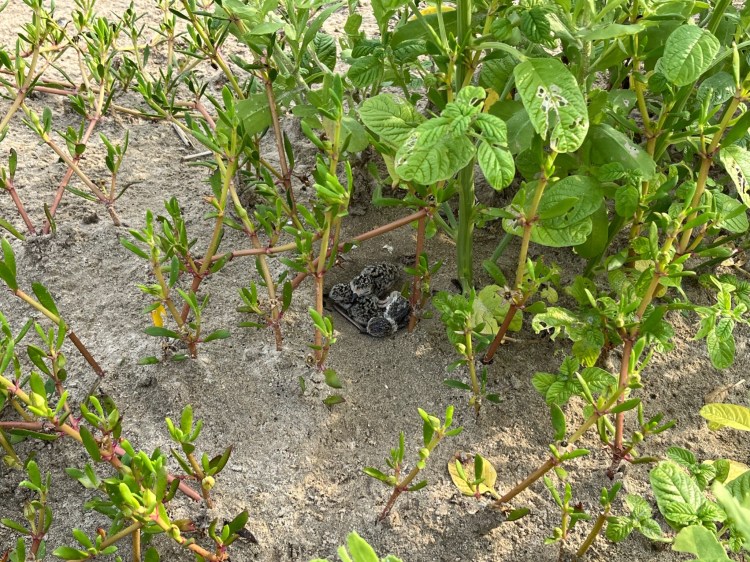
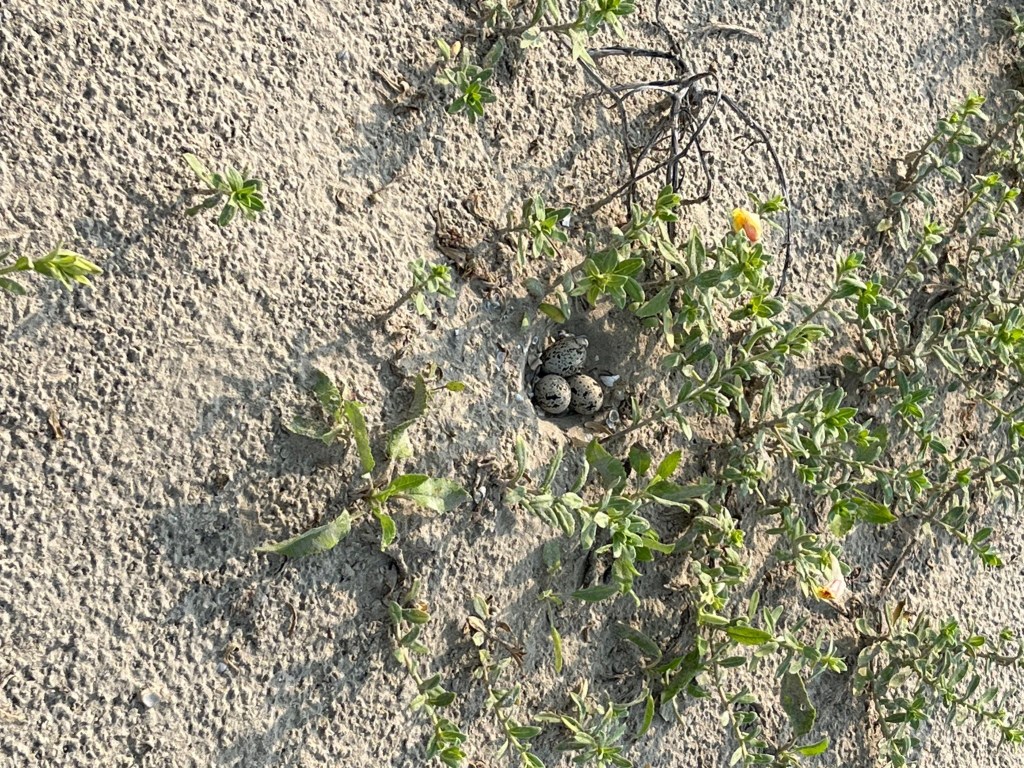
Summer is heating up– as is the 2024 beach-nesting bird season! The first Wilson’s Plover nest of the season was discovered at San Luis Pass on April 16th, and the birds have been keeping busy ever since! So far this season, a total of 20 Wilson’s Plover nests have been found across all seven sites that are monitored on Galveston Island and the Bolivar Peninsula. On the Bolivar Peninsula, four nests have been found at High Island Beach, six nests at Bolivar Flats Shorebird Sanctuary, and one nest at the beach at the Port Bolivar Ferry Landing. On Galveston Island, three nests have been found at San Luis Pass Beach, four nests at San Luis Pass County Park, and three nests at East Beach! A pair of Snowy Plovers attempted to nest at East Beach earlier this season, but unfortunately were not successful. Additionally, there are active Least Tern colonies at several of these sites. Our focal species aren’t the only species breeding at these sites! Nests belonging to several other species, including Killdeer, Common Nighthawks, and Black-necked Stilts have also been discovered.
Despite some high tides and flooding earlier this spring and more recently due to Tropical Storm Alberto, many of these nests have been successful, and the first chicks of the season have hatched! Plover and tern chicks are precocial, meaning that they are feathered and fairly independent and mobile when they hatch. Just hours after hatching, Wilson’s Plover chicks can be found running among the dunes and finding food for themselves while their parents stand guard nearby. Unlike Wilson’s Plovers, Least Terns nest in colonies, and young tern chicks remain in these colonies and are fed small fish by their parents; even when young birds become old enough to fly, their parents will continue to bring them food and will lead them to foraging areas.
As you’re enjoying Texas’s beautiful beaches, keep these tips in mind:
- Nests and chicks are well-camouflaged; stay alert as you’re walking or driving down the beach to avoid stepping on a nest or chicks. A good rule of thumb is to keep to the wet sand, as beach-nesting birds tend to nest above the high tide line.
- To ensure that these amazing birds have plenty of space to safely raise their chicks, respect signs and fencing, and keep at least 50 yards away from plovers and terns you encounter while out on the beach. Excessive disturbance leaves eggs and chicks exposed to predators, and may lead birds to abandon a site altogether.
- Dogs and vehicles are not permitted beyond the vehicular barrier at Bolivar Flats Shorebird Sanctuary. On beaches where dogs are welcome, note that dogs are required to be leashed on all beaches in Galveston County.
By sharing the beaches with these spectacular birds and recreating responsibly, we can help ensure that they will continue to have safe spaces to raise their chicks and will continue to inhabit our beaches for generations to come!
More information about our Beach-nesting Bird stewardship, monitoring, and sites can be found here:
https://abcbirds.org/program/gulf-coast-birds
https://houstonaudubon.org/sanctuaries/bolivar-flats/history.html
https://houstonaudubon.org/conservation/research
This project is in collaboration with American Bird Conservancy, Gulf Coast Bird Observatory, Coastal Bend Bays and Estuaries, US Fish & Wildlife Service, Texas Parks & Wildlife, and TXDOT, among others.
 Houston AuduBlog