
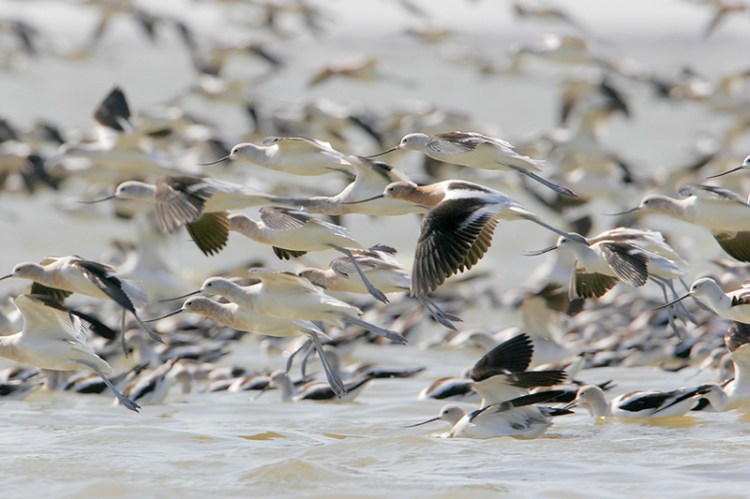
American Avocet (Recurvirostra americana)
Family: Recurvirostridae
By Charlie Ayers, Houston Audubon Coastal Conservation Technician
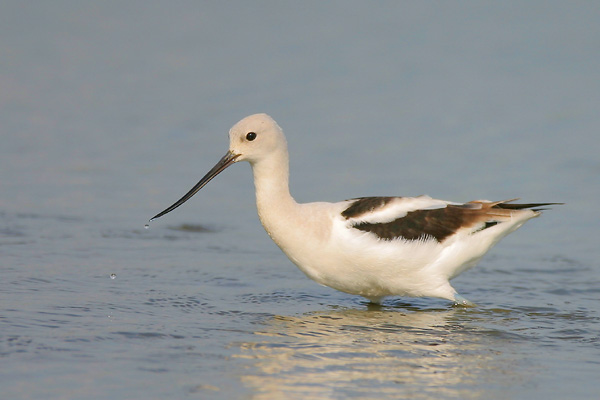
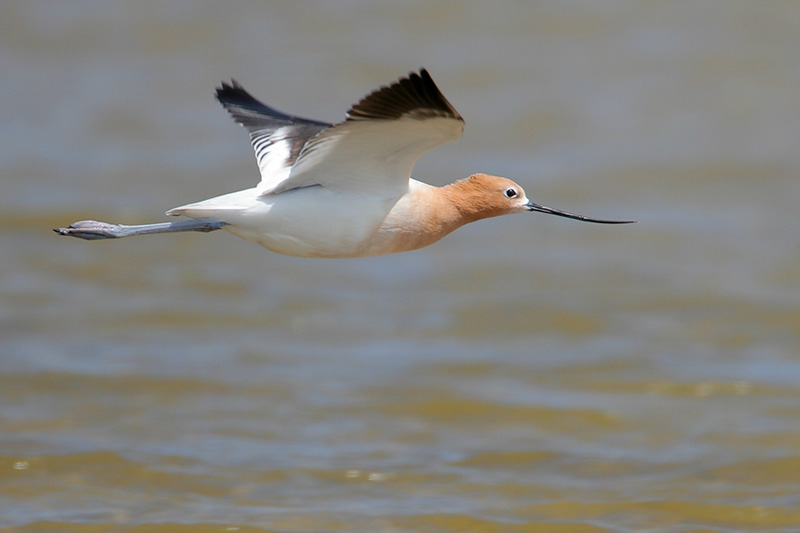
This week’s Beak of the Week is one of the funkiest ones out there, the American Avocet. Look for this large wading bird’s long, thin, uniquely upturned bill, bold black and white wings and long blue-gray legs. American Avocets, like many species, molt every year into a winter plumage, the most notable change in appearance being that their head and necks change from a buffy orange to a pale gray. Both plumages can be seen here in Texas depending on the time of year.
Beaks are often indicators of what a bird eats, or sometimes the way a bird eats. American Avocets swing their heads back and forth in the water to catch small invertebrates like fairy shrimp, water boatmen and brine flies. This feeding style is known as scything. The slight upcurve of the beak helps to funnel the invertebrates into their mouths as they lift their heads from the water.
American Avocets are often found in wetlands, both salt and freshwater. Even with their extra long legs, they tend to prefer shallow bodies of water for foraging, with a water depth of less than 8 inches on average. Their breeding range extends from Texas to Alberta, with wintering grounds along the Gulf of Texas, California, Mexico, many islands in the Caribbean and, more rarely, in states on the east coast like North Carolina. They gather in flocks of a few hundred to a few thousand in certain locations.
One of those places is the Bolivar Flats Bird Sanctuary, one of the most important overwintering sites for American Avocets in the United States. During the winter and into early spring, over 8,000 of these tall, majestic birds can be found feeding in the nutrient rich waters. This amazing shorebird can also be found at Anahuac National Wildlife Refuge and, less frequently, on the ponds at Smith Oaks Bird Sanctuary.
Visit our Bird Gallery to read about other Texas birds!
 Houston AuduBlog