
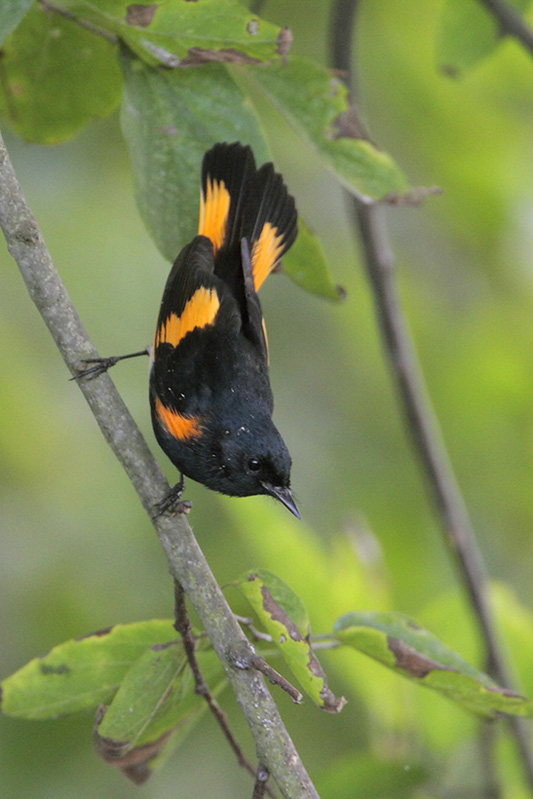
American Redstart (Septophaga ruticilla)
Family: Parulidae
By Charlie Ayers, Houston Audubon Coastal Conservation Technician
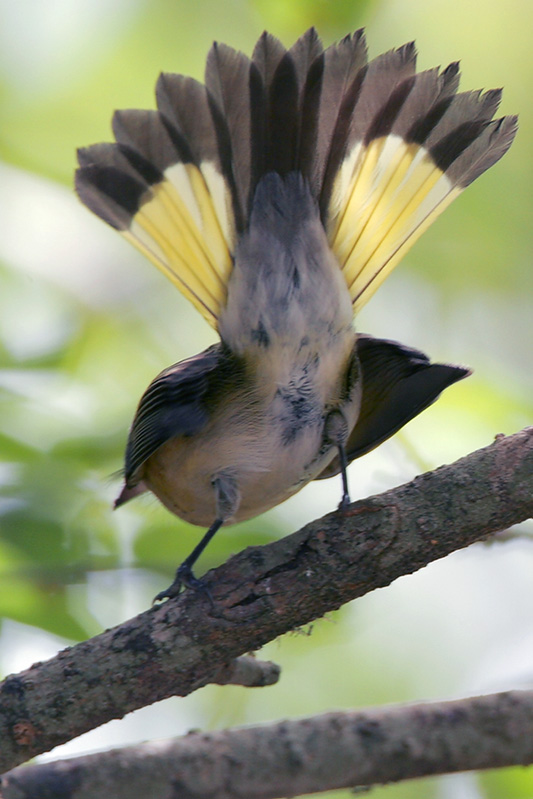
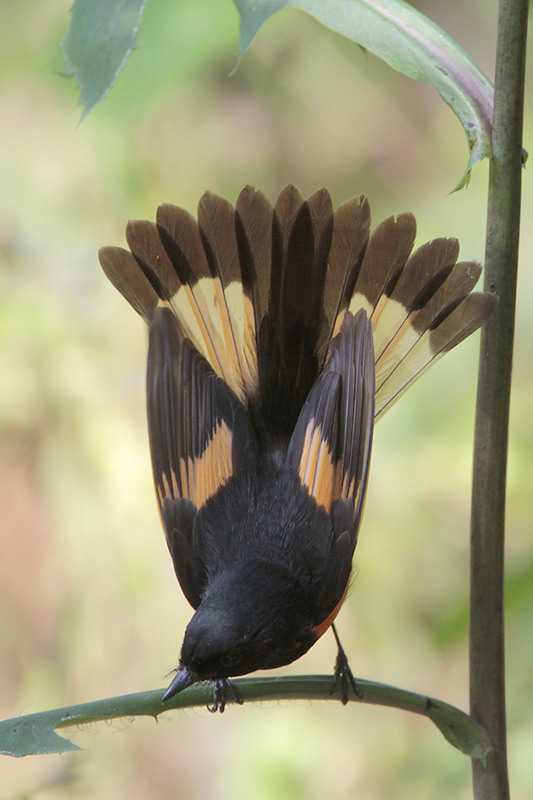
This week’s Beak of the Week belongs to a bird who is always ready for Halloween, the American Redstart. Adult males of this species are black overall with splashes of orange on the flanks, wings and tail. Females and immature males have gray heads with yellowish-gray backs and yellow patches on the flanks, wings and tails. Both species have white bellies. American Redstart males can sometimes be confused for Baltimore Orioles; when debating between the two, note the larger size of the oriole along with a longer bill and completely orange belly. Redstart females can often be misidentified as Yellow-rumped Warblers; note the lack of the yellow rump patch and streaking on the belly when differentiating between the two.
Similar to many of our east coast warblers, the American Redstart is an insectivore; however, the way they catch their prey is unique. Its orange and black or yellow and gray tail and wings is not just for aesthetics-it also doubles as its greatest asset in foraging. When flitting through the canopy, redstarts will open their tails and droop their wings, displaying these brightly colored patches. This sudden pop of color will startle the unsuspecting leafhopper or beetle, causing them to attempt an escape. This is when the redstart will grab its prey, sometimes out of midair. Redstarts are gifted flycatchers, sometimes competing with Least Flycatchers and Eastern Wood Pewees for foraging locations.
American Redstarts breed throughout much of the eastern U.S and in pockets of the western U.S with overwintering grounds in Mexico, the Caribbean and northern South America. They can be found along the Texas Gulf Coast during both spring and fall migration, peaking in late April/early May and in late October/early November. To find one of these striking warblers for yourself, head to locations with large stands of native tree species like live oaks, yaupon hollies and hackberries. Avoid areas heavy with Chinese Privet as these plants are not eaten by native insects and therefore will have very few warblers. Houston Audubon’s Boy Scout Woods, Smith Oaks Bird Sanctuary and Edith L. Moore Nature Sanctuary are great places to find these Halloween-themed gems because the habitat is managed for native plants.
Visit our Bird Gallery to read about other Texas birds!
 Houston AuduBlog