

Red Knot (Calidris canutus)
Family: Scolopacidae
By Theresa Kelly, Houston Audubon Coastal Conservation Technician
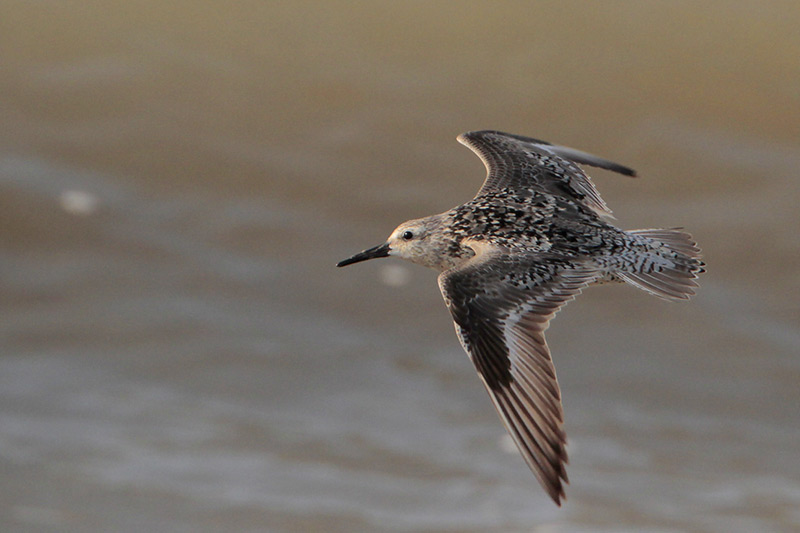
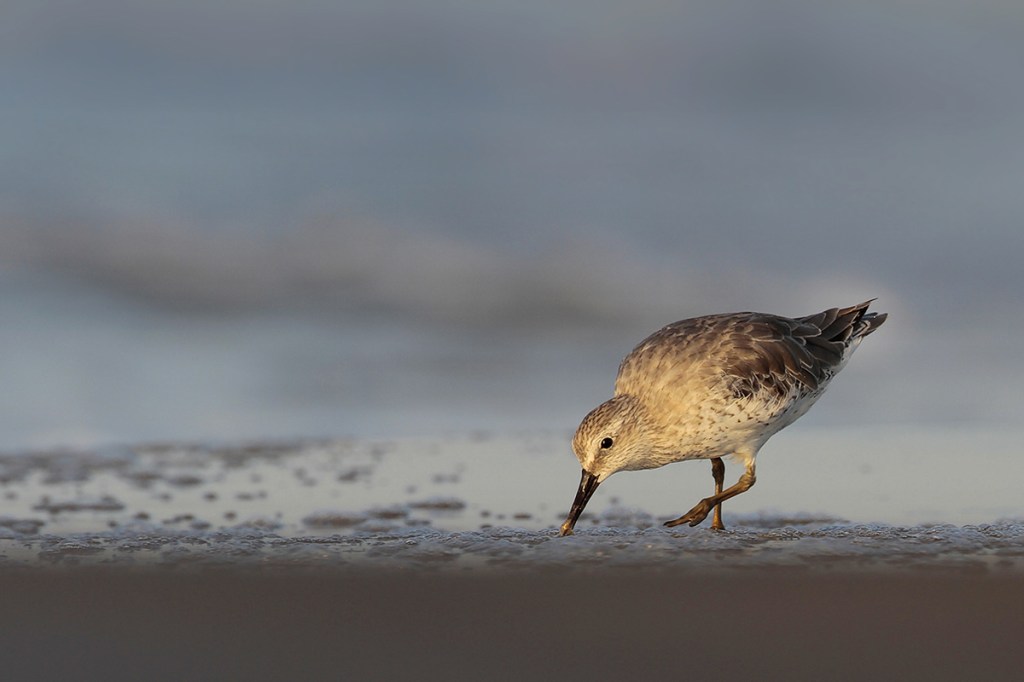
This week’s Beak of the Week may seem to be a bit of a misnomer, as the Red Knot’s winter plumage can be fairly drab: pale brown underneath and speckled on the back and wings just like so many other shorebirds. It’s the Red Knot’s spring plumage that gives this bird its name-bright, rusty red all the way from the face down to the chest.
The Red Knot is somewhat of a champion when it comes to migration. Red Knots spend their summer breeding season in the Arctic Circle, feeding on insects (especially flies) and the occasional plant material. In wintertime they migrate to coastlines around the world, making it as far as Africa and even Australia. Luckily for those of us in Texas, some choose the shorter route and make the Gulf Coast their temporary home. Scientists are unsure how long Red Knots typically live, but the oldest known individual is roughly 31 years of age. He’s nicknamed Moonbird, as his combined lifetime migrations have exceeded the distance between Earth and the Moon!
Despite being plentiful across North America less than two hundred years ago, large numbers of Red Knots were killed while migrating in the late 1800s. Certain populations in eastern North America have declined even more sharply in recent decades, in large part due to unsustainable harvest of the horseshoe crab eggs which make up much of their migration diet. While this decline is unfortunate, it has made Red Knots something of a flagship species for shorebird conservation, an important voice for a vulnerable group of avians.
Early in the breeding season, males can be seen flying in high circles above their territory, rapidly flapping a few times and then gliding. During the winter you can find this scolopacid on the beaches, scrounging through intertidal mud for mollusks, marine worms, and crustaceans. Their bill, so important to their feeding habits, is long, straight, and dark, easily distinguishing them from curve-billed species like the Curlew and the Whimbrel. Displaying males have a call that’s been described as distinctly flute-like, while birds flushed from the nest have a quick, high-pitched ‘whit-whit’ call. Next time you’re at the beach, keep an eye (and ear) out for the rotund little Red Knot.
Visit our Bird Gallery to read about other Texas birds!
 Houston AuduBlog