

Sneed B. Collard III, Author
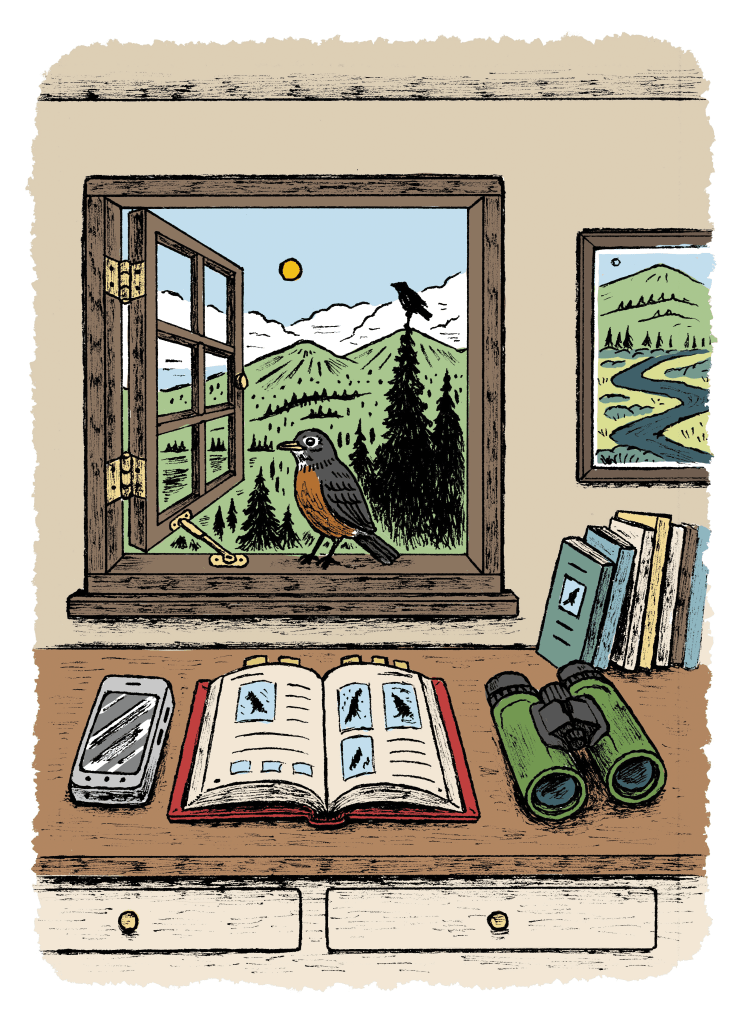
There’s no one right way to start birding. Some people begin by catching “birding fever” from friends. Others, by watching birds in their gardens. Perhaps a “spark bird” captures your attention and propels you into the larger joys of birding. Or maybe you get wowed by Blue-footed Boobies and Magnificent Frigatebirds during a once-in-a-lifetime trip to the Galapagos. However you begin, I’ve found a few things that will accelerate your joys of birding—and make it easier to overcome the frustrations.
Tip #1: Learn how to use and care for your binoculars.
Binoculars are almost always the first thing one considers when starting out birding, and you might have guessed that I would urge you to buy the best pair possible. That’s not bad advice, except that many of us can’t afford to buy new equipment. As a beginner, it’s more important to actually learn to use the binoculars you actually have available. These optical devices aren’t always as intuitive to learn as you might think. Why? Because you have to adjust them to your individual eyes—eyes that often see differently from each other. Fortunately, you usually can do this by adjusting for one eye and then the other, so before you do anything else, figure out how to do this by messing around with your binos—or looking up an article such as this one: https://www.massaudubon.org/news/latest/how-to-fit-focus-your-binoculars
If you wear glasses, experiment with the “eye relief” tubes that many binoculars come with, too. Oh, and while you’re at it, pick up a chamois cloth and make sure you clean and polish the binoculars’ lenses. This sounds super basic and obvious, but taking an hour or so to do this sets you up to have the best possible birding experiences!
Tip #2: Download Merlin and eBird
Many beginning birders immediately purchase one or more field identification guides, and that’s a great move. Phone apps, though, also have become indispensable to most birders. Apps can serve as portable field guides, but also make it super simple to record the birds that you see. The first two to start with are Cornell Lab’s Merlin and eBird apps, and guess what? They are free! These apps have many features, and people use them in different ways. I use Merlin as a field guide and also make heavy use of its Sound ID feature, which employs AI to identify the vocalizations of birds around me. You can record your birds on Merlin, too, but I find that eBird is more versatile and easier to use. Once you have created a free account for eBird and Merlin (the same account will work for both apps), you can also enjoy the incredible power of the web version of eBird, which offers many additional features for data crunching and exploration. While you’re at it, you might want to download Audubon’s free phone app, which includes an excellent North American field guide.
Tip #3: Start Local
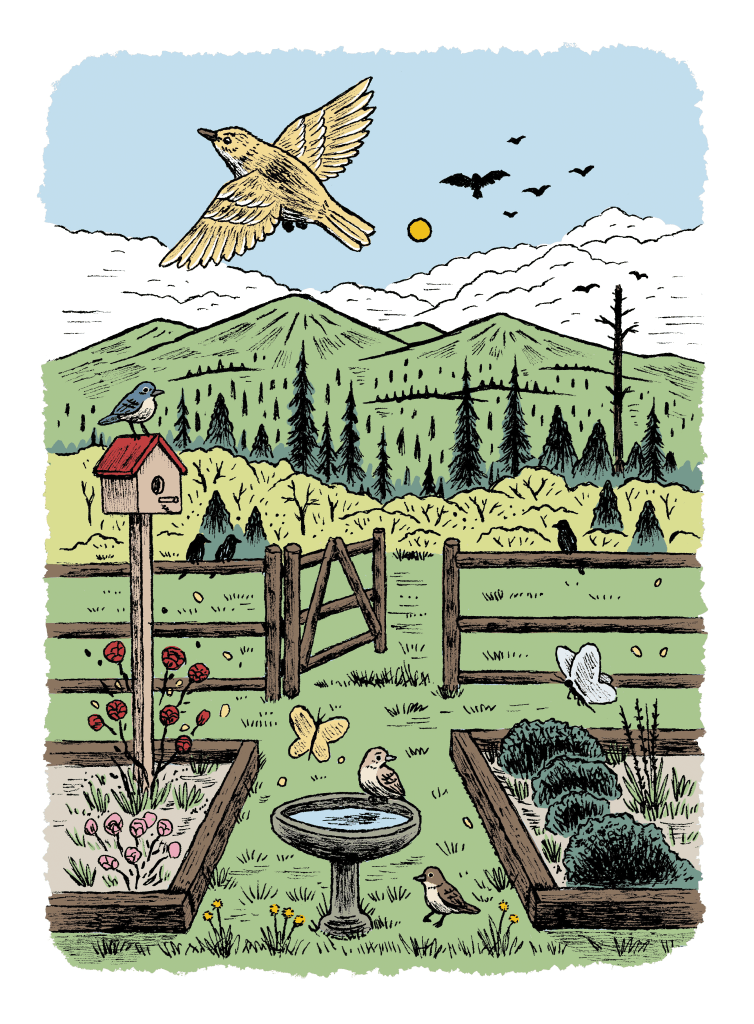
With binoculars, apps, and a field guide in hand, you’re ready to start birding in earnest. You can begin by spending five figures on a tour of one of the world’s premier birding locations—but I don’t recommend it. Unless you are already an expert on that location’s birds, you will spend your time following a naturalist around as he points out one bird after another. You’ll be mumbling “Uh-huh. Uh-huh.”—and promptly forget most of the birds you see or hear. Instead, build slowly by learning the birds around your house, in local parks, and other places in your community. I highly recommend always carrying your binoculars with you, because you never know when you will run into a promising “birdy” area. My son and I have seen some of our best birds not in well-known birding hotspots, but in cemeteries, along railroad tracks, around irrigation ditches—anywhere with overlooked habitat. Building up your local expertise is also the best preparation for going on birding trips farther afield.
Tip #4: Get Your Hearing Checked Out

Did you know that the average person waits five to ten years to get hearing aids after they know they have hearing loss? Even in our modern age, the stigma around wearing hearing aids still dissuades many people from getting and using them. My message? Don’t wait! If you even suspect you that have hearing loss, get your hearing checked, and if it’s called for, take the plunge. The benefits of hearing aids extend far beyond being able to hear birds better. Among those with hearing loss, people who wear hearing aids suffer less from isolation, depression, and anxiety. They are less likely to fall and get dementia. Studies indicate they live longer, too. No-brainer, right? I began experiencing noticeable hearing loss in my late fifties, shortly after I began birding. The hearing aids immediately restored much of my joy in birding and have helped me in many aspects of my personal life, too.
Tip #5: Bird with Others
Learning to identify birds can feel overwhelming for a beginner. One way to overcome this is to go out birding with other people. These can be other beginners like you—or groups led by veteran birders. Birding with others is not only great for your social life, it accelerates the learning process. I can’t begin to count how often I have learned invaluable ID tips from other, more experienced birders. What’s more, I remember those tips better than information I glean from a typical field guide. Don’t know anyone to bird with? Well, you’re in luck. Most Audubon groups, including Houston Audubon, organize and lead a variety of field trips and other bird-related activities. To find out more, check out https://houstonaudubon.org/programs/events/
If you aren’t lucky enough to have a local Audubon chapter, check out your local natural history museum, nature center, parks, and adult learning centers. One of the great things about birding is that someone is always doing it!
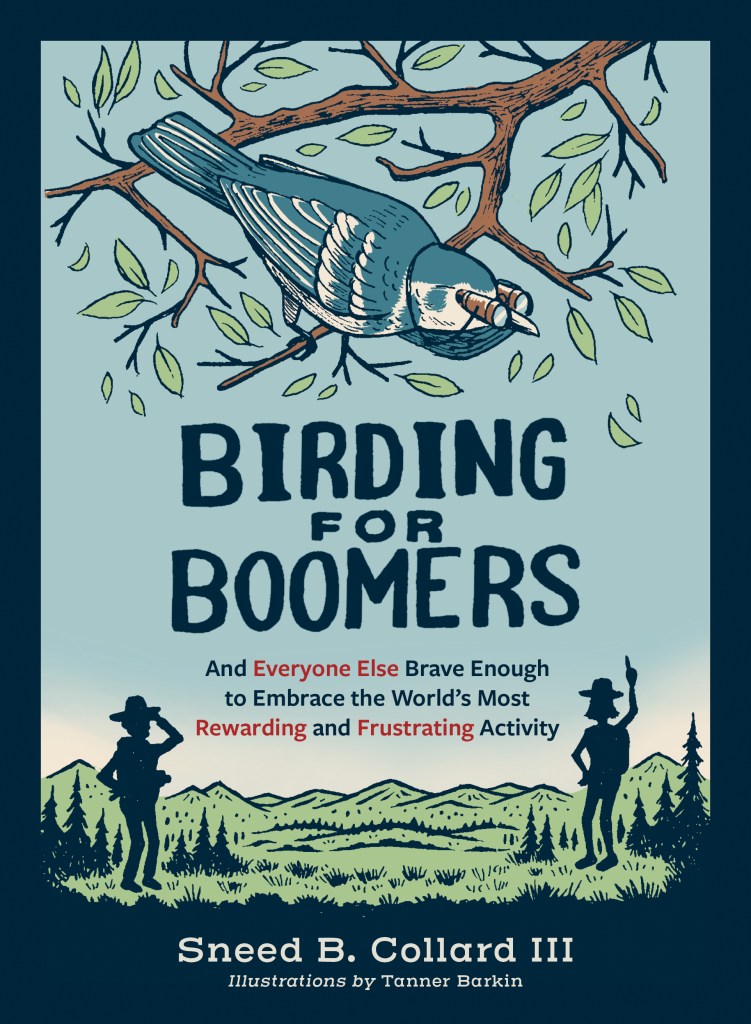
Sneed B. Collard III is the author of more than one hundred books for children and adults, including the popular new Birding for Boomers—And Everyone Else Brave Enough to Embrace the World’s Most Rewarding and Frustrating Activity. Learn more at his website, sneedbcollardiii.com, or the blog he writes with his son, fathersonbirding.com.
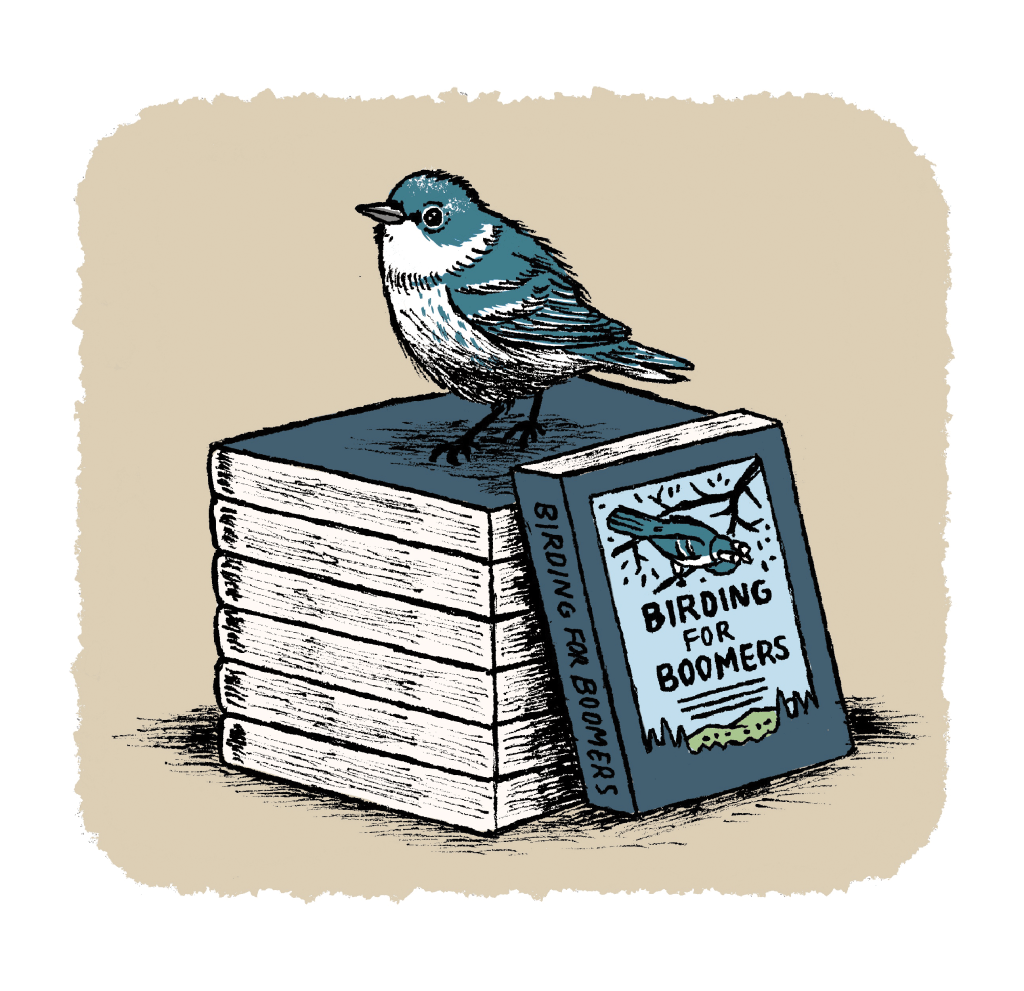
Illustrations by Tanner Barkin from Birding for Boomers (Mountaineers Books, 2024)
 Houston AuduBlog