
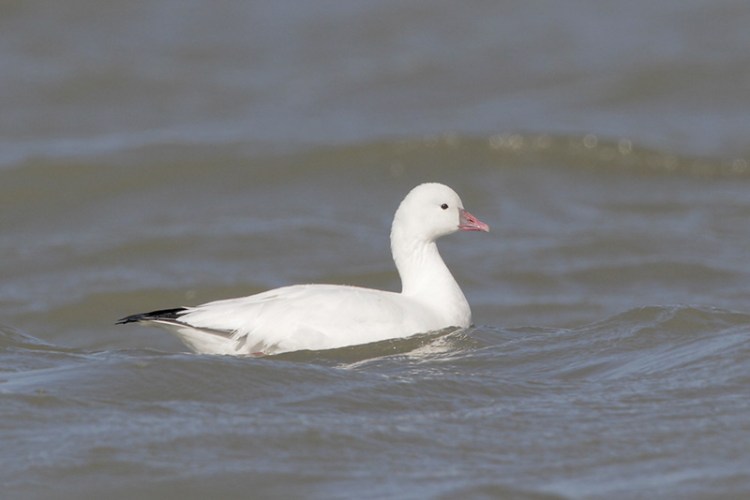
Ross’s Goose (Anser rossii)
Family: Anatidae
By Nick Minnich, Houston Audubon Coastal Conservation Technician
This Beak of the Week is short and stubby compared to its taxonomic ally, the Snow Goose. The Ross’s Goose is often referred to as a miniature version of the other white geese, previously belonging to the genus Chen. Like other members of the Anser genus (containing geese), Ross’s Geese forage mainly for plant matter. On breeding grounds in the Canadian tundra, the geese mainly eat roots of sedges/grasses as the tundra thaws. During the winter, as the geese move to California, New Mexico, Texas, and Louisiana, the birds typically eat cottongrass, chickweed, and other native non-woody plants, as well as domestic grains. While Snow Geese frequently expose roots and tubers, the smaller bill on the Ross’s restricts the bird’s ability to exhibit this behavior only after heavy rains soften the ground
Ross’s geese often form monogamous pairs, but males sometimes find additional mates while in the breeding colony. Courtship rituals are not atypical for geese, consisting of the male bird approaching, dipping his head, and sharing his high-pitched “I really want to mate with you” call. Multi-species breeding colonies are formed with the Lesser Snow Goose (a. caerulescens caerulescens) and are generally peaceful with occasional hissing and feather fluttering if a neighbor encroaches on another bird’s territory.
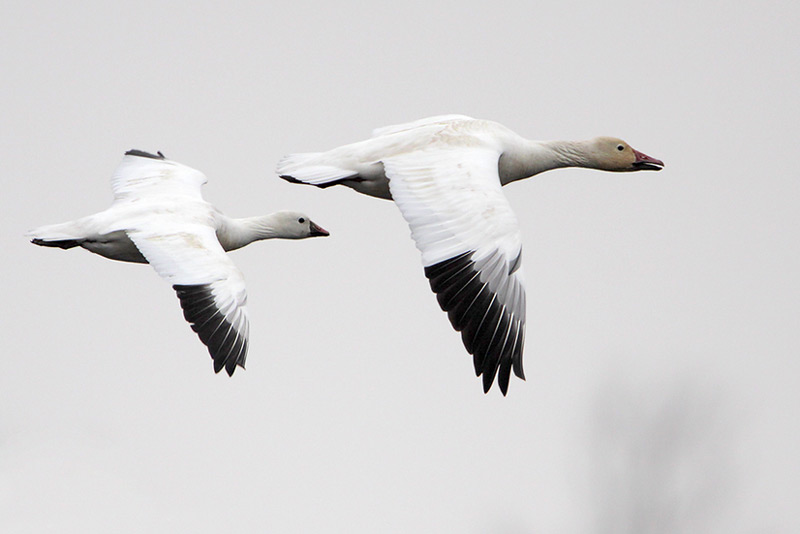
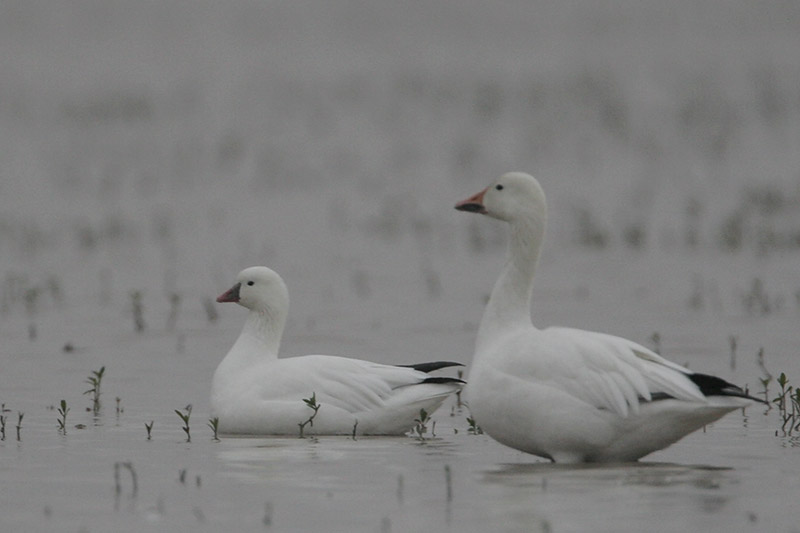
A Ross’s Goose is best picked out of a large flock of Snow Geese by its size, though hybridization occurs. Additionally, the bill of a Ross’s Goose is shorter, more triangular and mostly pink. If you see a group of Snow Geese fly over, grab your binoculars and/or camera and try to find an outlier in the group. The stubby neck of the Ross’s Goose often makes it stand out like a sore thumb (or neck). The High Island technicians have recently observed an uptick in Ross’s Goose numbers as the goose migration continues to get underway. Our most recent Smith Oaks Rookery survey turned up 24 Ross’s with 370 Snow Geese.
An analysis of Ross’s Goose population numbers raises an interesting conservation tale. In the mid-to-late twentieth century, the species was thought to be rare or even on the brink of extinction; however, warming in the arctic has led to a steep increase in both Ross’s and Snow Geese. The species is considered to possess low conservation concern as overall numbers of this pint-sized white goose continue to increase despite an annual harvest of around 50,000 to 100,000 birds a year.
As the year draws to a close and the fall migration continues, pay close attention to the large flocks of white birds with black wingtips. Though most of the birds tend to be Snow Geese, a diligent eye can almost certainly pick out a miniature Ross’s Goose in the mix! As you finish up the turkey leftovers from Thanksgiving, step outside and find this cute goose!
Visit our Bird Gallery to read about other Texas birds!
 Houston AuduBlog