
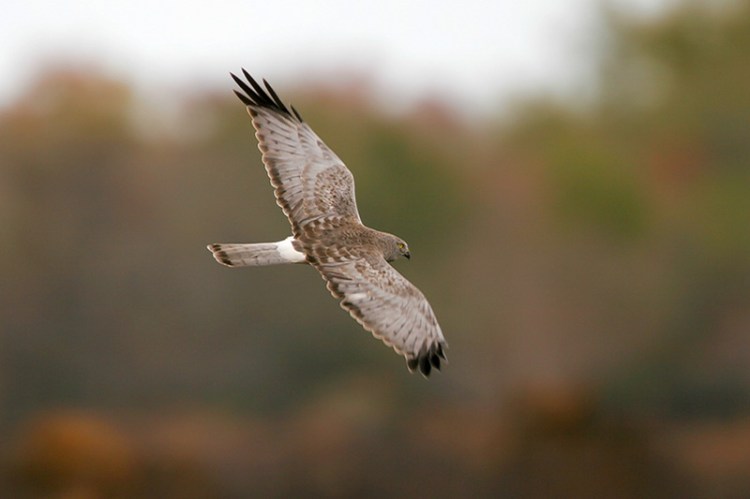
Northern Harrier (Circus hudsonius)
Family: Accipitridae
By Charlie Ayers, Houston Audubon Coastal Conservation Technician
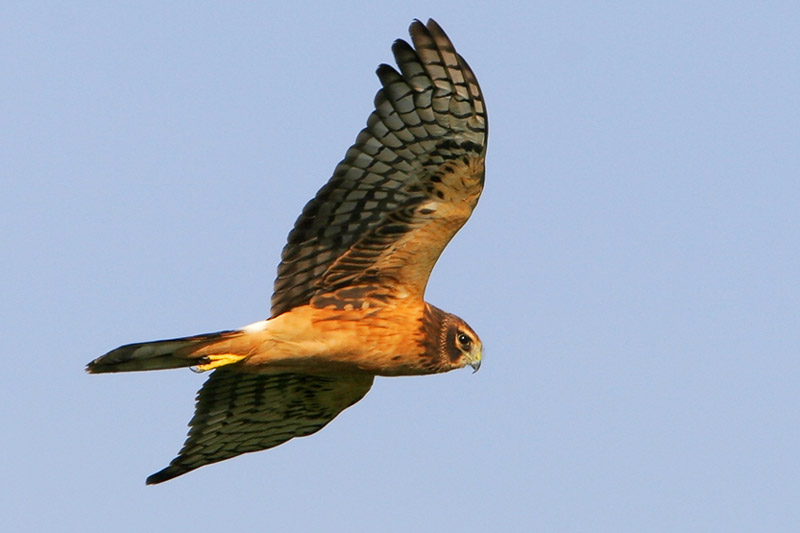
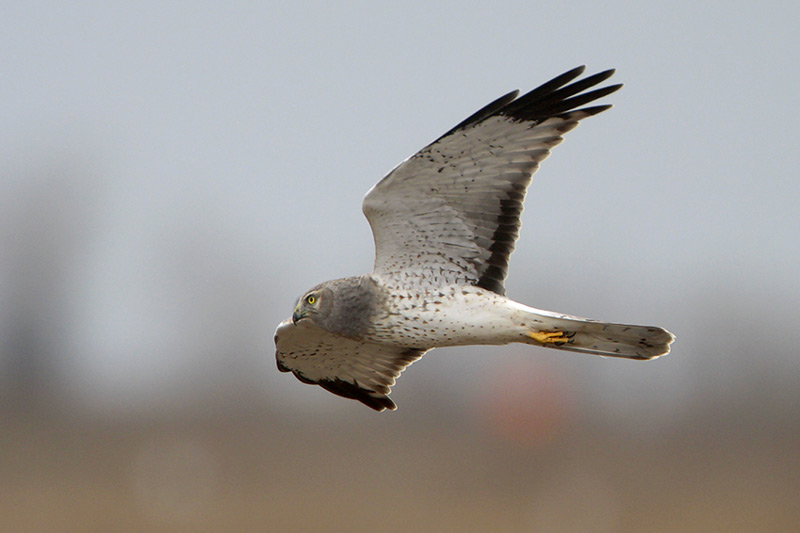
This week’s Beak of the Week, the Northern Harrier, has a small hooked bill that it uses to eat a variety of prey. The Northern Harrier is a medium-sized raptor with broad wings, a long tail and a white rump patch that makes them easily identifiable from far away. Northern Harriers exhibit sexual dimorphism, meaning the males differ from the females in appearance. Males are grey on top with light streaking on their underside; this is where the nickname “Grey Ghost” comes from. Females are brown on top with much more streaking underneath as this provides better camouflage when sitting on nests out on open grasslands.
Northern Harriers are unique in their hunting style as they forage more similarly to an owl than a hawk. You will most often find a harrier gracefully gliding over a large open tract of land, such as a grassland or wetland. Their similarity to owls doesn’t stop in their feeding style though-they also have disc-shaped faces that funnel in the sound of their prey scurrying amongst the vegetation. Harriers aren’t picky when it comes to food and will eat a variety of small mammals, songbirds and reptiles.
Northern Harriers can be found throughout the US and Canada depending on the time of year, with some birds migrating as far south as Colombia. If you go looking for them around dawn or dusk, pay close attention. If you’re lucky, you may find a Short-eared Owl as well. Short-eared Owls fly similarly to Harriers but lack the distinctive white rump patch. The best places to check for this silent surveyor of the plains are Anahuac National Wildlife Refuge near Frozen Point, Bolivar Flats Bird Sanctuary and Horseshoe Marsh Bird Sanctuary.
Visit our Bird Gallery to read about other Texas birds!
 Houston AuduBlog