
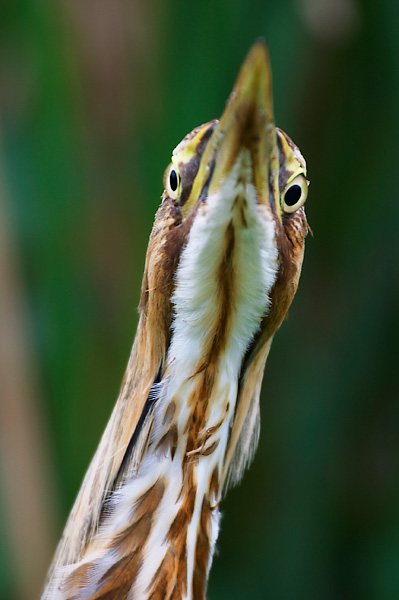
American Bittern (Botaurus lentiginosus)
Family: Ardeidae
By Charlie Ayers, Houston Audubon Coastal Conservation Technician
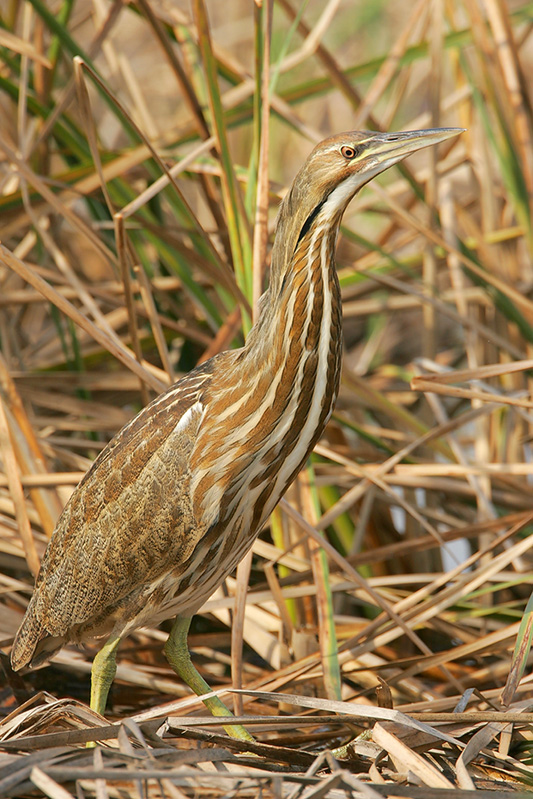
This week’s Beak of the Week, the American Bittern, is a master of disguise! American Bitterns tend to choose when they are seen rather than being found. With their cryptic, brown, streaky coloration, they materialize right in front of your face as they move methodically through the reeds, only to vanish into thin air once again when they decide to sit still.
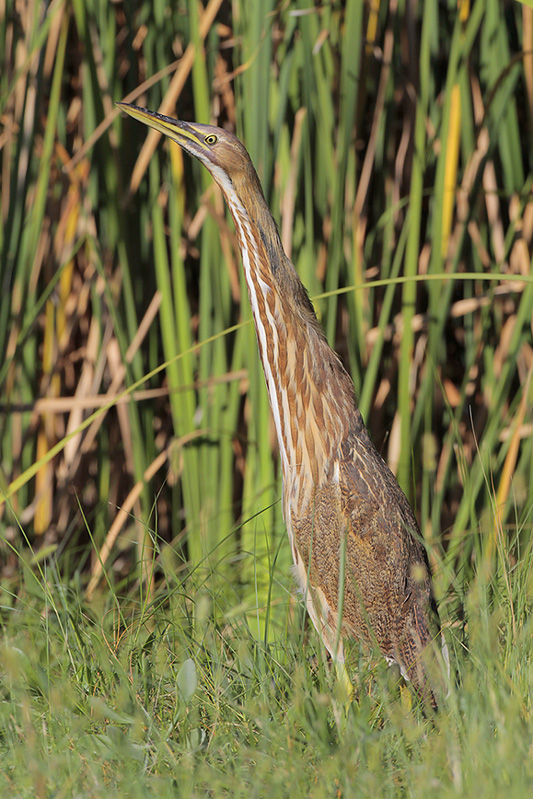
American Bitterns are medium-sized herons that almost exclusively occupy freshwater wetlands. They hunt for a variety of prey, including insects, salamanders, small mammals, and snakes, but their main food source is fish. American Bitterns, like many other herons, are ambush predators. They use their ability to stand extra still to their advantage when hunting—they will stand tall with their necks stretched out as to look like a reed and wait, slowly moving their heads down, focusing their eyes on the water until they lock on and attack with voracious speed, spearing their fish dinner.
American Bitterns can be identified by their overall streaky brown plumage, long yellow bill, and a black stripe that runs down the side of their necks. In flight, look for dark flight feathers, pale coverts, and a hunchback appearance. Learning its call is another sure way to identify this species, as it’s a unique one. During the breeding season, male American Bitterns will use a mating call that can be described as a pump-er-lunk. It sounds like a drip of water hitting a pool. This has earned them some colorful nicknames such as “thunder pumper” and “water belcher”. It is truly one of the weirdest sounds in the bird world.
Unlike many of the herons here in east Texas, American Bitterns do not breed in the area; they only stay for the winter and then migrate as far as northern Canada to breed in the rich freshwater marshes. If you want to try your luck at catching a glimpse of one of these mystics of the marsh, check out places with ample reeds for them to hide in, such as Gast Bay Bird Sanctuary, Anahuac NWR on the Shoveler Pond Loop, and Bolivar Flats Bird Sanctuary.
Visit our Bird Gallery to read about other Texas birds!
 Houston AuduBlog