
By Theresa Kelly, Houston Audubon Coastal Conservation Technician
The best weather for birding can vary heavily based on what you’re looking for. Although wind-driven rain might cause songbirds and waders to hunker down, it tends to push migrating seabirds such as petrels and terns closer to shore, making for great seawatching. Migrants of all orders, however, are best found after a cold front moves through, when migrating birds who might otherwise pass you by are forced to land in a phenomenon known as “fall-out”.
So why is this? Why exactly does inhospitable weather bring all the birds to your backyard? The simplest reason is precipitation — cold fronts are often preceded (or accompanied) by rain, sleet or snow, which make it difficult for migrants to fly. Rather than waste energy continuing their migration in less-than-ideal conditions, many birds relocate to the nearest landmass they can find so they might wait out the storm. Fall-out migrants may spend several days in a location if unfavorable weather lingers or if resources like food and shelter are abundant.
Wind also plays a major factor in landing migratory birds, particularly when storm systems send heavy gusts through an area. High-pressure weather systems bring fair weather, clear skies, and low winds (generally favorable conditions for flying, though the lack of a tailwind may slow migrants somewhat) while a low-pressure system comes with heavy cloud cover, unstable winds, and precipitation. The low-pressure system currently strewing snow across the upper Gulf Coast is putting Houston, Galveston, and High Island right in the path of northerly winds, with peak wind speeds exceeding thirty miles per hour. Such a strong headwind will impede northbound birds, forcing them to land until the system moves out and fairer skies return.
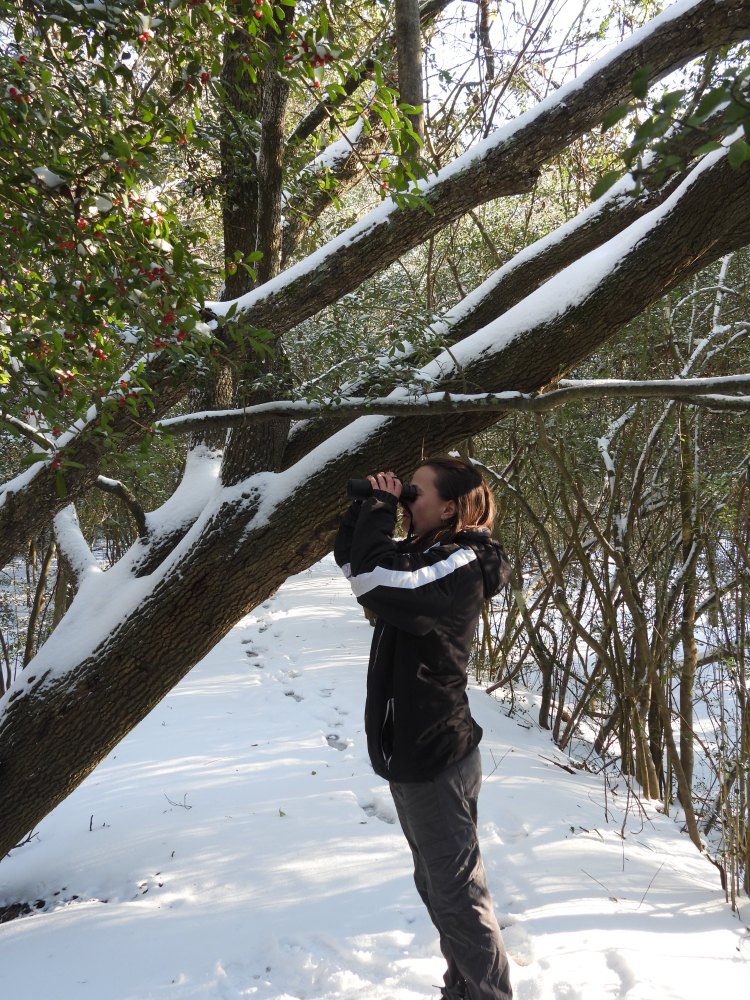
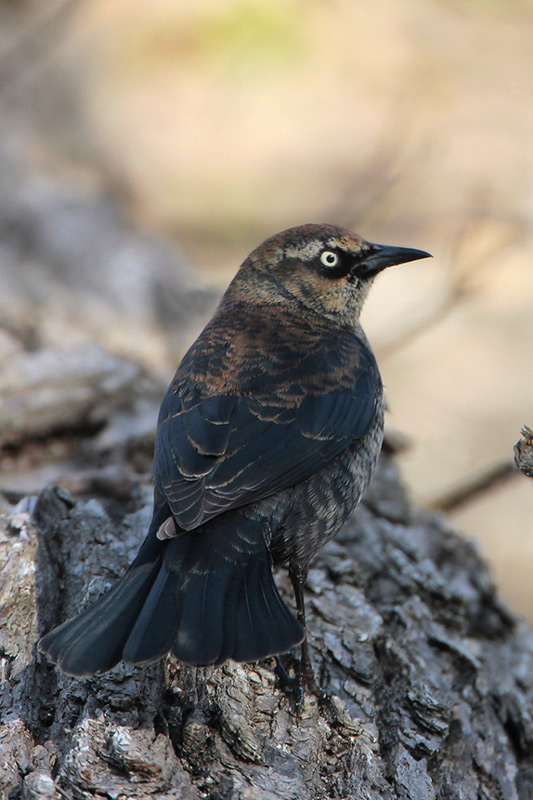
Despite recent concerns of avian influenza, the best thing you can do for our feathered friends when inhospitable weather comes through is ensure they have enough to eat. Per Dr. Julianna Lennoch of the Aphis National Wildlife Disease Program (via this Cornell Lab article), there is no recommendation to take down feeders if you do not keep domestic poultry, as the risk of transmission in wild songbirds is low. Previous cold fronts have brought in Rusty Blackbirds, an uncommon High Island icterid whose falling population levels make them more difficult to find by the year. As the worst of the cold passes, be sure to bundle up and grab those binoculars…. you never know what rarities the storm might have blown in!
 Houston AuduBlog