

Chuck-will’s-widow (Antrostomus carolinensis)
Family: Caprimulgidae
By Nick Minnich, Houston Audubon Coastal Conservation Technician
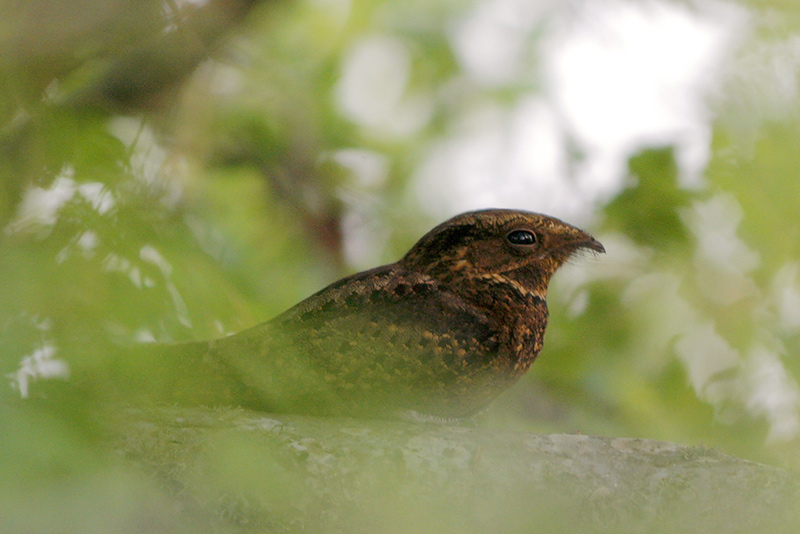
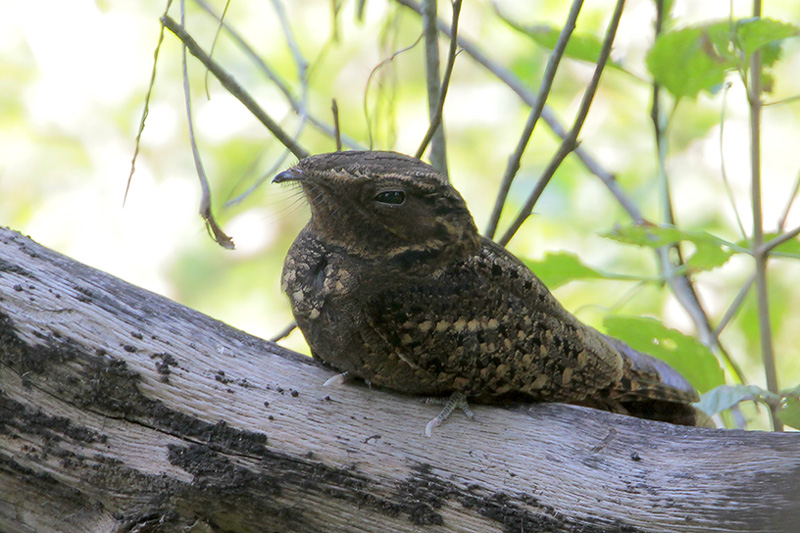
Our Beak of the Week is the largest North American member of the nightjar family. Caprimulgidae, colloquially referred to as goatsuckers, get this unusual nickname from a folk belief that the birds would milk goats with their enormous mouths each night as they’re nocturnal. Like other nightjars, Chuck-will’s-widows forage at dusk and dawn searching for insects. The specialized rictal bristles help funnel prey into their mouth, and they occasionally swallow small birds and bats along with insects.
“Chucks” are predominantly insectivores and are almost entirely nocturnal. Along with their specialized feathers for hunting, these birds are also well-equipped with highly mottled plumage that allows them to camouflage against tree bark, leaves, and the rest of the forest floor. While most of the nightjars share this camouflage plumage, the most similar-looking species is the Eastern Whip-poor-will. On average, the Eastern Whip-poor-will is smaller and grayer than the Chuck. Additionally, Chucks possess black streaking visible on the crown as opposed to the Eastern Whip-poor-will’s bold median crown stripe with prominent rufescent coloration and barring on the tail. Chuck-will’s-widows are large and chunky with a large head as well, especially when being compared to a petite Whip-poor-will.
Chucks are, of course, heard more often than they are seen due to their nocturnal behaviors and abundant camouflage. This cryptic bird’s name is a simple onomatopoeia of their call. This unmistakable call is certainly the best way to identify and observe this species; however, Chuck-will’s-widows are often faithful to their roost sites. Simply put, Chucks, as well as other nightjars, tend to be found if they’re flushed. Recently, a Chuck was found at Smith Oaks Bird Sanctuary by Houston Audubon staff during habitat management and privet removal. We were able to find the bird again later and confirm its identity with subsequent photos that were taken. Chucks are occasionally encountered on the Upper Texas Coast during the colder months, but there’s been only one other mid-winter record of the species for High Island. Chuck-will’s-widows breed in the forests of the Southeast and Mid-Atlantic states. They tend to inhabit more open areas than Whip-poor-wills and simply lay their eggs on the forest floor as opposed to making any sort of nest. In the winter, the birds often travel to woodlands and fields as far south as Colombia, Venezuela, and the Caribbean.
There is an overall decreasing trend of Chuck-will’s-widows across the United States. One factor which heavily impacts these nightjars is the usage of pesticides, due to their highly concentrated insect diet. Additionally, habitat loss on breeding and wintering grounds is an increasing threat. According to the North American Breeding Bird Survey, Chuck-will’s-widow numbers have cumulatively declined by about 58% since 1966.
Visit our Bird Gallery to read about other Texas birds!
 Houston AuduBlog