

By Nick Minnich, Houston Audubon Coastal Conservation Technician
With 2025 fully underway, spring migration is right around the corner! Exciting vagrants are already finding their spotlight in and around our High Island sanctuaries, such as a Spotted Towhee, Red-naped Sapsucker, Hooded Oriole, and more! It’s time to start studying your field guides and strengthening your neck muscles in preparation for finding warblers flitting in the canopy (I recommend neck flexions and chin to chests).
Various factors will come into play as you flock to High Island, key among them being weather. Prevailing winds on the Gulf Coast are from the South, which is why so many species use the Central Flyway in the spring on their journey northward. These tailwinds give birds an extra push across the 650 miles of open water from the Yucatan Peninsula to the Upper Texas Coast. Cold fronts during this time period bring north winds that cause the birds to work harder to make this crossing, and thus more likely to find refuge upon seeing land within wooded areas of the immediate coast (including High Island). Migrants depart the Yucatan Peninsula after sunset and undertake the crossing overnight. After 18+ hours, they finally make it to our shores. This is why, unlike many other places, bird activity is often greatest in the midafternoon and evening as new birds arrive en masse. Mornings can often turn slow quickly, but this has no bearing on what the afternoon may bring.
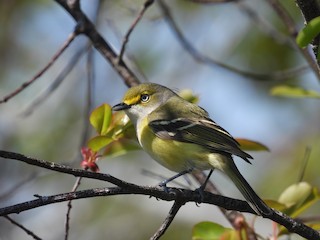
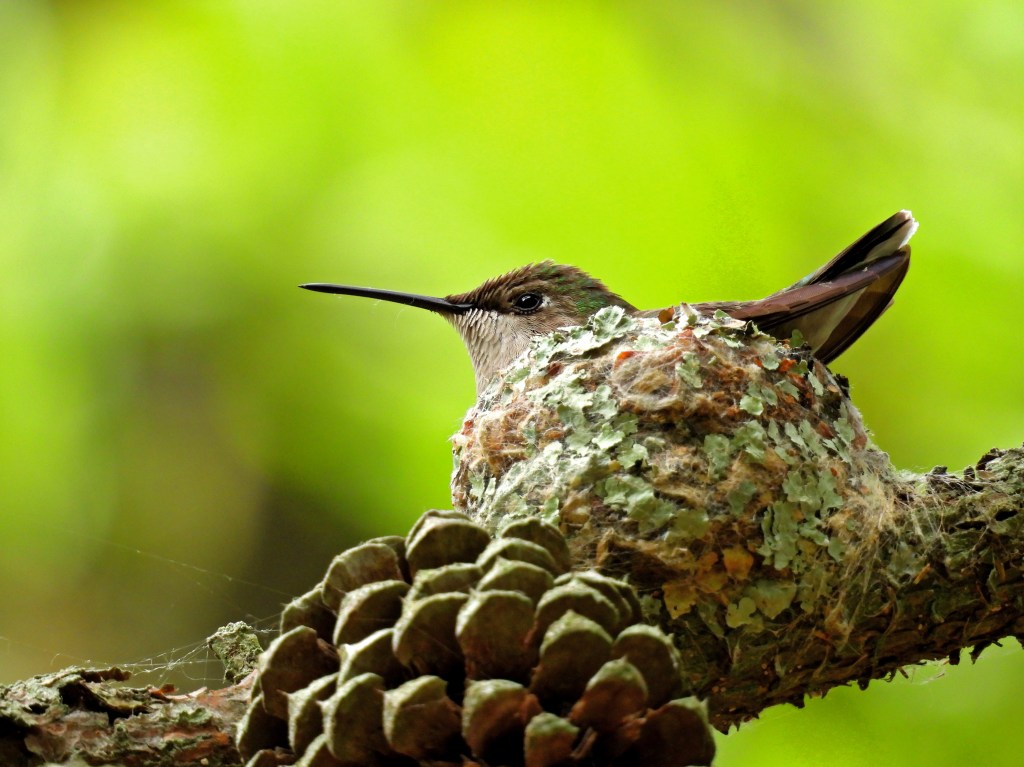
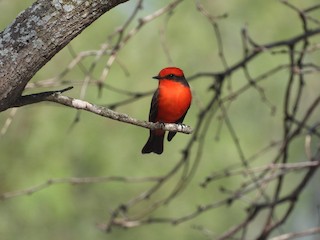
Another important tool for the visiting birder is understanding the timing at which different species move through our region. Broadly speaking, birds that breed at more southerly latitudes will move through first, while those breeding at higher latitudes move through later in the season. Knowing which species are likely to coincide with your visit will make sifting through the hundreds of species options in your field guide a little easier. Note that the arrival times below are just that, when these species begin to arrive. The period with the highest diversity of species moving through this region is approximately April 25th through May 5th.
Purple Martins returned in early February with other swallows joining in early to mid-March. One can expect to see Bank, Barn, Cliff, and Cave Swallows with the already present Tree Swallows. As March gets underway, Orchard and Baltimore Orioles will return and add a flash of color to the canopy. The first Wood Thrushes will begin to appear in the forests of our sanctuaries in Mid-March with Veery, Gray-cheeked, and Swainson’s arriving in late March. The plaintive calls of Eastern Wood-Pewees will join the cacophony of birdsong by late March. March and April will also yield a higher influx of Summer and Scarlet Tanagers and the potential for Western Tanagers. Higher counts of Rose-breasted and Blue Grosbeaks will come through beginning in late March. Dickcissels, the only member of the genus Spiza, will join in early April. Red-eyed and Yellow-throated Vireos can be observed starting in mid-March with Warbling and Philadelphia Vireos in early April. Everyone’s favorite honorary warbler (actually an icterid), the Yellow-breasted Chat, arrives in mid-march with peak numbers in April.
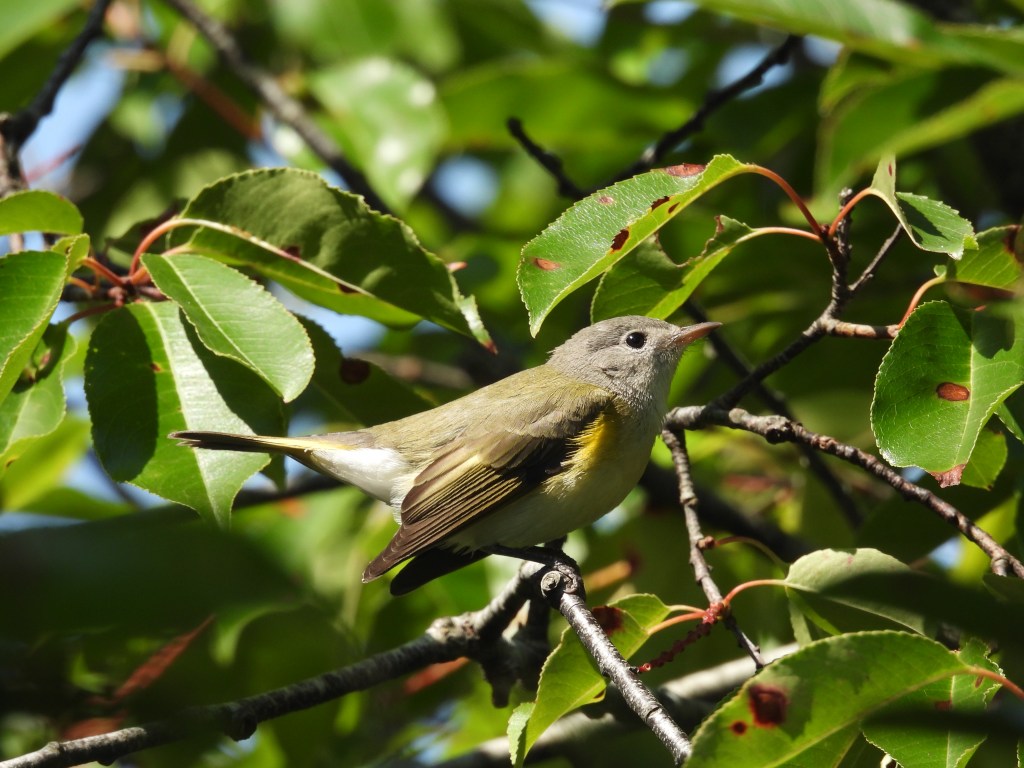
Boy Scout Woods, Smith Oaks, Eubanks Woods, Gast Woods and TOS’s Hooks Woods are known for prime warbler observation during spring migration. The first to arrive, joining the already present Yellow-rumped, Orange-crowned, Black-and-White, Wilson’s Warblers and Common Yellowthroats in late-February are Louisiana Waterthrushes. March arrives with the appearance of Northern Parula, Hooded, and Black-throated Green Warblers. Mid-March brings Ovenbirds, Worm-eating, Prothonotary, and Tennessee Warblers with Blue-winged, Swainson’s, Nashville, Kentucky, Chestnut-sided Warblers and American Redstarts towards the end of the month. Birders will find Golden-winged, Cerulean, Magnolia, Bay-breasted, Blackburnian, Yellow, Blackpoll, and occasional Prairie Warblers in early to mid-April. Middle to late-April may yield Cape May and Canada Warblers. Mourning Warblers are most often found in May (but easier to see in the fall rather than spring).

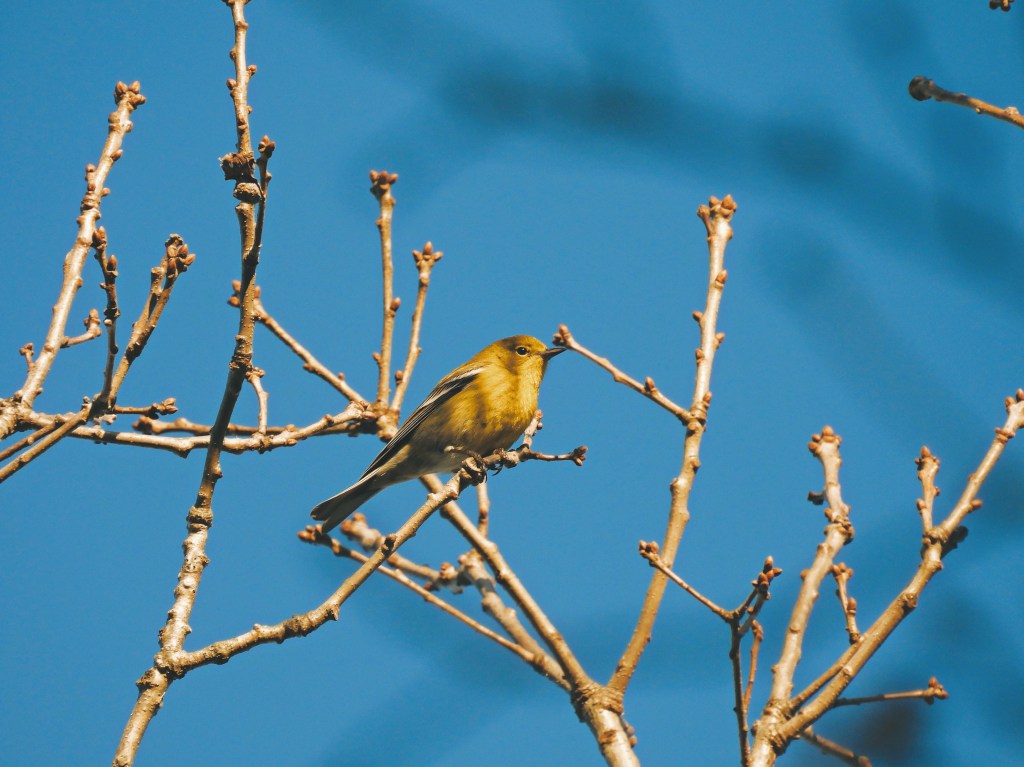
High Island’s unique geology is favorable to trees and shrubs in juxtaposition to the surrounding marshes, forming an important island of habitat for the spring migrants crossing the Gulf. The five main sanctuaries in High Island (Boy Scout Woods, Smith Oaks, Eubanks Woods, S.E. Gast Red Bay, and Hooks Woods) are premier locations to observe these birds. Boy Scout Woods’ 60 acres of woods, coastal prairie, and wetlands is ideal for spring birding. Purkey’s Pond is a great location to observe migrating birds come to drink and bathe in addition to the nearby Prothonotary Pond. The series of boardwalks extending into a managed prairie is a great place to look for Orchard and Baltimore Orioles along the edge habitat. Eubanks Woods, a 9.5 acre sanctuary of woods and wetlands, is perfect for forest-dwelling thrushes and a passerine foraging frenzy. Smith Oaks Bird Sanctuary is 177 acres of woods, wetlands, prairie and ponds. The rookery islands in the middle of Clay Bottom and Smith Ponds are a favored roosting and nesting location for thousands of herons, egrets, cormorants, and fan-favorite Roseate Spoonbills. The McGovern Canopy Walkway puts birders at eye level with warblers and vireos (and away from voracious mosquitoes). Migratory birds often frequent Don’s Drip, Norma’s Niche, and Katrina’s Corner, three water features with comfortable benches for optimal viewing. Both Gast Woods and TOS’s Hooks Woods are situated on the west side of Highway 124. In addition to the 8.8 acres of forested habitat, Gast Woods also provides access to the neighboring marsh and wetlands. Hooks Woods constitutes two acres of large oaks with a bird blind and drips to support the newly arrived spring migrants. Situated on the south side of High Island, this sanctuary is the first wooded habitat a tired migrant sees when it makes it to shore. Even on days with favorable south winds, many birds can often be seen popping into Hooks Woods for a bath and drink before taking to the skies once more to wing their way north.
Our sanctuaries are open 365 days a year, dawn to dusk. As a reminder, pets, laser pointers, recorded bird calls and “pishing” are prohibited for the sake of the birds and human visitors. Additional information can be found here.
Photos by Nick Minnich
 Houston AuduBlog