

By Wyatt Egelhoff, Houston Audubon Sanctuary Manager
Since it was signed into law in 1973 by US President Richard Nixon, the Endangered Species Act (ESA) has been a hallmark of American environmental conservation. The ESA provides a framework by which declining species are identified, designated, and protected. Most importantly, it creates a mandate for a plan to recover designated species. After five decades of trial and travail- both legal and practical- the ESA has not always proven to be the staunch bastion for imperiled species conservationists hoped. However, it is still one of the most proactive pieces of wildlife legislation, and can be credited as supporting the persistence of California Condors, Kirtland’s Warblers, and Black-capped Vireos in our American skies.
While the ESA formally and legally enshrined a process for designating and recovering imperiled species, it is far from the first wildlife conservation legislation passed in the United States. The Migratory Bird Treaty Act 1918 abolished the commercial harvest and trade of migratory bird species as a part of a broader international agreement between the United States, Canada, Mexico, and Russia. This legislation began the process for recovering the large wading birds (among other species such as Piping Plover) that had been nearly extirpated due to the millinery (feather) trade. In fact, none of the colonial waterbirds breeding at the Rookery in Smith Oaks Bird Sanctuary would be there today if not for this legislation.
An important trend for most species listed in the past 30 years is that their declines are often due to a myriad of factors, though chief among them being habitat loss and degradation. Most imperiled species in the early 20th century had become rare due to one or two primary factors, such as direct pressure from hunting, or (mid-century) contamination from chemicals. While those factors still influence declines of contemporary endangered species, now more than ever declines can be characterized as “death by a thousand cuts.” This means that despite some fantastic successes, there is still a lot of work to be done. Managers now approach conservation efforts more holistically, taking actions to preserve ecosystems as much as possible rather than individual species separately. Recovering declining species in an increasingly fractured world is more challenging than ever. But for birds in particular, effective conservation now demands collaboration across flyways and hemispheres, which in turn fosters more opportunities for connections, perspectives, and innovation. Species do not exist within a vacuum, and conservation action cannot be prescribed as such.
Houston Audubon’s 4,100+ acres of sanctuaries support many formerly endangered species and several currently listed species. Here are some examples you may recognize, and others you may not have realized were in jeopardy perhaps even within your lifetime.
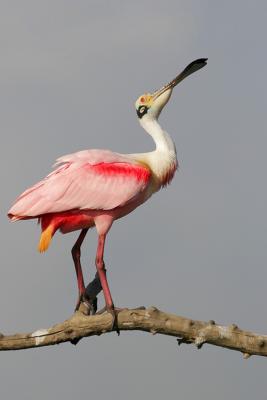
Roseate Spoonbill- Roseate Spoonbills were extirpated from the Gulf coast by the turn of the 20th century due to market hunting, with only a tiny remnant population in the mangrove-dotted wilds of Florida Bay. Following the cessation of commercial harvesting, the species quickly began rebounding along the Texas coast in the early 1940s. Galveston Bay supported many of the largest Roseate Spoonbill nesting colonies in the state from the 1960s-1990s. While their population remains secure, a decline in the number of bay islands, competition for nesting sites, and environmental factors has reduced the overall number of Roseate Spoonbills breeding on the Upper Texas Coast. Smith Oaks Bird Sanctuary supports the largest nesting assemblage of this species in Galveston Bay, with a current annual average of around 80 pairs since the first recorded nesting there in 1997.
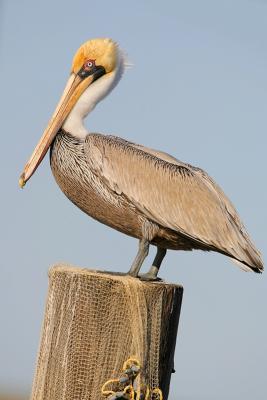
Brown Pelican- The 1974 Christmas Bird Count season tallied only 14 individual Brown Pelicans in all of Texas. This unique species had declined throughout the coasts of North America due to bioaccumulation of DDT, an insecticide widely used to control mosquitoes. DDT was also principally responsible for the declines of many birds of prey as well. The chemical was banned in 1972, after which direct intervention to recover affected species led to tremendous recovery. Brown Pelicans began nesting in Galveston Bay following the species’ range-wide recovery in 1991. Thirty-three years later in 2024, over 4,600 Brown Pelican pairs were surveyed in Galveston Bay alone.

Red-cockaded Woodpecker- Rampant clear-cutting of southern pine forests and later decades of fire suppression reduced and fragmented the range of this small US-endemic woodpecker species. Preferring Longleaf Pine forests with mostly open, grassy understory, this species’ foothold requires regular management of forests. This management benefits countless other animal and plant species, many of which would likely also disappear from the American landscape if not for the actions taken to maintain patches of functioning Longleaf Pine ecosystems. The Texas Pineywoods represent the Western extent of the Red-cockaded’s range. This species is somewhat peculiar among woodpeckers in that it maintains territories with family groups and often roost together in the same cavity. They do not nest on Houston Audubon property, but the species is often detected at our Winters Bayou sanctuary in San Jacinto County. Family groups that maintain territories in the adjacent Sam Houston National Forest often use the sanctuary for foraging.
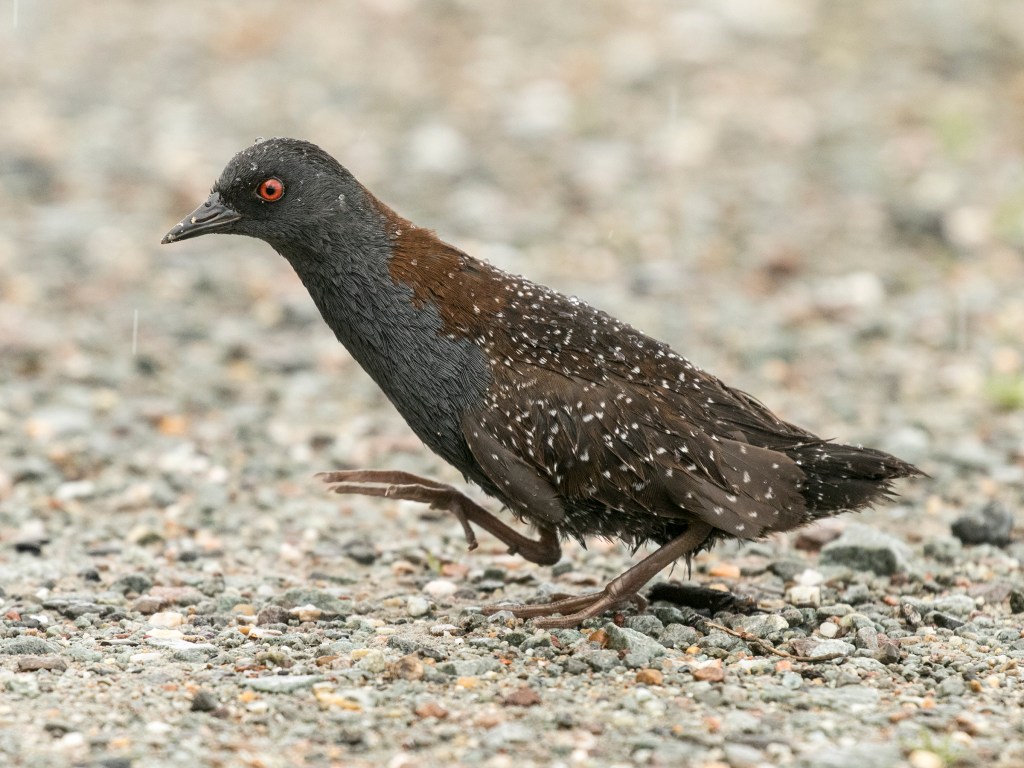
Black Rail– This denizen of coastal high marsh habitat is one of the most sought-after species for birders visiting the Upper Texas Coast. Far more often heard than seen, it is a resident of several of Houston Audubon’s coastal sanctuaries. It makes its home in a dynamic landscape where periodic disturbance from fire and surge coalesce to constantly change the character of the dunes, prairie, and marsh. This is a landscape humans also enjoy, but for us fire and storm surge represent costly insurance premiums and uncertainty when planning vacations. Development of coastal habitats, both in terms of physical development and interruption of natural processes through fire suppression, infrastructure such as roads or canals, introduction of non-native vegetation, and chemical contaminants, all conspire to degrade habitat that was once suitable for Black Rails. Physical displacement pushes them into fringes and corners that then makes the population more vulnerable to any number of events such as an oil spill or large fire. Houston Audubon frequently works with researchers to gain a better understanding of this species’ habitat requirements so that we can continue to make our Bolivar Peninsula sanctuaries favorable for this small and enigmatic rail.
For decades, we have been fighting to protect the species that rely on our sanctuaries and our city to survive. Join us in our efforts by getting involved today – by becoming a member, volunteering with us, attending a program, or advocating for birds in other ways.
- Learn how to participate in a Bird-Friendly Community https://houstonaudubon.org/bfc
- Sign up for our free Bird-Friendly Spaces program https://houstonaudubon.org/bfs
- Volunteer with us https://houstonaudubon.org/volunteer
- Become a member https://houstonaudubon.org/join
- Make a donation https://houstonaudubon.org/donate
- Visit our sanctuaries https://houstonaudubon.org/conservation/sanctuaries/
- Attend an upcoming event https://houstonaudubon.org/programs/
- Learn more at https://houstonaudubon.org/
 Houston AuduBlog