
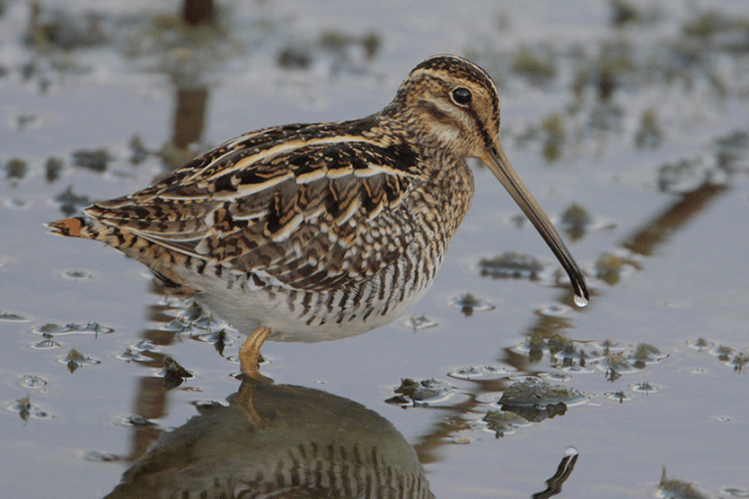
Wilson’s Snipe (Gallinago delicata)
Family: Scolopacidae

By Colleen McDonough, Houston Audubon Coastal Conservation Technician
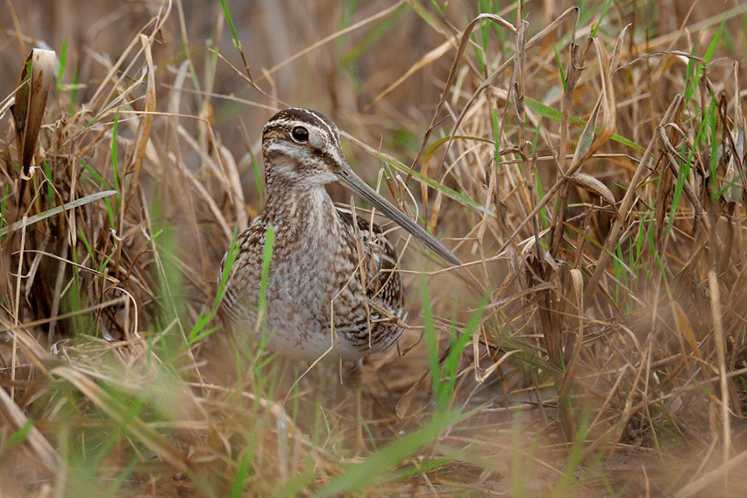
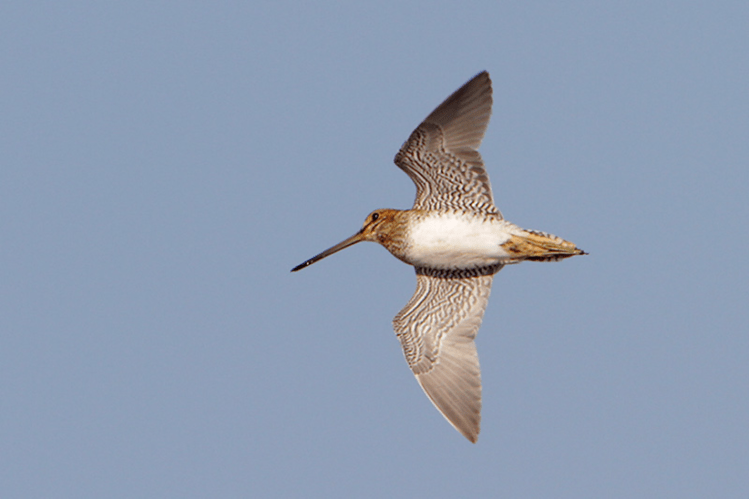
A bird you may not see until it suddenly bursts out of a grassy patch, Wilson’s Snipes are elusive shorebirds with intricate patterning that helps them blend in with their marshy surroundings. Their plump stature, brightly streaked plumage, and proportionately long bills help them stand out from most shorebirds. At first glance, a Wilson’s Snipe may look very similar to an American Woodcock but note the snipe’s relatively long legs and pale breast with barring down the sides when comparing the two species. The snipe’s flight style is also distinct; when flushed out of hiding, they fly in a rapid zig-zag pattern. The flight is accompanied by a sharp “scaipe!” call.
Wilson’s Snipes migrate to Canada, Alaska and the northernmost parts of the United States to breed, and winter throughout the southern half of the continent, including the entire state of Texas. Their cute, plump bodies are mostly made up of pectoral muscle tissue, which helps keep them aloft during their long migratory journeys and allows them to reach speeds of sixty miles an hour in flight!
Marshes and bogs are the preferred nesting habitats for snipes. Males perform a dazzling “winnowing” display to defend their territory and attract females. They fly in circles and suddenly dive, creating a loud whooping sound entirely from the vibration of their tail feathers! Females craft a nest out of woven grass in an area where they will be fully hidden while incubation. Chicks leave the nest within a few days of hatching and quickly learn from their parents how to find their own food. Snipes feed by probing their long bills into the mud to catch invertebrates like worms and insect larvae. They can move the tips of their bills independently, allowing them to slurp up their prey without ever removing their bill from the mud.
Wilson’s Snipes can be found in the Houston area in the spring as wintering birds travel north, and throughout the winter. Despite their secretive nature, you can still get a good view of them with some patience. Watch carefully along the grassy edges of marshes and flooded fields around sunrise and sunset when the birds are actively feeding. When I managed to get a glimpse of this bird out in the open for the first time, I was shocked by how beautifully its streaky plumage shimmered in the sunlight! Wilson’s Snipes are commonly seen in the wintertime around the marsh lookout areas at S.E. Gast Red Bay Sanctuary and Horseshoe Marsh Nature Trail.
Visit our Bird Gallery to read about other Texas birds!
 Houston AuduBlog