
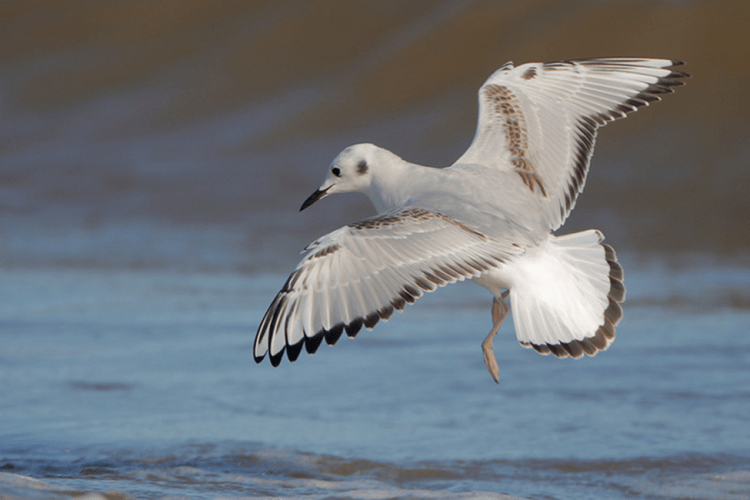
Bonaparte’s Gull (Chroicocephalus philadelphia)
Family: Laridae

By Robert Buckert, Houston Audubon Coastal Conservation Technician
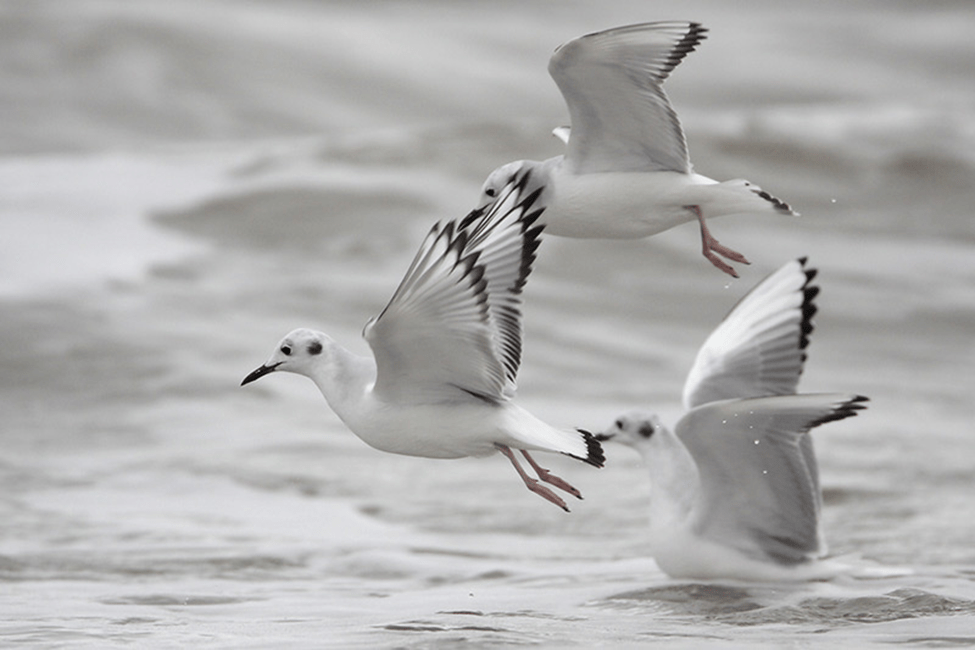
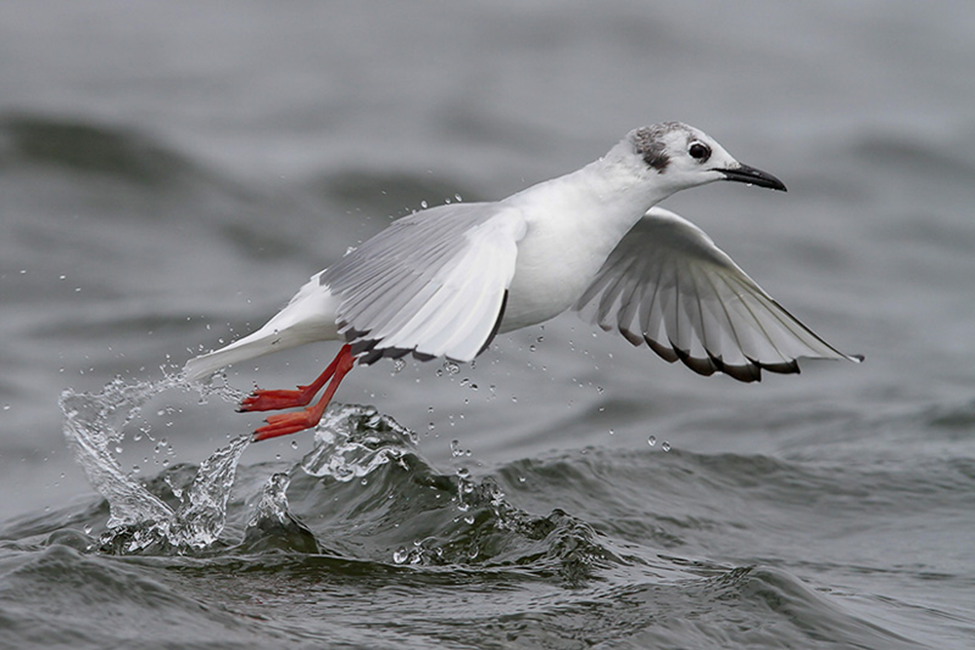
| Gulls are often regarded as one of the most difficult groups of birds for birders to identify. Across much of the country, there’s significant local diversity, often marked by subtle differences and complex plumage cycles. Add in often distant and suboptimal viewing conditions, and you’ve got a real bird-ID mess on your hands. As with most things, start small and start close. Identify the most common species and don’t tackle distant birds off the bat; instead, focus on closer views. Luckily, the Bonaparte’s Gull is quite distinct, especially as far as gulls go. A key identifying feature is the Bonaparte’s Gull’s thin black bill, especially compared to its closest relatives. They are also tiny – easily the smallest gull likely to be encountered across most of their range. While the Little Gull is smaller, it remains rare across North America. Bonaparte’s Gulls are so small and dainty that when they were first collected by Western science, they were classified as a tern! You may be wondering whether their namesake has any connection to the French emperor, and the answer would be yes! Charles Lucien Bonaparte was a nephew of Napoleon and an accomplished ornithologist who spent eight years in North America studying and classifying our avifauna. You will often see Bonaparte’s Gulls in flight, diving to the surface of the water to pluck prey or sitting on the water with their heads and wingtips held high. In flight, look for a bright, thin white wedge on the leading edge of the outer primaries, black wingtips, and a pale gray back. During spring and summer, adults sport crisp, all-black hoods—consistent with their genus name, Chroicocephalus, meaning ‘colored head’—and vibrant orange legs and feet. Immature birds are distinguished by a black band at the end of the tail and a black ‘M’ on the upper side of the wings. These gulls breed in wetlands across the boreal forest of Canada and Alaska, migrating across the entire continental US to extensive wintering grounds of the Pacific Coast, Atlantic Coast, Caribbean, and broadly across the south and central US. Remarkably, they can be found wintering in areas so distinct as the Great Lakes all the way out to where the Gulf Stream and Labrador Current interface. They stand “Bonapart” as the only gull that builds stick nests in trees (often spruce). After performing raucous, swooping courtship display flights, both sexes build the nest, incubate eggs, and raise young. Typical clutches consist of two to three eggs laid in loose colonies of 2–20 pairs near water. Following an incubation period of 22-25 days, the chicks hatch and leave the nest within 2-7 days to follow their parents to the nearest body of water. During migration and on wintering grounds, Bonaparte’s Gulls often congregate in impressive feeding flocks (similar to Franklin’s Gulls) and employ a conveyor-belt style of feeding, mesmerizing observers. Birders prioritize these groups as they frequently host rarer gulls of similar size and feeding style, like the Sabine’s Gull, Little Gull, Black-legged Kittiwake, and Ross’s Gull. Because they prefer food that is usually too small for other gulls, like small fish and invertebrates, you won’t find them feeding in parking lots or landfills. Don’t let me alienate them from their deep-seated, brutish gull nature; they may be small, but they hold their own as well-documented kleptoparasites, snatching prey from grebes, diving ducks, alcids, and shorebirds. And much like other gulls, they are widely omnivorous, feasting on everything from termites to salmon eggs during spawn. It is likely their population has increased over the last century, with an estimated 260,000 individuals worldwide. As always, the best time to protect a species is while it is still common. Bonaparte’s Gulls are currently vulnerable to the impacts of climate change as well as the pollution of their aquatic environments. |
Visit our Bird Gallery to read about other Texas birds!
 Houston AuduBlog
Quite informative and very well written. I’ve come across a number if articles written by Robert for various birding organizations, and always come away impressed with his ability to impart knowledge with a fun and easy to read technique. Keep up the good work Roberr!
LikeLike