
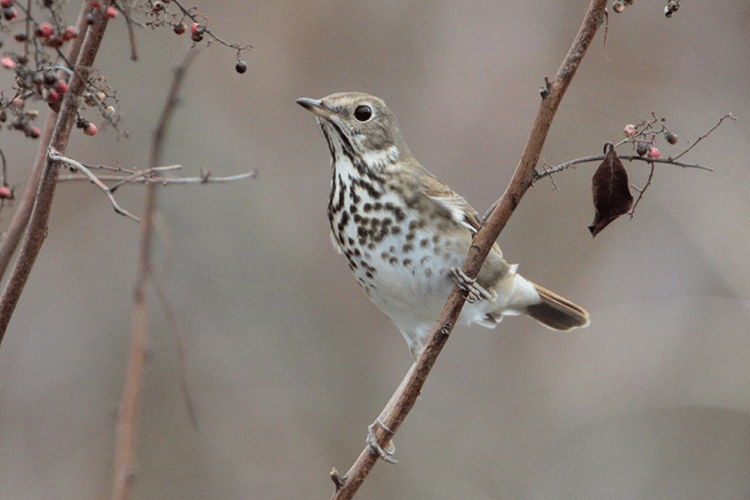
Hermit Thrush (Catharus guttatus)
Family: Turdidae

By Colleen McDonough, Houston Audubon Coastal Conservation Technician
| In the understory of forests across North America, the aptly named Hermit Thrush spends much of its time quietly foraging for insects in leaf litter. They are one of the most common thrush species seen in the wintertime across much of the United States. Hermit Thrushes have the typical plump “thrush-y” shape, with a brown back, reddish-tinged tail, and a white breast patterned with dark streaks and spots. To differentiate them from other brown-backed (Catharus) thrush species, such as a Wood Thrush, focus on the contrast in color between the back and tail feathers. Hermit Thrushes make “chup” calls when disturbed and sing a beautiful flutelike song with multiple phrases during the breeding season. A short-distance migrant, Hermit Thrushes breed across Canada, the northeastern United States, and the Rockies, and winter in the Southeast along the Pacific coast and in Mexico. They migrate earlier in spring and later in fall than the rest of the brown-backed thrushes. Females spend up to 10 days building their nests on or near the ground in conifer forests, using grass and pine needles for the outside and softer materials like willow catkins to line the inside. They lay four blue eggs, which they incubate for twelve days. Once the chicks have hatched, they fledge for another twelve days. A Hermit Thrush’s diet consists of insects, invertebrates, and berries from understory plants. Like other ground-foraging bird species, Hermit Thrushes rely on forests with quality native leaf litter. Fast-growing invasive plants like Chinese privet crowd the understory, preventing native tree species from getting enough sunlight to grow. Privet leaves provide less food and habitat for invertebrates and insects as they are very thin and decompose up to five times faster than leaves from native plant species like oaks. That’s why invasive plant removal efforts in our sanctuaries are crucial in making it easier for our local species like Hermit Thrushes to find food in the wintertime! Interested in how you can help? Join a Houston Audubon Sanctuary Workday where volunteers assist with trail maintenance, litter pick-up, gardening, and invasive species removal. Hermit Thrushes are known to winter in woodland habitats throughout Texas and can also be found migrating through the spring and fall seasons in the Houston area. When looking for them, scan the forest floor and understory for any movement, and listen for rustling leaves. If disturbed, they will often fly to a low branch and stare back at you while slowly thumping their tail. |
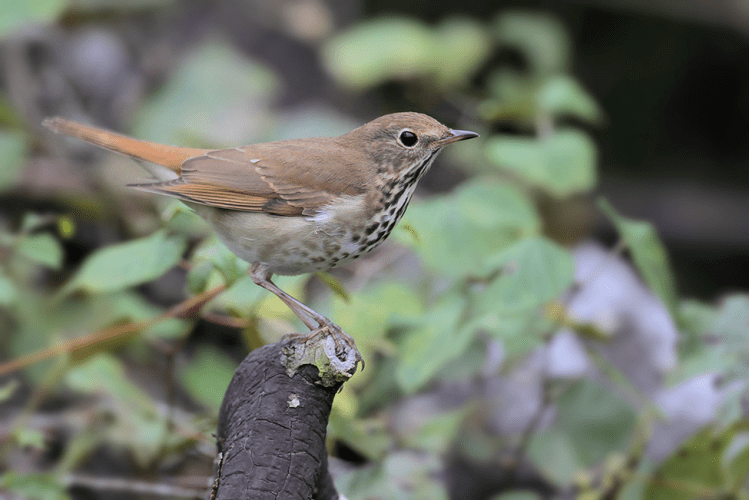
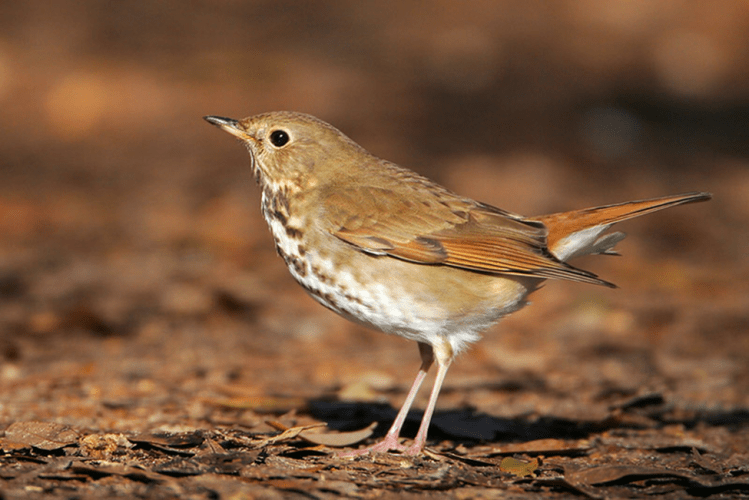
Visit our Bird Gallery to read about other Texas birds!
 Houston AuduBlog