
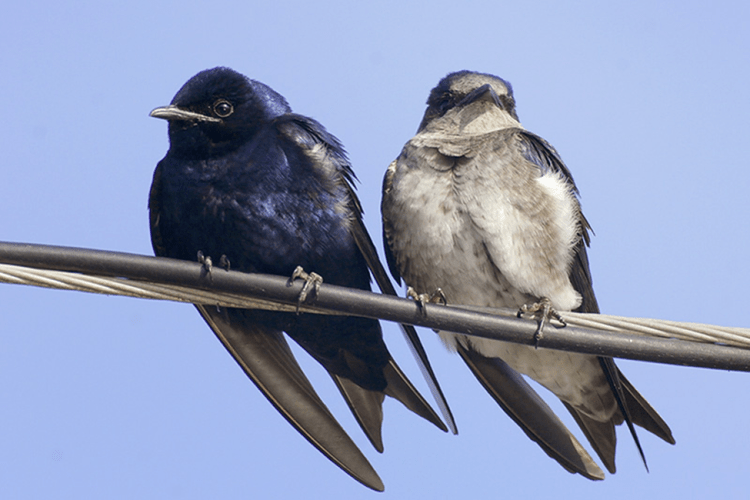
Purple Martin (Progne subis)
Family: Hirudinidae

By Spencer Poling, Houston Audubon Coastal Conservation Technician
As spring is beginning to arrive, so is one of our very first spring migrants, Purple Martins! These swallows are beloved to birders and non-birders alike. They can be found throughout most of the Eastern United States and sporadically throughout the West. They are the largest swallow found in North America, which makes their size a key identifying feature.
When identifying these birds, you can also take note of their iridescent blue-purple plumage. This iridescence, found in many other bird species, comes from the eumelanin pigment in their feathers. This melanin structure refracts light differently at varying angles, which makes their feathers appear to change color. Eumelanin is also critical in providing extra strength to the feathers, protecting them against wear. If you pay attention to the colors on martins and other birds, you may notice the blue, purple, and black appears in areas that need extra support, like the flight feathers!
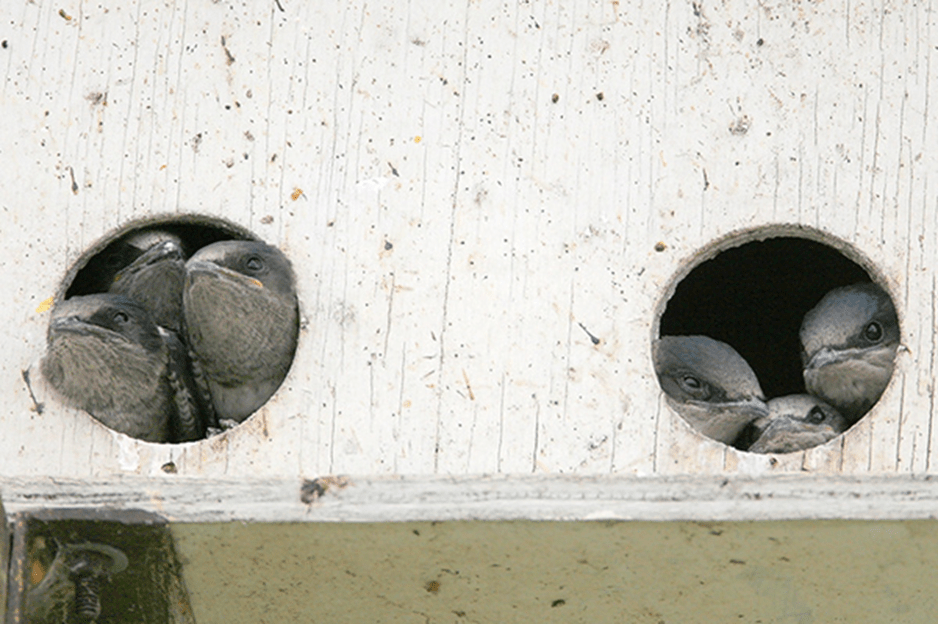
One of the best ways to watch these special swallows and support their population is by putting up your own Purple Martin house. With the eastern population of Purple Martins nesting almost entirely in martin houses, this has become a perfect symbiotic relationship between people and birds. We get to watch them close up as they raise chicks, and they get a safe, reliable place to nest each year. Plus, these houses are the gift that keeps on giving since adult martins are known to return to the same nesting sites each year. Over the years, adults will even familiarize themselves with their route, figuring out the safest time to migrate as early as possible.
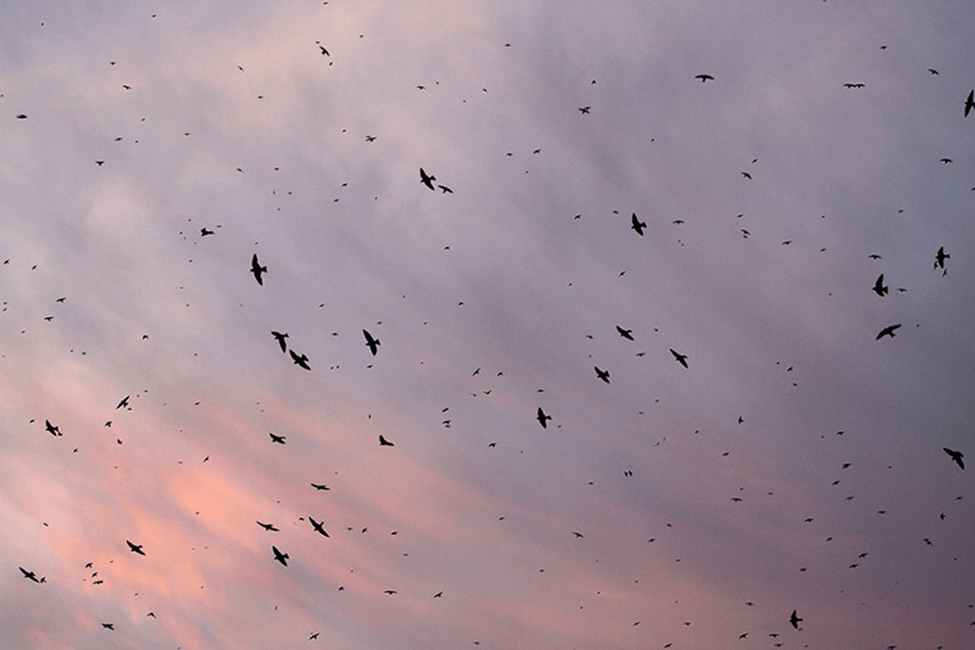
Now is the time to dust off your martin houses because the earliest migrants are already on the move! Although none have been reported on eBird yet in Houston, two martins have already been found in High Island on January 24th by our coastal conservation technician, Robert Buckert. Soon, you will be able to find Purple Martins in and around many of our bird sanctuaries, including Smith Oaks Bird Sanctuary, where we have Purple Martin houses. By late summer, you can see Purple Martins gathering in massive flocks to prepare for migration. In Houston, these roosts have had up to 500,000 birds! Be on the lookout for our Purple Martin Watch Parties this summer so you can witness this spectacle too.
Visit our Bird Gallery to read about other Texas birds!
 Houston AuduBlog