

By Spencer Poling, Houston Audubon Coastal Conservation Technician
It’s Invasive Species Awareness Week! So, I’d like to take this opportunity to highlight some of the important habitat restoration work we do that keeps our bird sanctuaries full of life.
But first, what is an invasive species, and why do they matter at our sanctuaries? Invasive species are species that are introduced to ecosystems where they are not native, outcompeting the species that do belong there. Ecosystems have a delicate balance of organisms that have co-evolved for millions of years. When a new species is introduced without that shared evolutionary history, it can easily disrupt that balance. Invasive species also lack the natural predators and competition that natives have, allowing them to spread aggressively.
This matters because our birds and plants have co-evolved to rely on each other. Migratory birds especially depend on our native plants for the proper nutrients to fuel the rest of their journeys. Native plants also support native insects. You may notice that native plants get eaten up by bugs, while ornamental, often invasive plants do not. That is partly because our insects have not adapted to consume non-native plants as food and tend to ignore them. The big picture is this: when invasive plants take over, they leave less room for our native plants. Fewer native plants mean fewer berries and insects, which ultimately means less food for migratory birds. Our sanctuaries serve as critical stopover sites for these birds, so having enough food for them to eat is necessary for them to continue their migration. Without this balance, the birding wonder of High Island would not exist!
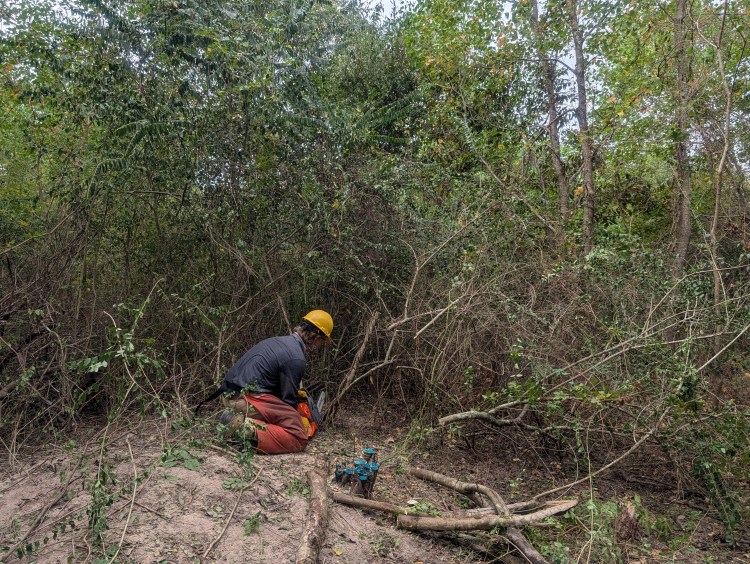
From October to December, our main objective as coastal conservation technicians was to restore this balance in a section of our High Island sanctuaries. The primary invasive species we manage on High Island are Chinese privet and Chinese tallow. Both species can take over entire areas by forming dense tangles of foliage that crowd out native plants. Each year, we target the sections of our sanctuaries where the overgrowth is more severe and focus our removal efforts there. Last Fall, we concentrated on Smith Oaks, specifically the woods west of the Levee Trail that stretches from Marker 35 to the canopy walkway. Our task—find, cut, and kill every living privet and tallow plant in the area.
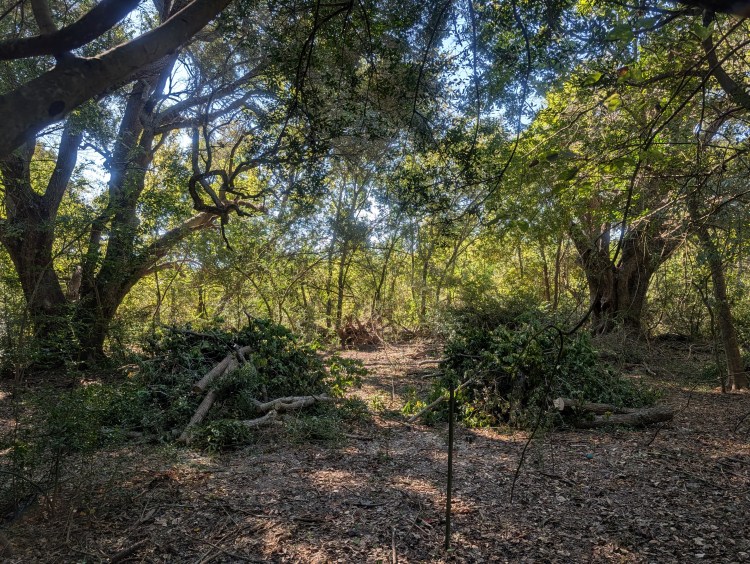
Removing privet and tallow is a long and arduous process. For weeks, we spent most days—often eight hours at a time—cutting and removing invasives in the heat, humidity, and countless mosquitoes. Through that effort, we restored 5.7 acres that are now free of our target invasive species! One of the most motivating parts of the process was seeing the immediate effects of our work in front of us, like the birds coming out to enjoy the newly opened areas. We also created new habitat by making neat brush piles from cut material. Within days, Winter Wrens were already taking advantage of the new shelter!
Seeing this area come to back life makes the upcoming spring migration even more exciting. As you walk this section of our trails, notice how different the birding is compared to other areas affected by invasive plants. Then consider how you can bring that mindset into your own backyard by prioritizing planting native plants over non-native ornamental plants. You are part of your local ecosystem, and improving native habitat where you live will bring more life to your area as well, whether it be migrating warblers, beautiful butterflies, or nesting bluebirds.
 Houston AuduBlog