
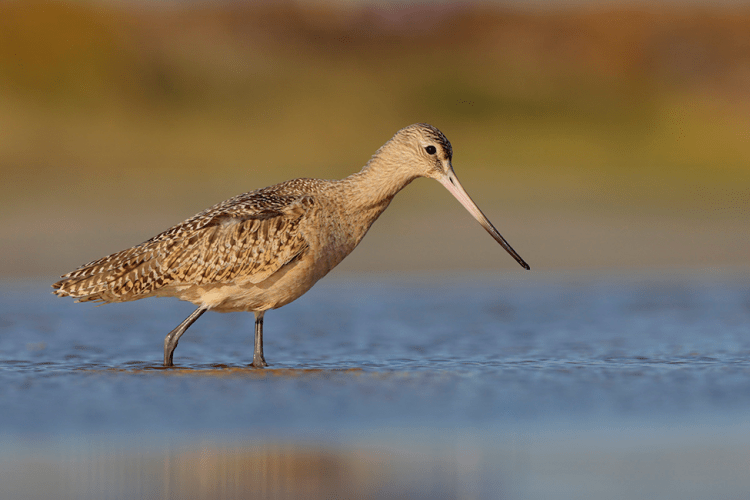
Marbled Godwit (Limosa fedoa)
Family: Scolopacidae

By Spencer Poling, Houston Audubon Coastal Conservation Technician
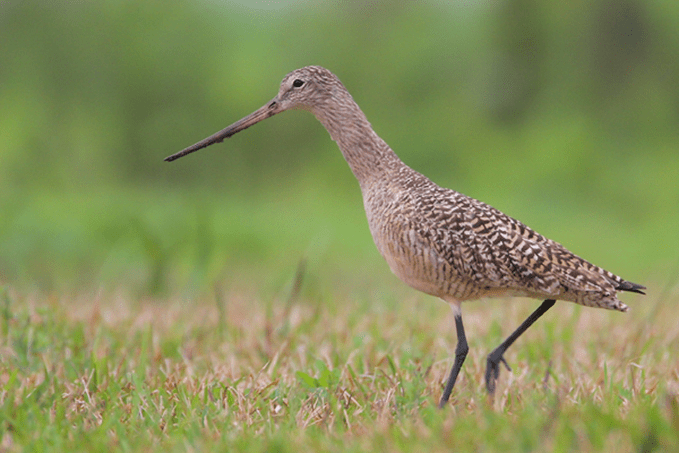
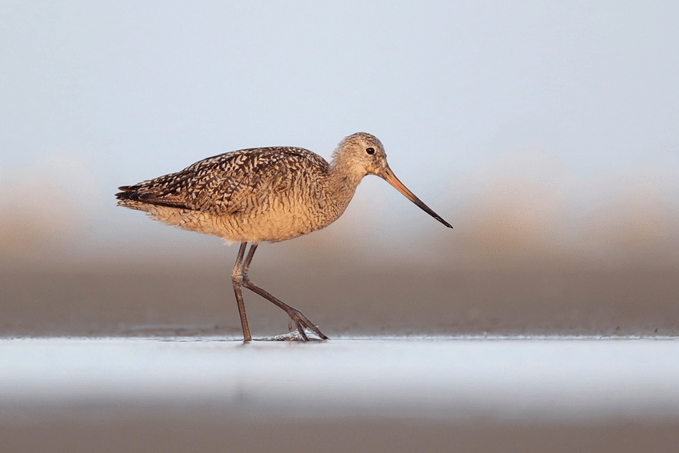
This week’s Beak of the Week is devoted to one of my personal favorite shorebirds, the Marbled Godwit! This month is the time to see your favorite wintering shorebirds before many of them leave in April, so this would be my recommended target for your next birding trip. Marbled Godwits are unmistakable, with their beautiful golden-brown plumage and their namesake marbled pattern.
If their plumage is not the first feature you notice, it’s likely their large size and long bill that make them stand out from many other shorebirds. Size is often a useful reference for identifying shorebirds. Marbled Godwits are between the size of a Willet and a Long-billed Curlew, which is helpful because you will often find all three of them near each other in deeper water. All three species have longer legs and bills, which allow them to get into deeper waters than other shorebirds, which can mean less competition and better access to food. Unlike Willets and Long-billed Curlews, Marbled Godwits’ bills are slightly upturned, which contributes to their marvelous look!
Once spring is in full swing, the Marbled Godwits will leave Texas and head up to the northern Great Plains, where they breed. There, they can primarily be found in shortgrass prairies adjacent to wetlands. Once they reach their breeding grounds, you can witness them actively circling their large territories in flight as their calls pour throughout the landscape. It’s quite a sight and adds to the spectacular dawn chorus alongside the meadowlarks, sparrows, and buntings.
Once they’ve secured their territory and found a mate, they build a nest on the ground and lay one clutch of 2-5 eggs per year. Although males and females do not migrate or spend the winter together, most pairs return to the same site each spring to repeat the cycle of displaying and nesting.
In the winter, Marbled Godwits can be found foraging along coastal mudflats throughout the United States coasts. One of their important wintering sites is Bolivar Flats Shorebird Sanctuary, which is a very reliable place to spot them. Habitat loss is the primary contributor of species population declines across the world, and it affects Marbled Godwits too. They have lost a lot of their breeding habitat due to agricultural development, and much of their wintering habitat due to coastal development, leading to them being classified as vulnerable by the IUCN. This is one of the many reasons Bolivar Flats is so special and why protecting this habitat is crucial for these birds!
Visit our Bird Gallery to read about other Texas birds!
 Houston AuduBlog