
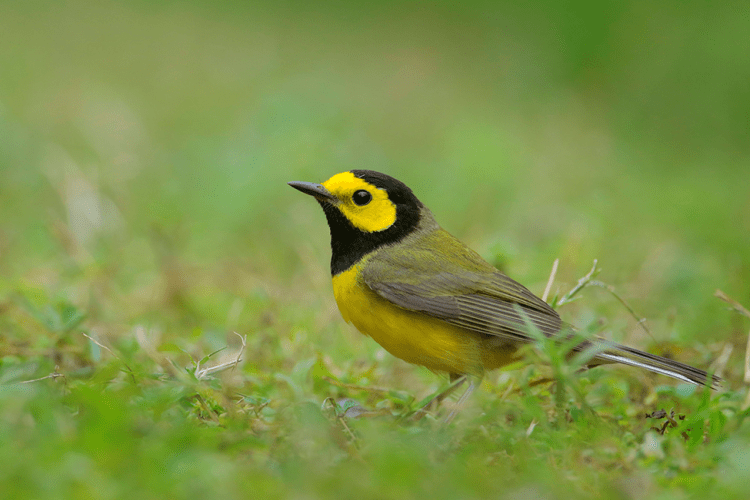
Hooded Warbler (Setophaga citrina)
Family: Parulidae

By Spencer Poling, Houston Audubon Coastal Conservation Technician
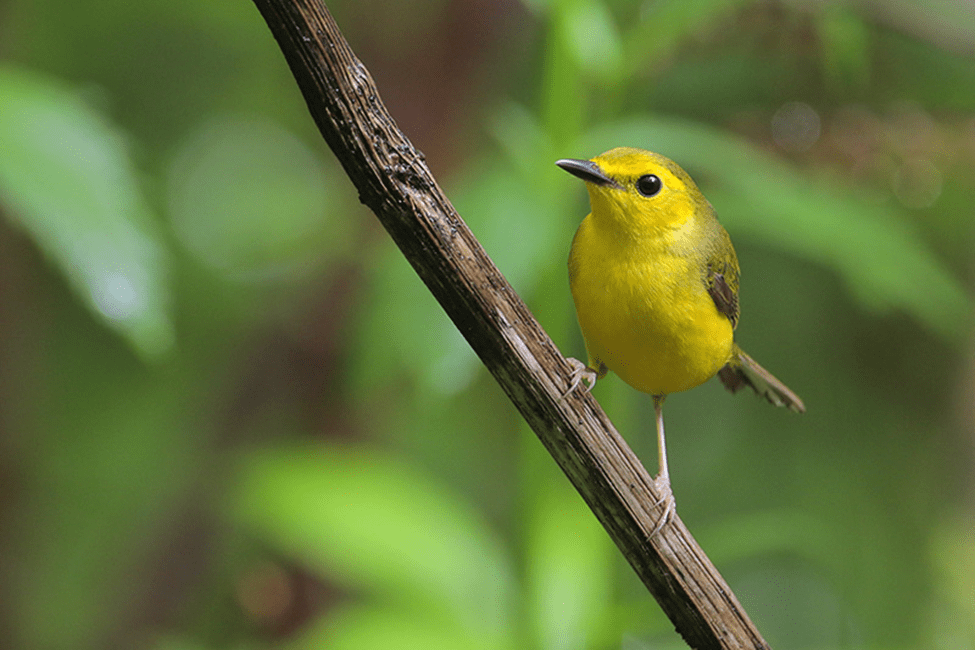
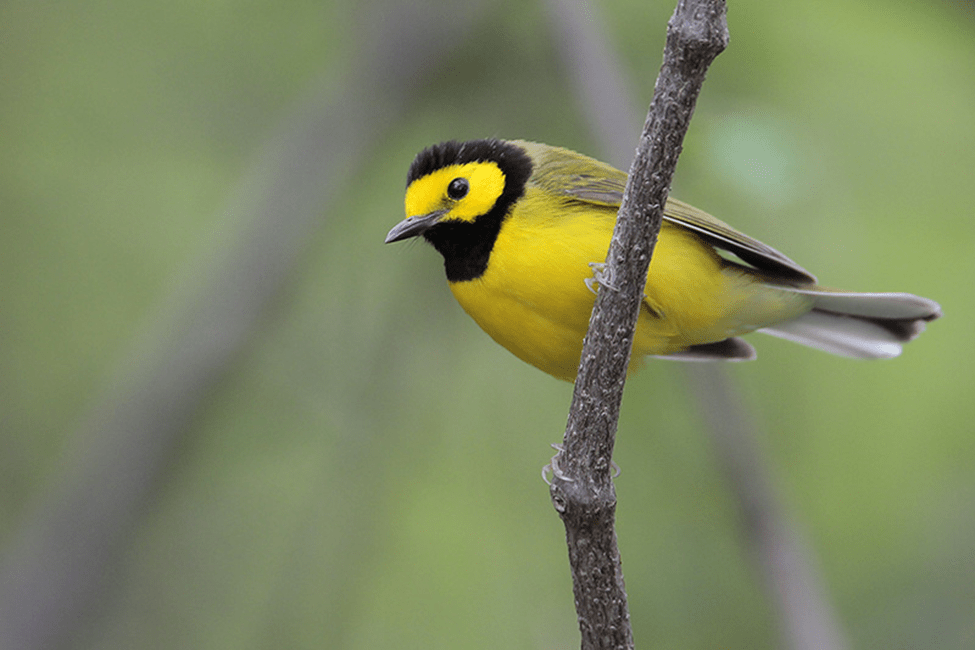
The warblers are finally here! The last couple of weeks have been full of excitement and anticipation as the first warblers are starting to trickle in, leading the charge of millions that will be flooding through the country next month. This week, I want to highlight the brave Hooded Warblers, who are a part of this first wave of migrants. Male Hooded Warblers are hard to mistake, sporting a balaclava-like black hood and throat. However, females have a hood that can vary on a spectrum from just as full as a male, to nearly absent. With an absent hood, they may look very plain, with a yellow face and breast, and olive-green back and crown. Listen for their song in the spring and summer, which sounds like “wheeta, wheeta, wheatio!”
Like the other early-migrating warblers, Hooded Warblers don’t travel as far to breed. Their winter range is relatively close to Texas, allowing them to pass through first and claim breeding territory up north before other species arrive. Their breeding range is wide, spanning the mature forest understories throughout much of the southern and eastern United States. They aren’t picky about where they nest and will use both native and invasive plants. This presents a challenge: since Hooded Warblers are protected under the Migratory Bird Treaty Act, any invasive shrubs hosting their nests cannot be removed until the breeding season concludes.
If you’ve ever noticed a Hooded Warbler’s white outer tail feathers, they actually serve a unique purpose, helping them hunt for insects, which make up most of their diet. They will flick their tail feathers out, creating a flash of white that startles nearby insects, causing them to fly out into the open. Just as you can identify a Palm Warbler by its tail bobbing, you can easily spot a Hooded Warbler by its tail flashing.
Hooded Warblers can be found in any forested Houston Audubon sanctuary in the spring and fall. In the summer, they have been reported in Houston Audubon’s northernmost sanctuary, Winters Bayou, so you can potentially find them breeding there. In any of these seasons, look out for buggy areas with a dense understory, and you may find them flashing their white tails or singing their iconic song.
Visit our Bird Gallery to read about other Texas birds!
 Houston AuduBlog