Great-tailed Grackle (Quiscalus mexicanus) Family: Icteridae (blackbirds, orioles, and allies) By Rachel Myers, Houston Audubon Coastal Conservation Technician The Great-tailed Grackle is North America’s largest grackle and a common permanent resident throughout Texas. They can be found just about anywhere in their range and birders and non birders alike have observed flocks of these loud […]
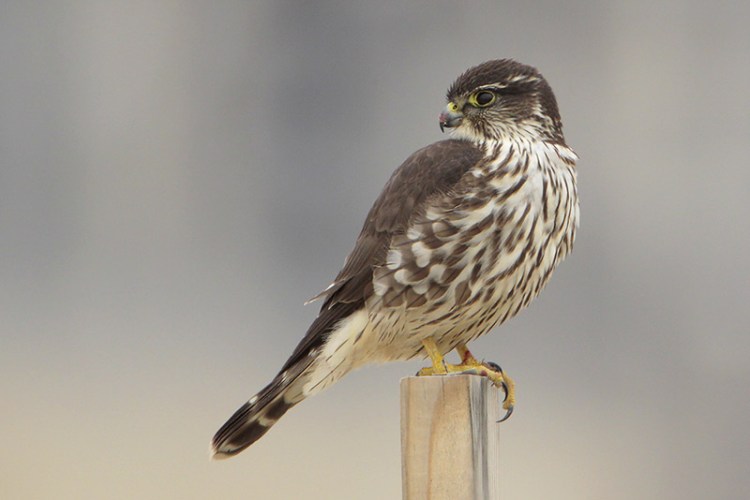
Merlin (Falco columbaris) Family: Falconidae By Grace Yaros, Houston Audubon Coastal Conservation Technician Merlins are small falcons that can be found throughout much of both the eastern and western hemispheres. Their name comes from the Old French name for this bird, esmerillon. They are slightly larger than American Kestrels, and are gray/brown above and white […]
By Rachel Myers, Houston Audubon Coastal Conservation Specialist This week is National Invasive Species Awareness Week, an international event created by the North American Invasive Species Management Association (NAISMA). This event is intended to raise awareness about invasive species, the threat that they pose, and what can be done to prevent their spread. Invasive species […]
Royal Tern (Thalasseus maximus) Family: Laridae (Gulls and Terns) By Rachel Myers, Houston Audubon Coastal Conservation Technician The Royal Tern is a year-round resident that nests on the Upper Texas Coast. They are social birds, and often gather on undisturbed beaches and nest in dense colonies. They are easy to distinguish in the breeding and […]
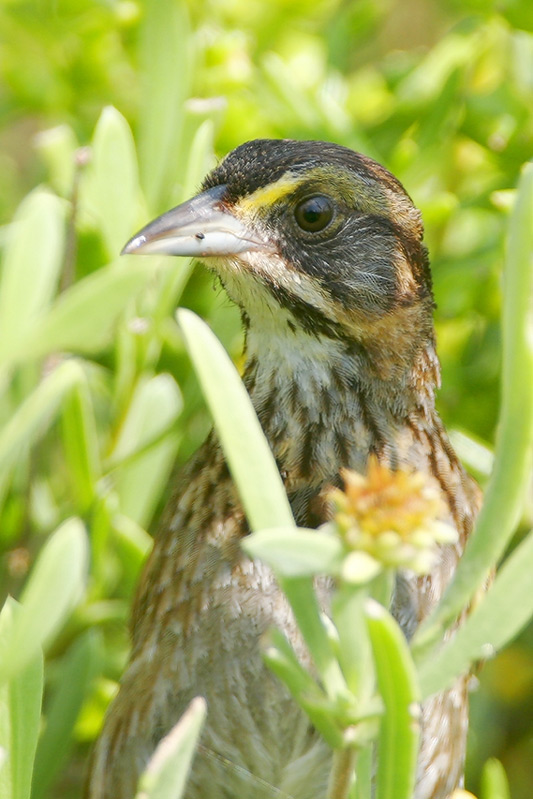
Seaside Sparrow (Ammospiza maritima) Family: Passerellidae By Grace Yaros, Houston Audubon Coastal Conservation Technician Seaside Sparrows are rather large, long-billed sparrows that are found in tidal saltwater marshes and brackish marshes along the Atlantic and Gulf coasts. Populations that breed from New Hampshire and Maine south through Virginia are migratory or partially migratory, while populations […]
By Mary Anne Morris, Houston Audubon Education Director The winds from the south were gusting at about 15 mph. The water was choppy and the ground was wet. Despite the forecast and the gloom of clouds the atmosphere at Super Bird 58 was hot!! Hot donuts and eager birders ready to face off in the […]
Orange-crowned Warbler (Leiothlypis celata) Family: Parulidae (Wood-Warblers) By Rachel Myers, Houston Audubon Coastal Conservation Technician The Orange-crowned Warbler is a rather inconspicuous species of warbler common to the upper Texas coast during the winter. They can be seen from October through April and are absent during the summer. Due to their rather drab coloring and […]
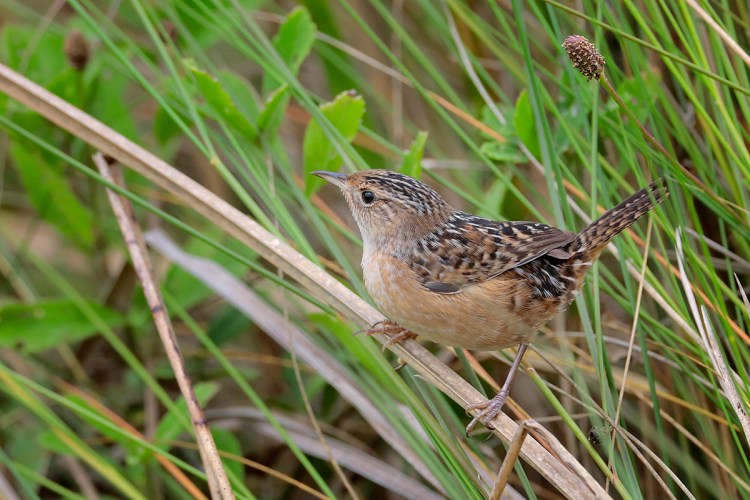
Sedge Wren (Cistothorus stellaris) Family: Troglodytidae By Grace Yaros, Houston Audubon Coastal Conservation Technician Sedge Wrens are small, well-camouflaged wrens. They are brown all over, with a paler throat and belly and dark streaking on the wings, back, and crown. They can be found in wet habitats with dense grasses and sedges, including coastal marshes […]
Gray Catbird (Dumetella carolinensis) Family: Mimidae (Mockingbirds and Thrashers) By Rachel Myers, Houston Audubon Coastal Conservation Technician Related to mockingbirds and thrashers, the Gray Catbird is a common bird you can see throughout the year on the Upper Texas Coast. They are most common during spring and fall migration, but small numbers overwinter in the […]
By Zoe Gapayao, Houston Audubon Community Outreach Manager Just outside the 610 Loop in southwest Houston, you’ll find the international community of Gulfton. About 58% of Gulfton residents were born outside of the United States, 75% of whom were born in Latin America. In the middle of the neighborhood, families regularly gather at Burnett Bayland […]