American Goldfinch (Spinus tristis) Family: Fringillidae By Carrie Chapin, Houston Audubon Conservation Technician The American Goldfinch is a relatively common yet cute passerine whose flocks use many habitats, including neighborhoods, feeders, forests, fields, and edge habitats. Their range encompasses all of the contiguous U.S., though they do not breed in the southernmost states. This species […]
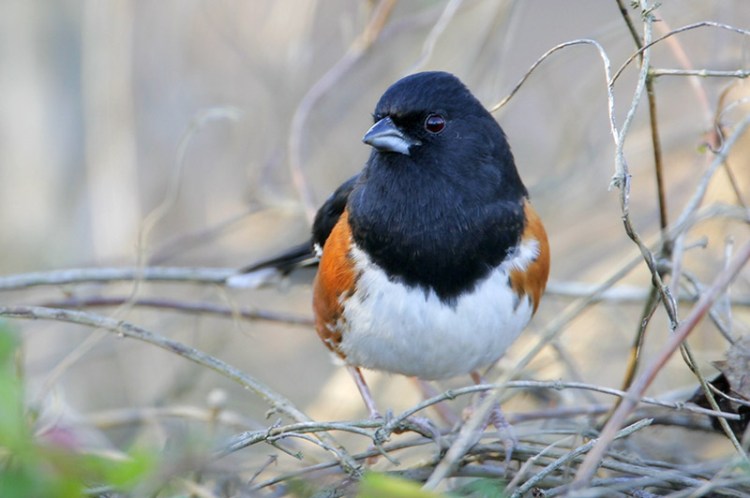
Eastern Towhee (Pipilo erythrophthalmus) Family: Passerellidae By Jon Piasecki, Houston Audubon Conservation Technician Eastern Towhees are a species of sparrow typically found throughout the eastern half of the United States. Their physical appearance is much different from many other “new world sparrows” that you may know. Adult males have a black head and back, with […]
Brown Creeper (Certhia americana) Family: Certhiidae By Carrie Chapin, Houston Audubon Conservation Technician The Brown Creeper is a unique species as the only North American member of the tree creeper family. Brown Creepers are uncommon in southeastern Texas and can be found foraging in dead and dying trees, with a preference for conifers. These birds […]
American Wigeon (Mareca americana) Family: Anatidae By Jon Piasecki, Houston Audubon Conservation Technician The American Wigeon is a species of dabbling duck that can be found throughout the United States on ponds, lakes, and marshes. These birds breed in the northwestern U.S., the western half of Canada, and Alaska. They can be seen migrating during […]
Pomarine Jaeger (Stercorarius pomarinus) Family: Stercorariidae By Carrie Chapin, Houston Audubon Conservation Technician The Pomarine Jaeger is a rare and fascinating seabird, the largest of the three jaegers. Field identification of jaegers can be difficult due to the high variation in their populations; however, Pomarine Jaegers are the most barrel-chested of the jaegers and have […]
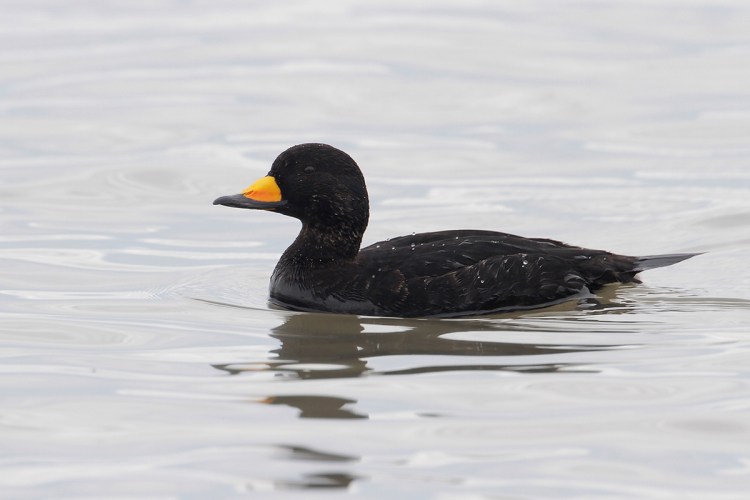
Black Scoter (Melanitta nigra) Family: Anatidae The Black Scoter is a medium-sized duck, but is the smallest species of the sea-dwelling scoters. Both male and females have a small and straight bill, although the male’s bill is also adorned with a bright yellow knob. These ducks occasionally occur in mixed flocks with other scoter species. […]
Common Gallinule (Gallinula galeata) Family: Rallidae By Will McDaniel, past Houston Audubon Conservation Technician The Common Gallinule is a species of rail which inhabits the Gulf Coast year-round, with its range extending to large parts of Central and South America. It can be recognized by its dark bluish-black plumage with wide yellow feet, a flash […]
American White Pelican (Pelecanus erythrorhynchos) Family: Pelecanidae By Carrie Chapin, Houston Audubon Conservation Technician One of the largest birds in North America, the American White Pelican is a sight to behold. With the second longest wingspan of birds in the U.S. after the California Condor, and its fascinating bill, they are difficult to miss. American […]
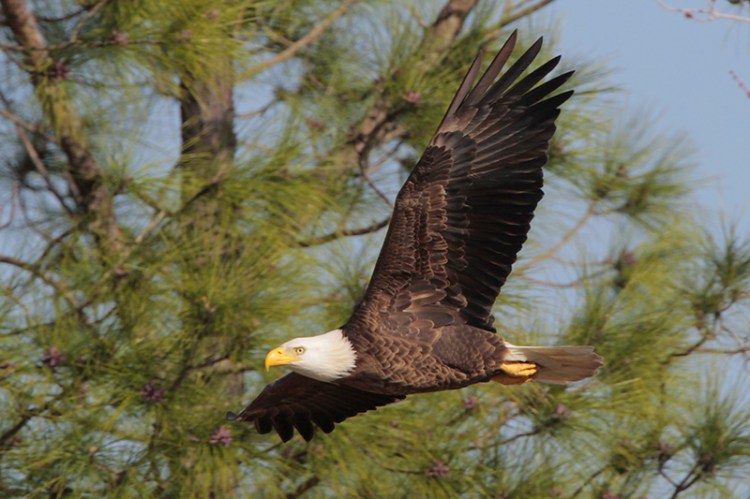
Bald Eagle (Haliaeetus leucocephalus) Family: Accipitridae By Jon Piasecki, Houston Audubon Conservation Technician Often recognized as a national symbol of the United States, the Bald Eagle has been the country’s national bird since 1782. Known for their bright white heads and tails and yellow bills, Bald Eagles can be found throughout most of North America. […]
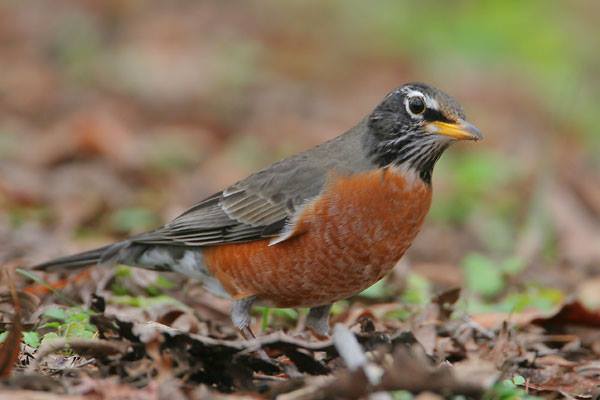
American Robin (Turdus migratorius) Family: Turdidae The American Robin is a large gray-brown songbird with warm, brick red underparts, darker head, and broken, white eye ring. Robins are the largest of North American thrushes and they offer a good chance to learn the shape of most thrushes. They have a large, round body, long legs, […]






 Houston AuduBlog