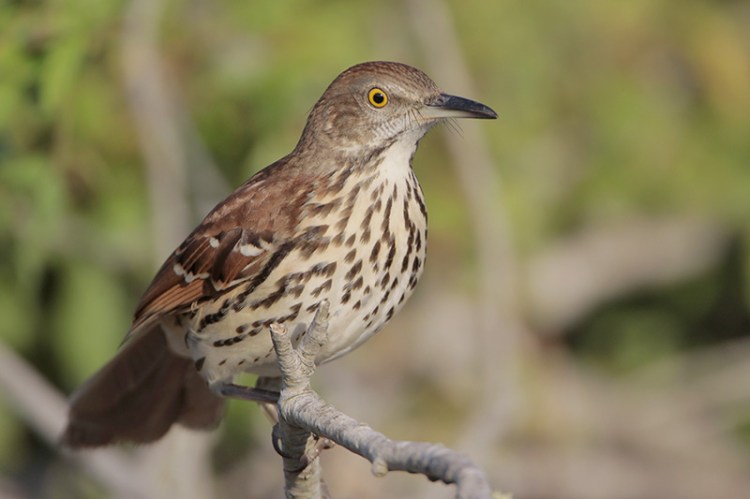
Brown Thrasher (Toxostoma rufum) Family: Mimidae By Carrie Chapin, Houston Audubon Conservation Technician The songs and calls of the brown thrasher are some of the most delightful and confusing sounds to be heard in forests and hedgerows. The brown thrasher is a medium-sized, rusty-brown-backed songbird with black streaks on the breast and flanks, a black […]
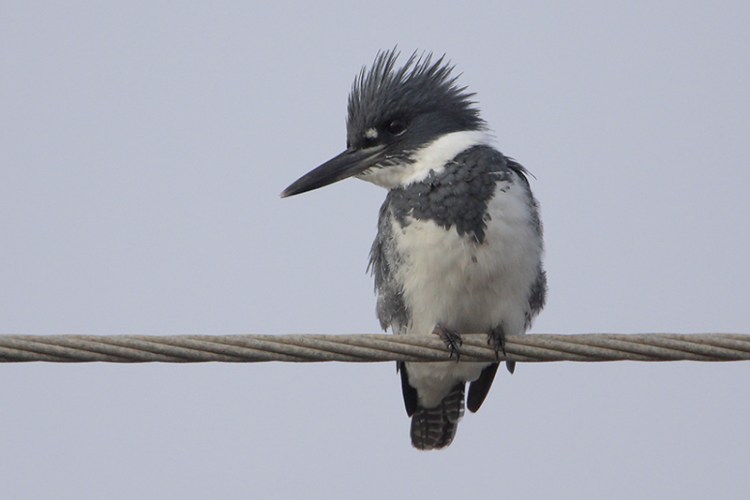
Belted Kingfisher (Megaceryle alcyon) Family: Alceninidae Belted Kingfishers can often be seen foraging along water bodies throughout North America. They are resident in the the continental United States, expanding their range into Canada in the summer to breed. They are also known to winter in Mexico and Central America, where they overlap with the more […]
Pine Warbler (Setophaga pinus) Family: Parulidae Pine Warblers are yellowish birds with olive backs, whitish bellies, and two prominent white wingbars on gray wings. Adult males are the brightest; females and immatures are more subdued and can even appear gray-brown. No bird is more aptly named: it nests exclusively in pine trees, spends much of […]
Red-bellied Woodpecker (Melanerpes carolinus) Family: Picidae The Red-bellied Woodpecker’s name is a bit misleading as the red patch on its lower abdomen is difficult to see in the field. This sleek, medium-sized woodpecker has a black-and-white barred back, red nape, and white patches speckled with black on its rump and tail feathers. The red nape […]
Blue-gray Gnatcatcher (Polioptila caerulea) Family: Polioptilidae The Blue-gray Gnatcatcher is a tiny bird that can be easily identified by its buzz-like ‘pzzz’ call that it makes as it energetically flits about and hovers in treetops, pursuing insects to eat. As its name indicates, its body is of a blue-gray color on top and paler gray […]
Caspian Tern (Hydroprogne caspia) Family: Laridae The Caspian Tern is the world’s largest tern at up to 2 feet in length and topping out at an impressive 5 foot wingspan, slightly larger than the Royal Tern, which it superficially resembles. Similar to other terns, the Caspian Tern sports a black hood or skullcap, white plumage […]
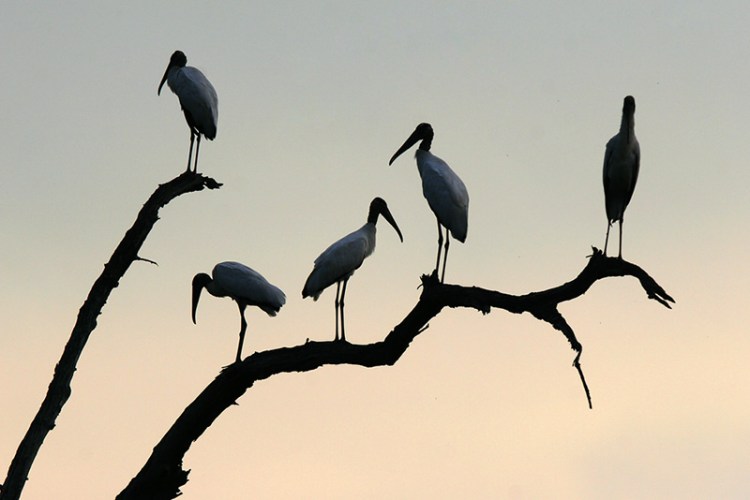
Wood Stork (Mycteria americana) Family: Ciconiidae Wood Storks are large wading birds with long legs, a long curved bill, and a bald head and neck. They are mostly white with black flight feathers. Wood storks tower over most other wading birds standing over 3 feet tall. They often soar high in the sky, sometimes riding […]
Mourning Dove (Zenaida macroura) Family: Columbidae Mourning Doves are small gray-brown doves with black spots on the wings and a long, thin tail. In flight they show their long tapered tail with white tips. Mourning Doves get their name from their soft, drawn-out coos which sound like laments. Inexperienced listeners can mistake their coo-ah, coo, […]
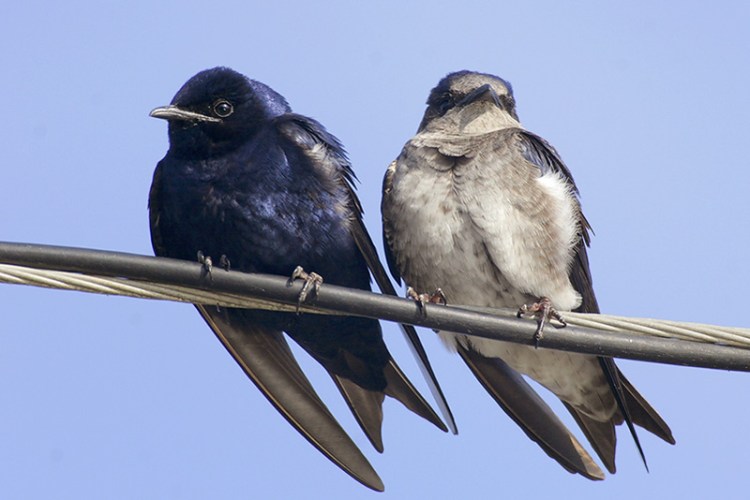
Purple Martin (Progne subis) Family: Hirundinidae Purple Martins are the largest member of the swallow family in North America. Adult males are iridescent, dark blue-purple overall with brown-black wings and tail. Females and immatures have dusky throats, light bellies, and dull purplish-black upperparts. Purple martins have undergone a complete tradition shift in their nesting behavior. […]
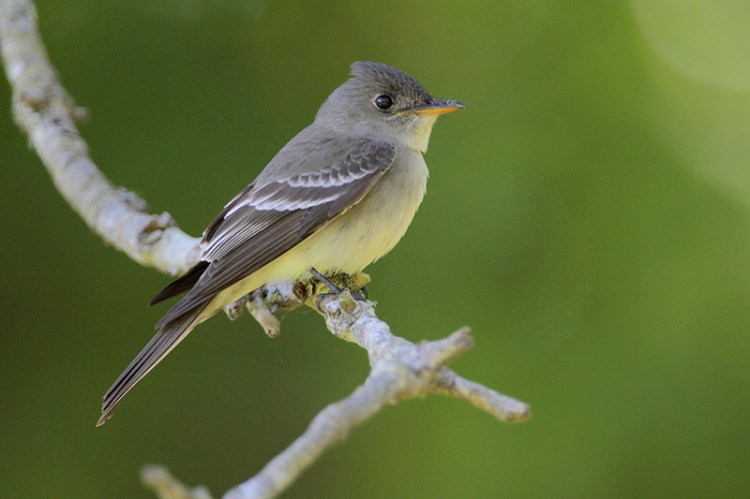
Eastern Wood-Pewee (Contopus virens) Family: Tyrannidae Eastern Wood-Pewees are a medium-sized grayish flycatcher with long wings and tail, short legs, two wing bars, and a peaked crown giving the head a triangular shape. From the front, you can see the sides of the breast are dusky gray with a lighter throat and belly, making it […]




 Houston AuduBlog