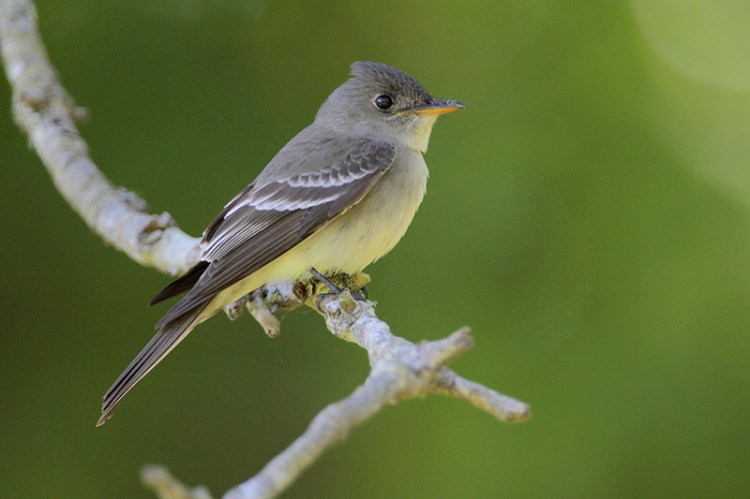
Eastern Wood-Pewee (Contopus virens) Family: Tyrannidae Eastern Wood-Pewees are a medium-sized grayish flycatcher with long wings and tail, short legs, two wing bars, and a peaked crown giving the head a triangular shape. From the front, you can see the sides of the breast are dusky gray with a lighter throat and belly, making it […]
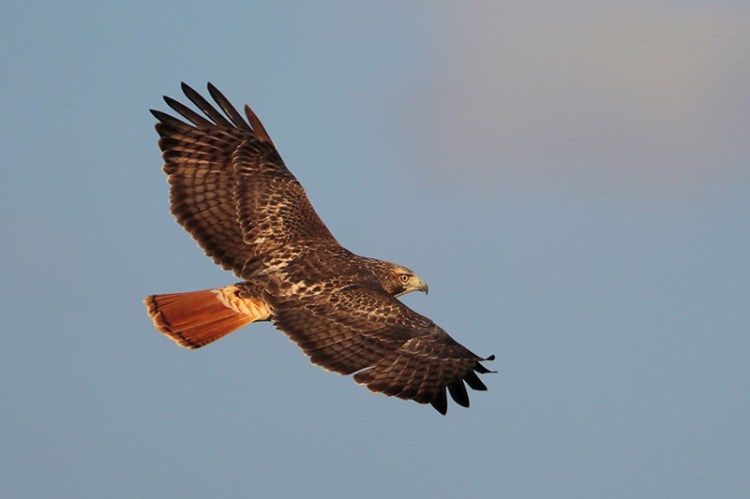
Red-tailed Hawk (Buteo jamaicensis) Family: Accipitridae Red-tailed Hawks are the most familiar and common large hawk in North America. Like other members of the genus Buteo, they have broad, rounded wings and a short, wide tail. Most Red-tailed Hawks are rich brown above and pale underneath with a streaked belly. The most defining ID characteristic […]
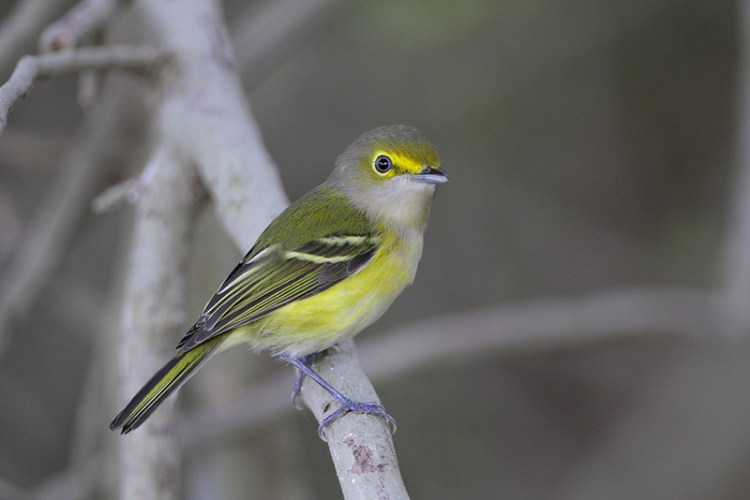
White-eyed Vireo (Vireo griseus) Family: Vireonidae The White-eyed Vireo is a migratory songbird common throughout much of the eastern United States. Like other vireos, White-eyed Vireos are relatively stocky birds with a thick, straight, and slightly hooked bill. The White-eyed Vireo has a gray head, a pale throat, yellow flanks, an olive back, and two […]
Summer Tanager (Piranga rubra) Family: Cardinalidae Summer Tanagers are medium-sized, chunky songbirds with big bodies and large heads. They have large, thick, blunt-tipped bills. The strawberry-colored male Summer Tanager is the only completely red bird in North America. Adult females have olive-green upperparts and mustard yellow underparts. First spring males may have varying patches of […]
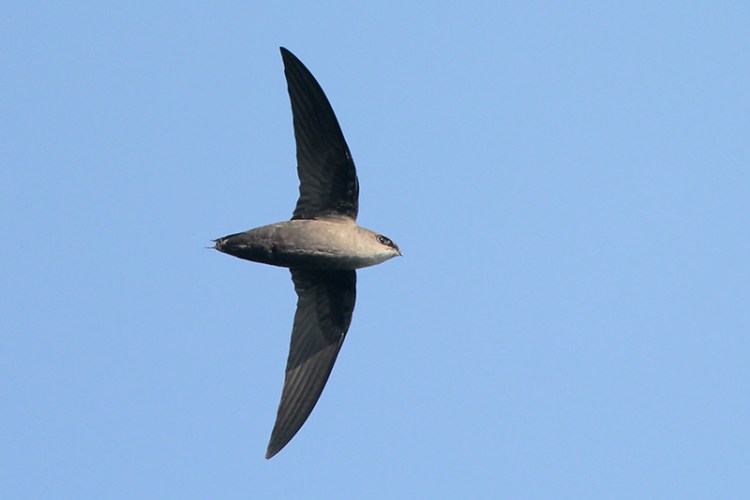
Chimney Swift (Chaetura pelagica) Family: Apodidae Chimney Swifts are small, grey-brown birds found in Houston from March to October. They are best identified by their silhouette- slender bodies, round heads, long, narrow, curved wings and short, tapered tails. Their wide bills are so short that they are often hard to see. They have a distinctive […]
Black-bellied Whistling-Duck (Dendrocygna autumnalis) Family: Anatidae The Black-bellied Whistling-Duck is a large duck with a long neck, long legs, and short tail. They have a chestnut breast and black belly with a bright pink bill and legs. Their face is gray and has a broad, white wing stipe that is visible in flight. True to […]
Eastern Kingbird (Tyrannus tyrannus) Family: Tyrannidae The Eastern Kingbird is a broad shouldered and big-headed songbird with black head, white underparts and black tail with a white tip. This bird belongs to the one of the oldest and most diverse families of birds, the tyrant flycatchers. Eastern Kingbirds, like many other flycatchers are insectivores meaning […]
Black-and-white Warbler (Mniotilta varia) Family: Parulidae The Black-and-white Warbler is a medium-sized warbler with a long, slightly downcurved bill. They are boldly striped in black and white and their black wings have two wide, white wing bars. The males of this species have more pronounced black streaking on their underparts and cheeks. Females and immatures […]
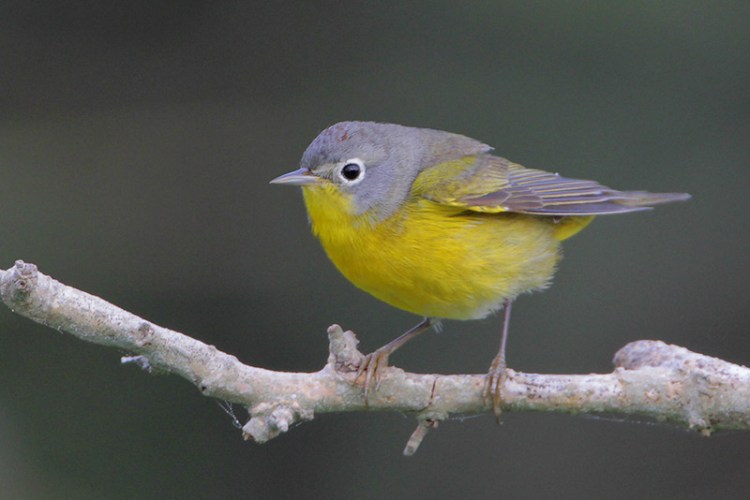
Nashville Warbler (Leiothlypis ruficapilla) Family: Parulidae By Ryan McGinty, Conservation Technician, Houston Audubon The Nashville Warbler is a small bird with a yellow underside, olive back, and gray head. They also have a white eye-ring and a little spot of chestnut on their crown, although this is often not visible. These birds move between branches, […]
Swainson’s Warbler (Limnothlypis swainsonii) Family: Parulidae By Ryan McGinty, Conservation Technician, Houston Audubon What one might think of as a boring, brown warbler, the Swainson’s Warbler is a unique bird with many interesting behaviors. Ranging from olive to chestnut, these birds have a dark back, cap, and eyeline to contrast their lighter underside and supercilium. […]