Ruby-throated Hummingbird (Archilochus colubris) Family: Trochilidae Did you know that Ruby-throated Hummingbirds are able to fly in all 6 directions with wing beats of 53 times per a second? Ruby-throated Hummingbirds are bright emerald or golden-green on the back and crown with gray-white underparts. Males have a brilliant iridescent red throat while females and immatures […]
Chestnut-sided Warbler (Setophaga pensylvanica) Family: Parulidae The Chestnut-sided Warbler migrates through eastern Texas in spring and the boldly patterned male never fails to dazzle onlookers with his bright yellow crown, black line through his eye, black mustache stripe, white breast, and chestnut streaked flanks. The female has a similar pattern but is duller with a greener […]
Cedar Waxwing (Bombycilla cedrorum) Family: Bombycillidae Flocks of Cedar Waxwings are welcome winter visitors to the Houston suburbs where they feast primarily on berries. The Cedar Waxwing is one of the few North American birds that specializes in eating fruit; their digestive system is especially adapted to rapidly digest berries and they can survive on […]
Magnolia Warbler (Setophaga magnolia) Family: Parulidae As migration in High Island continues, birders are seeing increasingly more mid and late-season migrants. Among them is our Beak of the Week, the striking Magnolia Warbler. Unlike Pine Warblers, Magnolia Warblers do not forage and nest predominantly in their namesake tree. Rather, the first Magnolia Warbler was collected […]
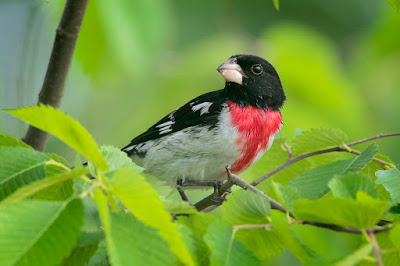
Rose-breasted Grosbeak (Pheucticus ludovicianus) Family: Cardinalidae Rose-breasted Grosbeaks are stocky, medium-sized songbirds with very large conical bills. The breeding plumage of adult males is striking; they have a black hood and back, a bright red chevron that extends from the black throat down the middle of the breast, and the underparts and rump are white. […]
Yellow-bellied Sapsucker (Sphyrapicus varius) Family: Picidae The Yellow-bellied Sapsucker is a member of the woodpecker family that winters in the southeastern United States. Similar to other sapsuckers, the Yellow-bellied Sapsucker has white vertical wing patches, an unbroken white stripe from the bill to the belly, and a stout beak. Adult males have a red crown, […]
Blackburnian Warbler (Setophaga fusca) Family: Parulidae The Blackburnian Warbler is a small songbird with a bright orange throat and face with a black crown, broad white wingbars, and a triangular ear patch. Females and juveniles are paler and yellower overall. They have a thin call that increases in speed that sounds like sleet-sleet-sleet-sleetee-sleeeee. They live […]
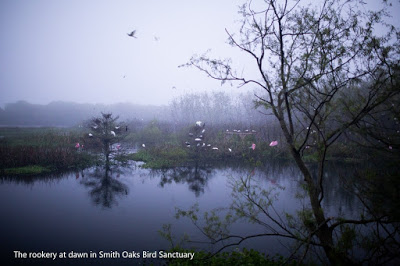
I awoke well before dawn on April 6, 2019. A night of fitful, anxious sleep pushed me out of bed. After a year of planning, I was eager to start work at Smith Oaks Bird Sanctuary in High Island, Texas. Walking about a quarter of a mile east into the sanctuary, I reached the rookery […]
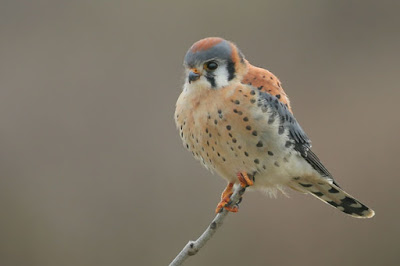
American Kestrel (Falco sparverius) Family: Falconiformes The American Kestrel is the smallest yet most numerous and colorful of the North American falcons. It was once referred to as the sparrow hawk because of its small size and its occasional sparrow snack. Unlike many raptors, which may prove difficult distinguishing male and females, it is quite […]
Yellow Warbler (Setophaga petechia) Family: Parulidae The Yellow Warbler is a small songbird with medium-length tails and a round head. The bill is relatively large for a warbler species. Males are a bright yellow with reddish streaks on its underside. Both males and females have yellow patches on their tail. Their face is unmarked, allowing […]





 Houston AuduBlog