American Coot (Fulica americana) Family: Rallidae ✏️ By Averi Lohman, Conservation Technician, Houston Audubon The American Coot is probably one of the goofiest birds you can see in the United States. This duck-like bird, just a bit smaller than a mallard, has a peculiar habit of bobbing its head forward as it swims, almost as […]
Brown Booby (Sula leucogaster) Family: Sulidae ✏️ By Hope Caliendo, Conservation Technician, Houston Audubon Brown Boobies are a rarity in the United States, but they can occasionally be seen along the Bolivar Peninsula and can stray as far north as Canada. Their typical range revolves around tropical oceans worldwide where they are seen maneuvering swiftly […]
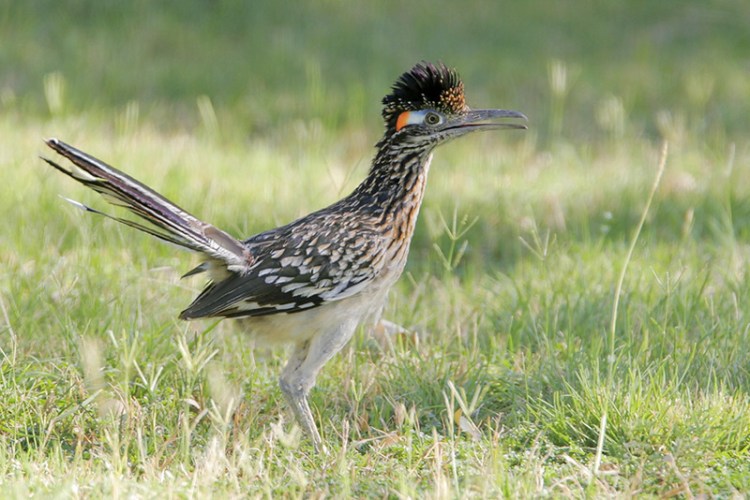
Greater Roadrunner (Geococcyx californianus) Family: Cuculidae ✏️ By Ryan McGinty, Conservation Technician, Houston Audubon The Greater Roadrunner is a large cuckoo that was born to run. While it is a weak flier, this bird is able to outrun a human, reaching speeds upward of 15 mph when running and even faster spurts when chasing prey. […]
Broad-winged Hawk (Buteo platypterus) Family: Accipitridae The Broad-winged Hawk is a small sized raptor with a brown upper body, reddish head, barred undersides, and a black and white banded tail. Broad-winged Hawks are what birders like to call “Buteos” which refers to their genus. Buteos are typically distinguished from the other major genus of hawk […]
✏️ By Ryan Call, Houston Audubon Young Professionals Advisory Council 2021 Pileated Woodpecker (Dryocopus pileatus) Family: Picidae Records show that the Pileated Woodpecker is the largest woodpecker in North America—the Ivory-Billed Woodpecker and the Imperial Woodpecker were larger but are presumed extinct. An unmistakable, crested, red and black, crow-sized bird, the Pileated Woodpecker makes its […]
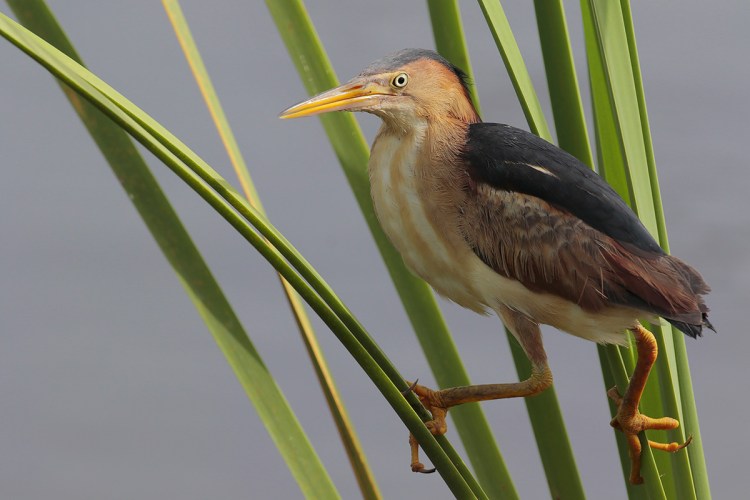
Least Bittern (Ixobrychus exilis) Family: Ardeidae The Least Bittern is the smallest North American heron and blends into its marshy habitat exceptionally well. Measuring only about 12-13 inches, these tiny herons have a long neck, with a dark brown to black crown and back blending to warm tan on the sides and tan and white […]
By Ryan Call, Houston Audubon 2021 Young Professionals Advisory Council (YPAC) About this time every summer, we receive questions about ridiculous-looking birds: birds with oddly mismatched feathers, birds without feathers, birds that seem bedraggled or undernourished or sickly-looking. For the most part, these birds are perfectly fine! They’re just in the midst of a completely natural […]
✏️ By Ryan Call, Houston Audubon Young Professionals Advisory Council 2021 Downy Woodpecker (Dryobates pubescens) Family: Picidae Perhaps the most common woodpecker in North America, the Downy Woodpecker thrives all across the continent: from the tree line in Alaska and Canada to the southernmost forests of California and Florida (Birds of the World). In Houston, […]
✏️ By Ryan Call, Houston Audubon Young Professionals Advisory Council 2021 Turkey Vulture (Cathartes aura) Family: Cathartidae A hardy, adaptive bird, the Turkey Vulture thrives in the Houston area and beyond. It’s a bird you can often see high above the terrain, its wings upswept in a shallow dihedral, the bird rocking back and forth […]
By Ryan Call, Houston Audubon Young Professionals Advisory Council 2021 Roseate Spoonbill (Platalea ajaja) Family: Threskiornithidae Being married to a non-birder, I strive to make birding as easy and as convenient as possible for my family. I’m not always successful, of course—I sometimes return too late from a long day of birding or dally a […]