

Red-headed Woodpecker (Melanerpes erythrocephalus)
Family: Picidae
By Grace Yaros, Houston Audubon Coastal Conservation Technician
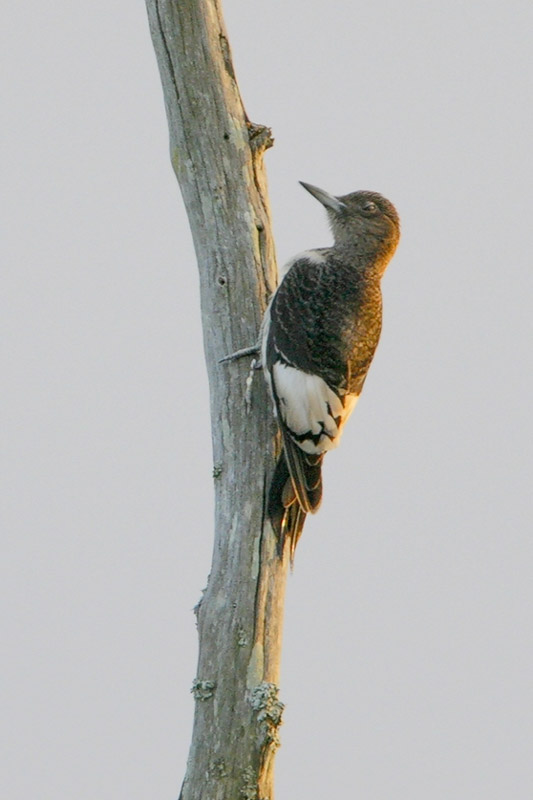
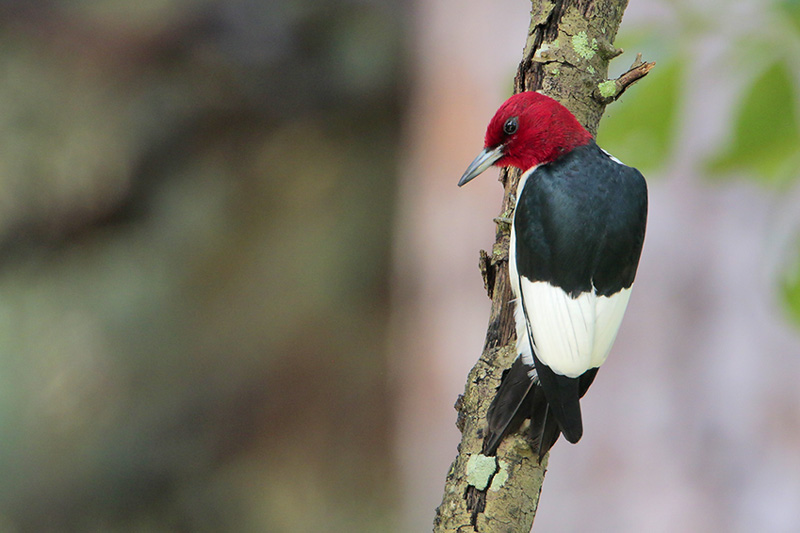
Red-headed Woodpeckers are among the most handsome and distinctive woodpeckers in North America. Adults are striking, with bright cherry red heads, white bellies, and black backs with a contrasting white rump. Their wings are black with large, bold white patches on the innermost flight feathers. Immature birds have the same overall pattern as adults, but are brown with variable brown streaking on their underparts and a distinct dark stripe through their wing patches.
Red-headed Woodpeckers are common throughout much of the central and eastern United States, from eastern Montana to the Atlantic coast and south to central Florida, though they are absent from high-elevation areas of the Appalachian Mountains. They can be found as far north as south-central Canada. Individuals breeding in the northern and western portions of their range are generally migratory and will move south or east outside of the breeding season, but this is heavily dependent on the amount of hard mast available for them to feed on; if there is a large enough crop and food is abundant, individuals are likely to remain near their breeding grounds or migrate only a short distance. They can be found in open woodlands with dead tree limbs and/or standing dead trees that they can excavate nesting cavities in. Pairs will fiercely defend their breeding territories against other Red-headed Woodpeckers and even other species that intrude too close to their nest. Outside of the breeding season, individuals are solitary and defend their own winter territories.
Red-headed Woodpeckers are omnivorous, and their diet includes arthropods such as beetles and cicadas, seeds, berries, nuts, and fruits. These woodpeckers are skilled flycatchers and will fly out from a perch to snatch a passing insect in midair! During the winter months when insects become scarcer, they rely heavily on acorns and other nuts. They frequently cache, or store, insects and acorns in crevices and cavities of trees and wooden posts for later use.
Data from Breeding Bird Surveys indicate that Red-headed Woodpeckers are declining throughout the majority of their range, including in eastern and northern Texas. In urban and suburban areas, the removal of dead limbs and trees limits the availability of nesting sites. Like other cavity-nesting species, competition for nesting sites with invasive European Starlings negatively impacts the nesting success of Red-headed Woodpeckers breeding in areas where starlings are common. During the 1800’s, Red-headed Woodpeckers were more common than they are today in northern and northeastern North America, and their decline from much of the northern United States was tied to the decline of northern beech forests. These colorful, feisty woodpeckers can be found in wooded parks throughout Houston, such as Bear Creek Pioneers Park, Mitchell Nature Preserve, Memorial Park, Kleb Woods Nature Preserve, and Jesse H. Jones County Park.
Visit our Bird Gallery to read about other Texas birds!

