

Cape May Warbler (Setophaga tigrina)
Family: Parulidae
By Theresa Kelly, Houston Audubon Coastal Conservation Technician
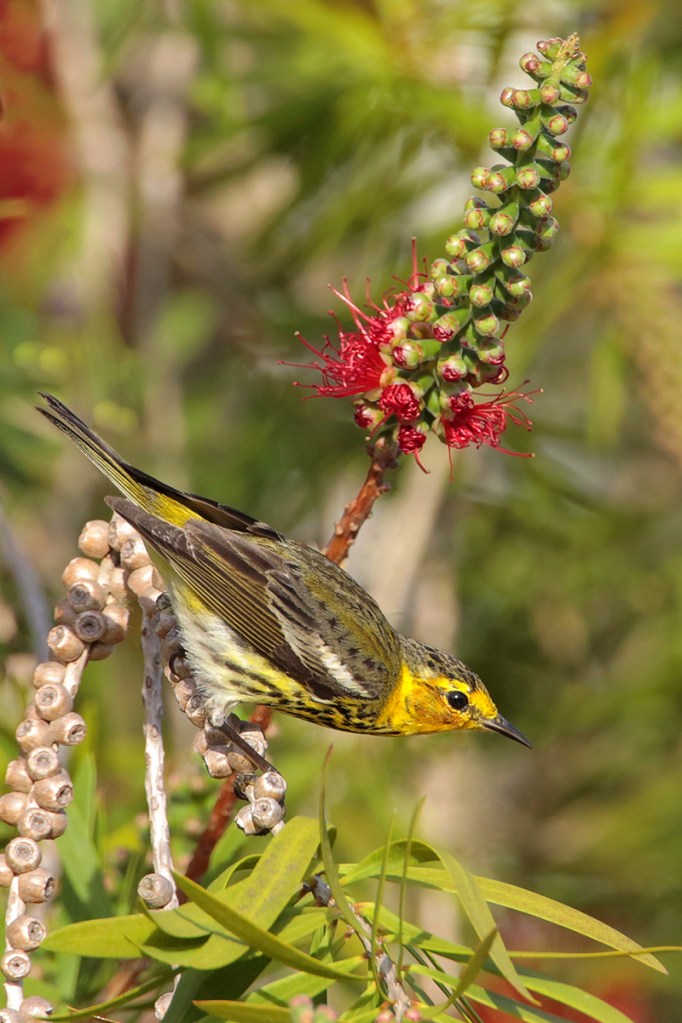
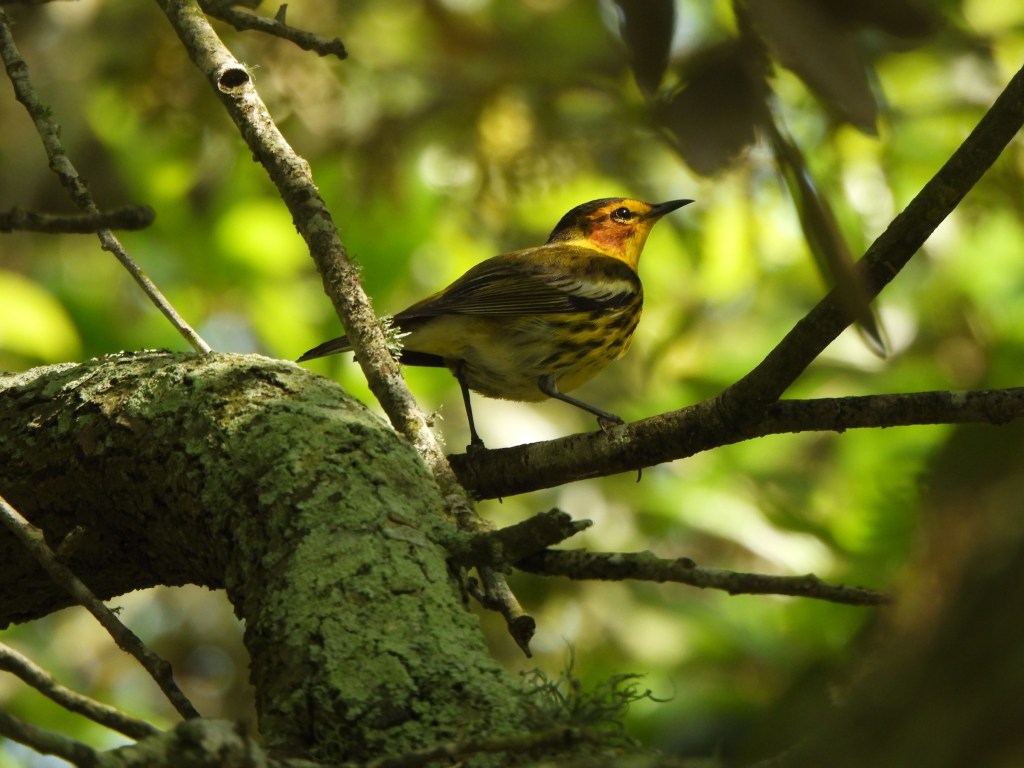
This week’s Beak of the Week may be more easily recognized by its common name — Cape May Warbler — but its taxonomic species tigrina is a more apt descriptor. Adults boast a bright yellow face, breast, and belly, with dark tiger-like stripes of black creeping down the chest and flanks. Adult males have an extra splash of color in their russet cheeks (auriculars), black eyeline, and black cap, while females and immatures tend towards gray cheeks, gray caps, and a fainter gray eyeline. All ages and sexes are duller from the back than the front, possessing only a faint wash of yellow on otherwise gray wings, though bright white wing patches and undertail coverts still stand out. Short-tailed and delicate overall, Cape May Warblers have a noticeably decurved bill which is unusual among warblers, allowing them to probe flower blossoms for insects.
During their breeding season, Cape May Warblers are somewhat elusive, breeding in remote spruce-fir forests from New England to Alberta, Canada. If you wish you could spend your winters in the Caribbean, then this warbler is living your dream; they winter on Caribbean islands and coasts, consuming an omnivorous diet of fruit, nectar, and insects. Interestingly, they possess a curled, semitubular tongue which allows them to extract nectar from flowers and, on occasion, hummingbird feeders. An unusual bill and tongue are not the only thing that separate Cape Mays from their fellow warblers, as their clutch size is also unique. Averaging six eggs, it is thought that a greater clutch size allows populations to expand in response to outbreaks of the Spruce Budworm caterpillars which are so crucial to their breeding diet.
Wintering Cape May Warblers are territorial in some (but not all) habitats while migrating birds may defend resources in some contexts. It is on their breeding grounds that they display the most territoriality. Despite their small size, male Cape May Warblers will defend territories of approximately an acre, chasing rival males away and guarding the nest while the females build it.
A Cape May Warbler recently turned up in Smith Oaks Bird Sanctuary! He was seen by dozens of people over the three days he spent flitting above and around the Canopy Walk, and was actually observed feeding from sapsucker holes in the Live Oak…a great display of those exceptional morphological features at work!
Visit our Bird Gallery to read about other Texas birds!

