

Wyatt Egelhoff, Sanctuary Manager and Victoria Parker-Thacker, Seasonal Coastal Avian Technician, Houston Audubon
Shortly before the woods fill with migrating songbirds, Houston Audubon staff spring into action, readying the beaches of the Bolivar Peninsula for the arrival of our beach-nesting birds in mid-March. For over a decade, Houston Audubon has monitored and stewarded several key sites on the Peninsula, working with partners across the Texas coast. These efforts ensure our beaches remain safe nesting places for Wilson’s and Snowy Plovers, Least Terns, Black Skimmers, and other species. A total of five sites are regularly monitored, with Bolivar Flats, Port Bolivar Ferry Beach, and High Island Beach being the primary ones.
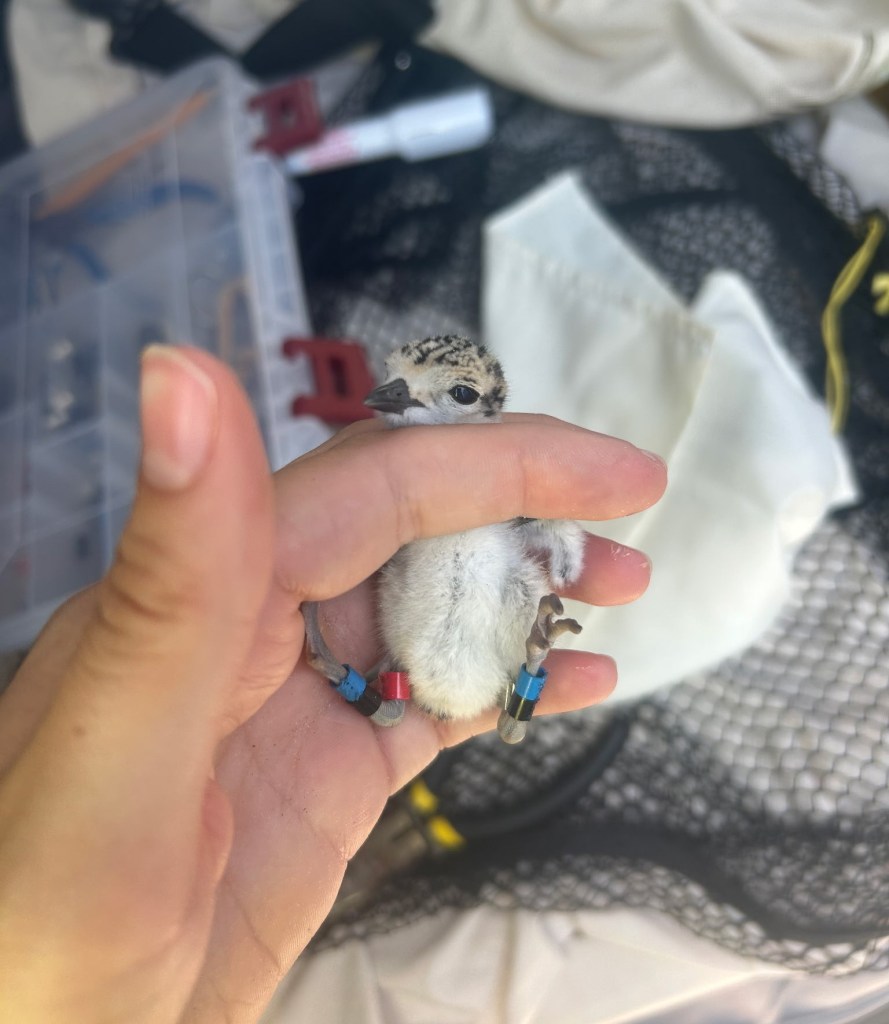
Life among the dunes is facilitated by the vagaries of the sun and surf. Unlike songbirds, beach-nesting birds build a simple nest in the sand known as a “scrape.” Consisting of a shallow depression in which the eggs are laid, these species rely on remarkable camouflage to protect their nest from predators. Some years, elevated tides wash out all but the most elevated nests. Other years can be too dry to support the pockets of wetland needed for the chicks to forage and grow to adolescence. Given the added disturbance from humans – including direct destruction of nests, pets, trash, and even increased erosion from vehicles – it is not surprising that the populations of many birds nesting on Texas beaches have declined.
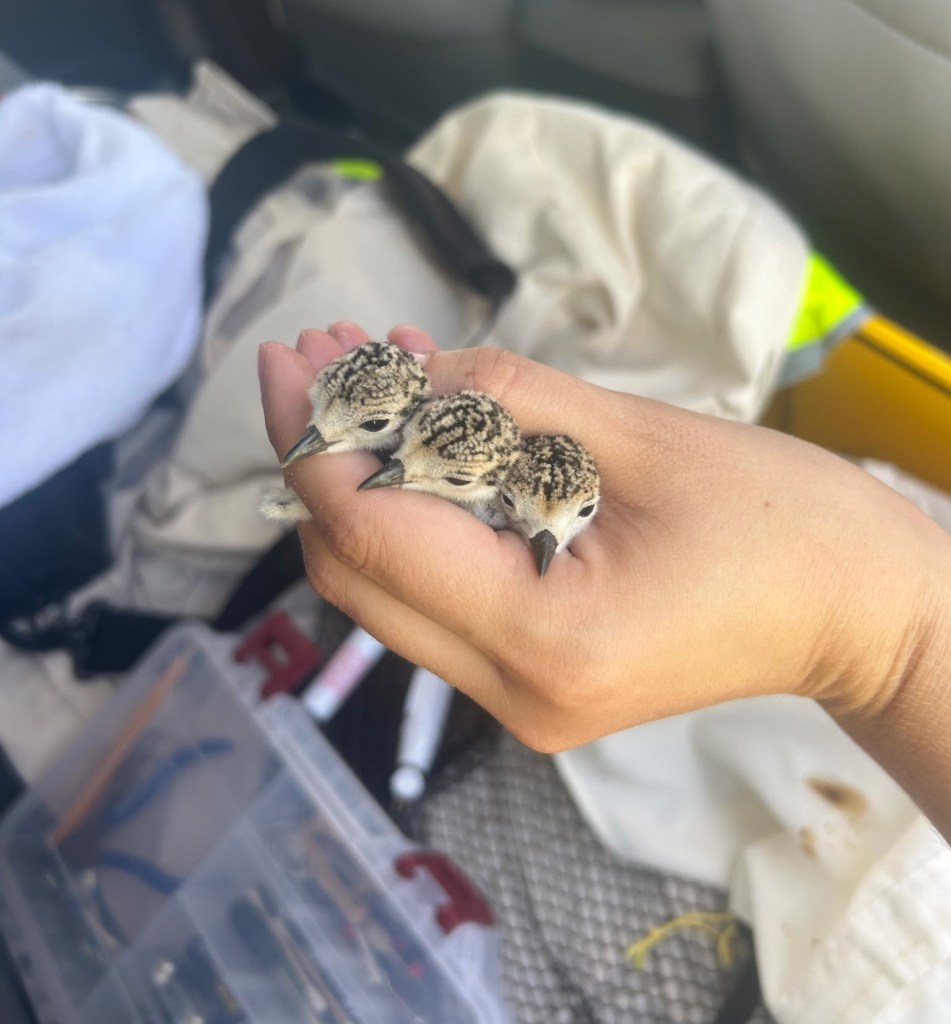
This spring’s nesting efforts have been encouraging. Thus far, a total of thirteen Wilson’s Plover nests have been discovered across our sites. Five were lost due to weather, primarily high winds that either buried the nests in sand or pushed the tides high enough to wash the nest away. Despite these setbacks, three known nests have successfully hatched. Staff have also discovered several Wilson’s Plover chicks in areas without known nests, meaning a few pairs have managed to escape detection and nest successfully. Most of the successful nests have come from Bolivar Flats and Ferry Beach, an encouraging indication that our stewardship of these sites is working. High Island Beach has produced a mix of hatched nests and re-nesting attempts. While recent beach renourishment activities have increased the amount of habitat at this site, it has also made the area more accessible for recreation and increased human disturbance.
Least Terns are also having a productive season. High Island Beach is supporting about eighty active nests. Ferry Beach has forty-five active nests, with a few managing to hatch already. Bolivar Flats hosts twenty active nests at present. This is a vast improvement on last year’s total lack of successful Least Tern nests.
As the breeding season progresses, staff will continue to monitor nest success, chick development, and potential threats. The signs of successful hatching are promising. If you find yourself on the Bolivar Peninsula this summer, respect all symbolic signage and fencing by staying out of marked areas and giving the fencing a wide berth. If you notice birds calling or following you (or even doing a “broken-wing” display), carefully walk away from the area, giving the birds at least fifty feet of space. Whenever possible, walk in the wet sand, as this will help ensure you don’t disturb nests or chicks. Learn more about our Beach-nesting Birds initiative at www.houstonaudubon.org/BNB
Photos of Wilson’s Plovers by Sarah Belles / American Bird Conservancy. Birds are only handled by trained professionals with permits.
 Houston AuduBlog