

Loggerhead Shrike (Lanius ludovicianus)
Family: Laniidae
By Colleen McDonough, Houston Audubon Coastal Conservation Technician
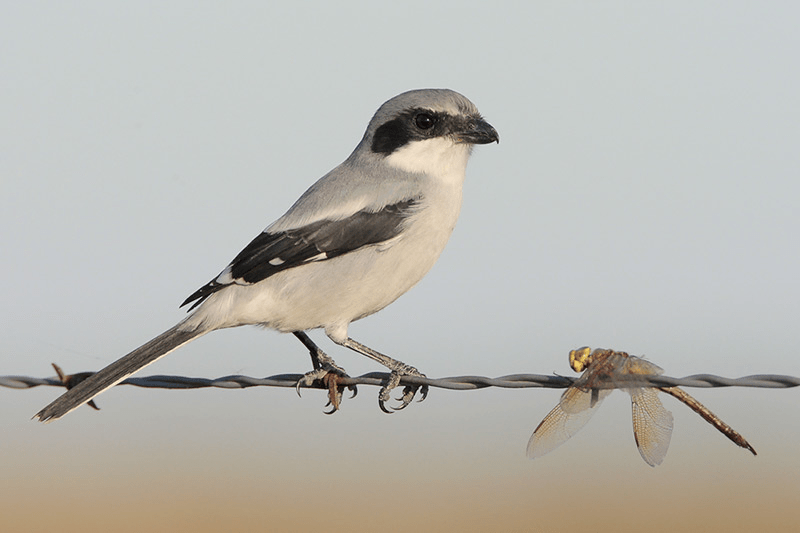
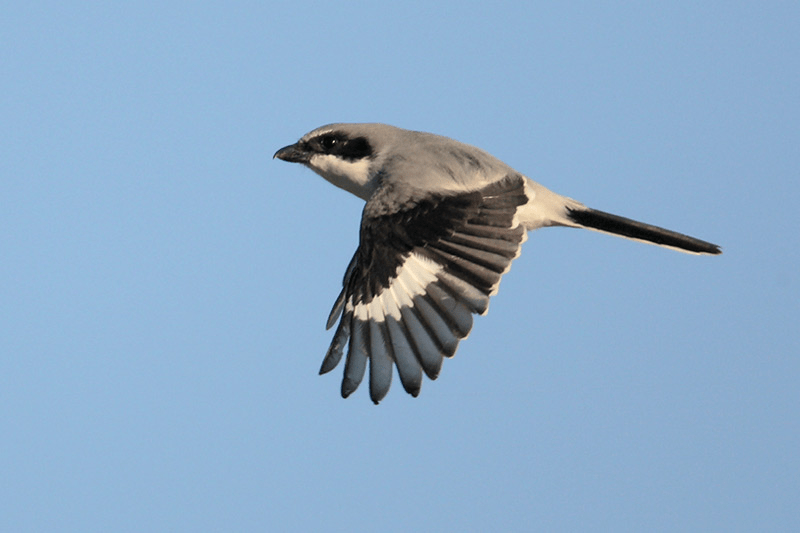
The Loggerhead Shrike, nicknamed “butcherbird”, is a songbird with unexpected carnivorous tendencies. Similar in size to a cardinal, shrikes are mostly gray with a black eye mask, hooked bill, and white wing patches visible in flight. The Loggerhead Shrike is one of two shrike species native to North America, and is the only shrike species present on the Gulf Coast. They are most similar in stature to a mockingbird, but have a larger head-to-body size ratio, a thicker bill, and darker wings. The shrike gets its name from the Old English word for “shriek”, which appropriately refers to its harsh and buzzy vocalizations.
Many Loggerhead Shrikes are year-round residents of the southern half of the United States and Mexico, while other populations migrate to the northern United States and Canada to breed. In the winter, migratory shrikes join resident populations in coastal prairies, pastures, and open grasslands throughout Texas. Adults form territories and nest in thorny shrubs and small trees.
Loggerhead Shrikes primarily eat insects like grasshoppers and dragonflies, and sometimes lizards, small rodents and other birds. Hunting strategies include scanning or hovering over open areas and pouncing, and flashing their bright wing patches from the ground to surprise prey out of hiding. Shrikes are notorious for impaling their catch on fence spikes or thorns; this “skewering” of prey is an adaptation that allows shrikes to hold their food in place while eating, as they lack strong talons to grip with. Shrikes also use this strategy to cache food, leaving their prey on spikes to eat later. If an animal known to be poisonous is caught, such as a narrow-mouth toad, it will purposefully be left on a spike for a few days to allow any toxins to break down before being eaten.
Like many American grassland birds, Loggerhead Shrikes are in steep decline across their range. The conversion of ideal shrike habitat to farmland and the rise in use of chemical pesticides are both thought to have contributed to falling population numbers throughout the 20th century. Despite their widespread decline, Loggerhead Shrikes can reliably be found year-round at Bolivar Flats Shorebird Sanctuary. Scan the tops of shrubs and telephone lines for perching shrikes along Rettilon Road on the way to the beach parking lot. They are also commonly seen elsewhere in coastal prairie habitats across Galveston County.
Visit our Bird Gallery to read about other Texas birds!

