
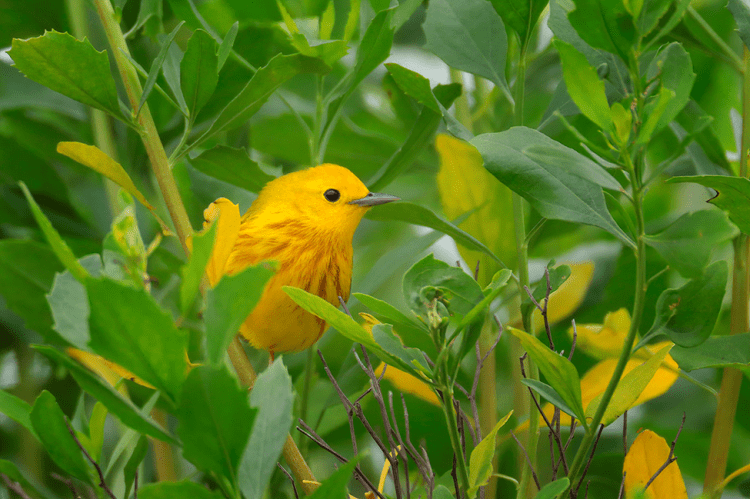
Northern Yellow Warbler (Setophaga aestiva)
Family: Parulidae

By Spencer Poling, Houston Audubon Coastal Conservation Technician
This week’s Beak of the Week is the Northern Yellow Warbler! If you’re already familiar with this bird, you may have noticed the addition of “Northern” to their name. This is because taxonomists have split the Central American Mangrove subspecies into its own species, the Mangrove Yellow Warbler. Our own Northern Yellow Warbler, however, is one of the many exciting warblers that migrate through the Houston area each spring.
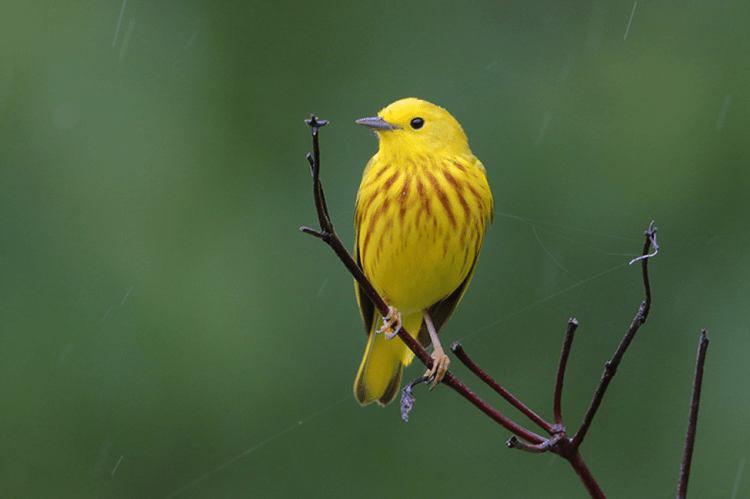
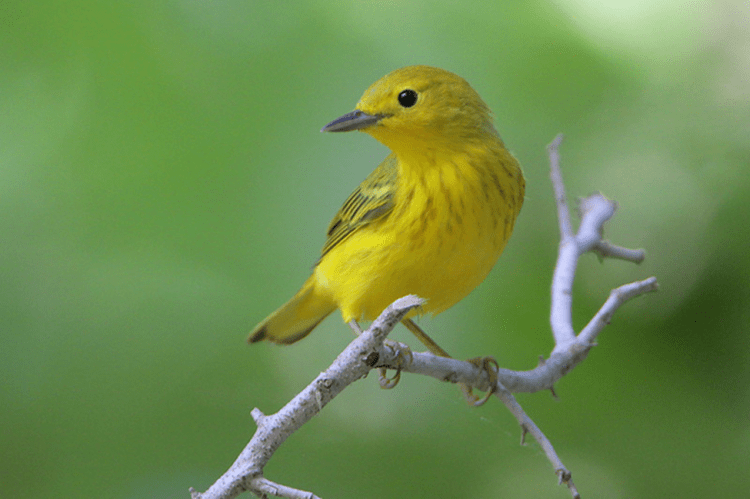
For the lovers of the color yellow out there, this bird is for you! Many warblers are known for the yellow in their plumage, but Northern Yellow Warblers take it to the extreme, with their plumage being entirely yellow, except for the reddish streaks on their breast. Females look the same as males, except their red streaks are less prominent. This overall yellow plumage makes Yellow Warblers easy to identify, and they are often easy to find too, because they prefer open wooded habitats with great visibility for birders. They have quite an easy song to recognize as well, described as “sweet sweet sweet, I’m so sweet.”
Northern Yellow Warbler nests are small, cup-shaped, and sometimes multi-storied! This happens due to nest parasitism by Brown-headed Cowbirds, who lay their eggs in other birds’ nests instead of raising their own chicks. Some species are able to recognize that cowbird eggs aren’t their own and remove them from their nests. However, Northern Yellow Warblers are not physically able to remove them, so they build a new nest on top of the old one, sometimes having to do this several times! Brown-headed Cowbirds have a bad reputation due to their nest parasitism, but they are actually rising in populations due to humans. Brown-headed Cowbirds prefer edge habitat, and human development has greatly increased the edge habitat of our forests, therefore increasing cowbird populations. This ultimately increases the amount of nests our poor Northern Yellow Warblers are forced to build, which comes at a great energetic cost to them. But don’t blame the cowbirds, they just behave in the way that they’ve evolved and it’s our own actions that allow them to thrive.
Although their populations are slowly declining, Northern Yellow Warblers overall are considered to be doing quite well. They are one of our most numerous warblers and are hard to miss around their breeding range. As mentioned before, Northern Yellow Warblers prefer open wooded habitat, especially if adjacent to a stream or wetland. They are primarily insectivorous, so watch for them moving throughout the foliage of trees, gleaning for insects. Northern Yellow Warbler migration peaks around Houston in late April, so now is a great time to see them!
Visit our Bird Gallery to read about other Texas birds!

