
By Channing Mena, Houston Audubon Education Specialist
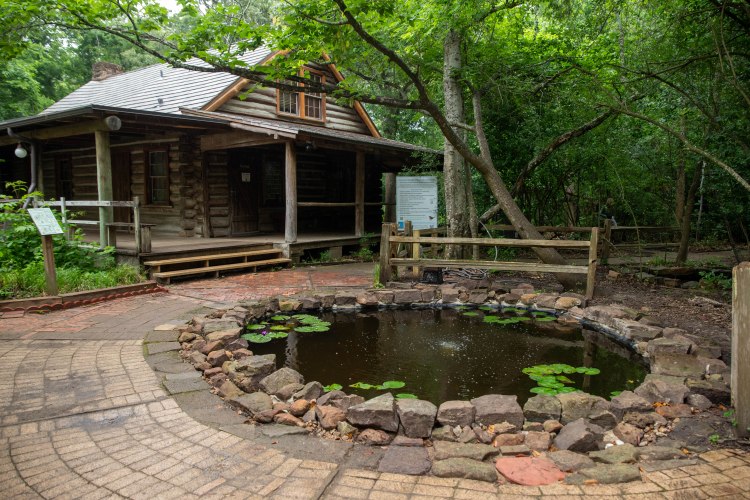
The big frog pond located between Houston Audubon’s Natives Nursery and the historic log cabin was originally built by Edith and Jesse Moore to raise American bullfrogs to be sold to local restaurants for their legs. While it has held up well over the past 90 years, our Sanctuary Lead, John LeaRussa, noticed it was requiring more and more refilling at an unnaturally fast rate. At that point, we knew it finally needed some updating. Even though a more modern pond liner has now been added over the old concrete barrier, the original moss rocks were kept, preserving the exact same border the pond has always had.
Although the pond has held a variety of vegetation and wildlife over the years, waterlilies have been re-added to the water—recreating a look similar to how it appeared in the 1970s (a picture of this can be seen when visiting inside the cabin). The new waterlilies are Nymphaea elegans, also called the tropical royal blue waterlily, whose native range just barely extends to Houston. The flowers bloom straight up above the water and are extra sensitive to sunlight; visitors can watch them reopen each morning and close back up each evening. These lilies and their fast-growing pads provide essential habitat to all the native wildlife visiting the pond.
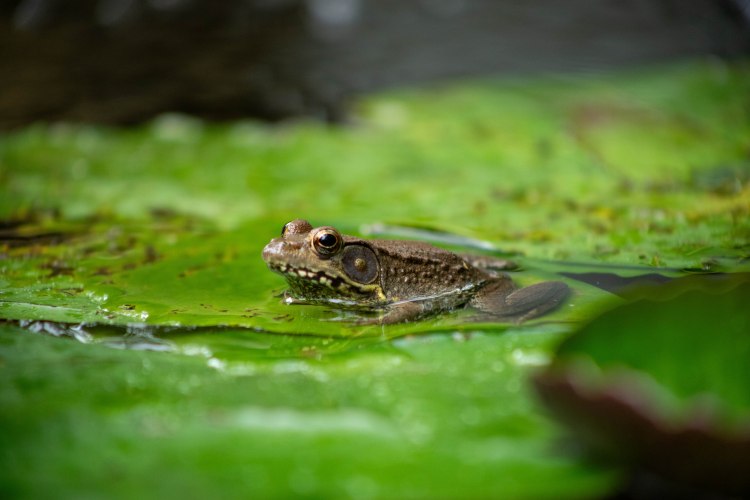
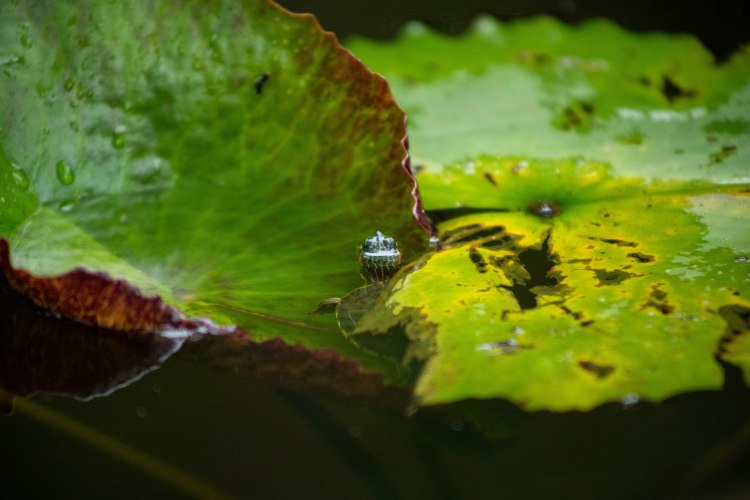
Our staff spent time returning the gambusia (mosquitofish) that were temporarily removed and held at the large turtle pond during reconstruction, but they are certainly not the only ones using the pond. Even before the liner was finished being installed, a common snapping turtle came to check out the work of our contractors. Now, visitors can regularly find red-eared sliders using the lower step towards the back of the pond to enter and exit as they please. The turtles are joined by curious ribbon snakes, wandering dragonflies, and pleased bronze frogs. Gulf Coast toads have already laid their eggs in long chains, which have hatched into tiny tadpoles that eagerly eat anything they can find.
All this diversity is wonderful, and to best maintain it, it’s important we don’t add anything unwanted to the pond. Throwing rocks and leaves or adding non-native species of fish is harmful to our delicate pond while it adjusts to its new liner. The best way to enjoy the pond is by respectfully taking a close look with your eyes only and enjoying the new aeration bubbler sounds with your ears. Let the natural wildlife find its way around on its own and keep coming back to see how it grows through the seasons.
Visit our Bird Gallery to read about other Texas birds!

