
Ruddy Turnstone (Arenaria interpres)
Family: Scolopacida

By Kayla Kutka, Birds Houston Coastal Conservation Technician
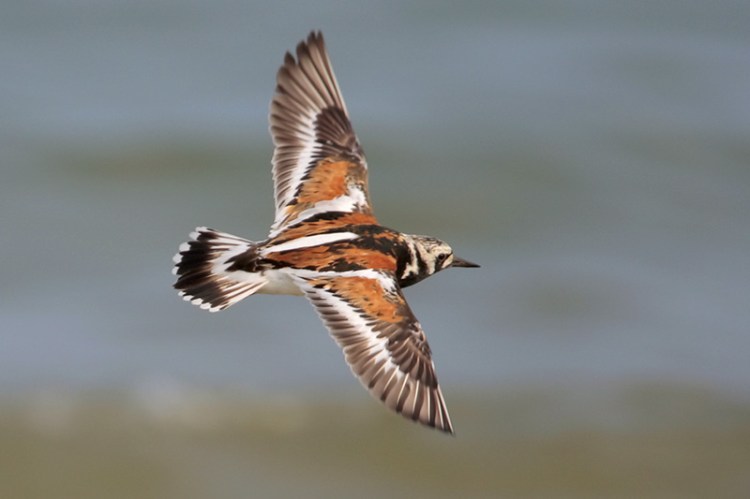
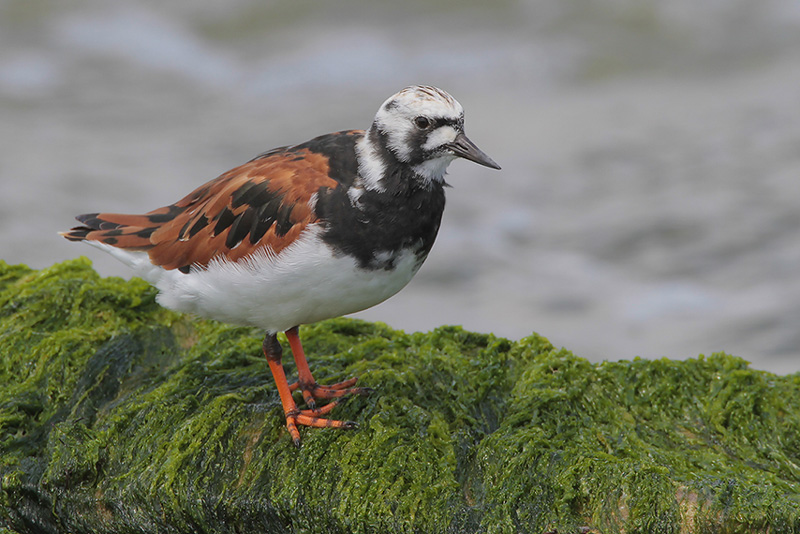
The Ruddy Turnstone is a small calico-colored shorebird with a stout, slightly upturned black bill and distinct orange legs that are brighter during breeding season. They use their strong neck and bill to flip stones, shells, or seaweed in search of small invertebrates and insects, hence where the name “turnstone” comes from. Ruddy Turnstones are mostly found on biologically productive rocky coasts or sandy beaches with washed-up seaweed or visible reefs perfect for foraging.
Ruddy Turnstones are one of the most northerly breeding shorebirds. They migrate yearly from the Arctic Circle to tropical coastlines, some traveling upwards of 6,500 miles between their breeding and non-breeding grounds. Excluding the breeding season in the Arctic, the Ruddy Turnstone can be found on coastlines throughout the world. Their estimated global population is 750,000 to 1,750,000 mature individuals, with the North American population making up about 59% of the global total.
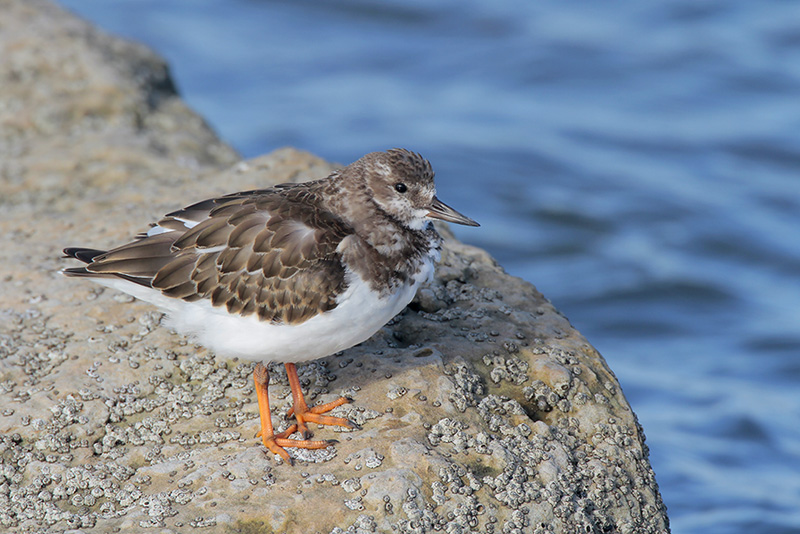
During breeding season, Ruddy Turnstones have vibrant orange and black colors, with more dull grays and browns when non-breeding. From late May to early August, these shorebirds are breeding on coastal plains or lowlands around the Arctic Ocean. In the winter, they are prevalent in the coastal areas of South America, Africa, the Pacific Islands, and the Northern Hemisphere. As for our Texas coastlines, Ruddy Turnstones can be found year-round. Although they are less likely during the summer months, they can be consistently spotted at Bolivar Flats Shorebird Sanctuary from Fall to Spring in their non-breeding plumage.
Visit our Bird Gallery to read about other Texas birds!

