Cape May Warbler (Setophaga tigrina) Family: Parulidae By Theresa Kelly, Houston Audubon Coastal Conservation Technician This week’s Beak of the Week may be more easily recognized by its common name — Cape May Warbler — but its taxonomic species tigrina is a more apt descriptor. Adults boast a bright yellow face, breast, and belly, with […]
Green Heron (Butorides virescens) Family: Ardeidae By Nick Minnich, Houston Audubon Coastal Conservation Technician This week’s Beak is often referred to as “daggerlike,” a perfect tool in the hunt for fish and amphibians. Green Herons are a short, compact heron who often prefer to stand on water’s edge vegetation as opposed to wading in the […]
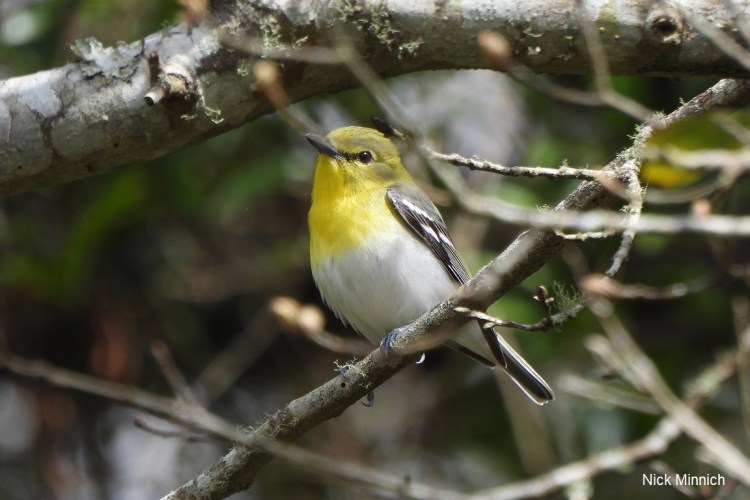
Yellow-throated Vireo (Vireo flavifrons) Family: Vireonidae By Nick Minnich, Houston Audubon Coastal Conservation Technician The Yellow-throated Vireo is one of the most striking North American vireos, with its bright yellow throat and breast plumage, broad yellow spectacles around the eyes, and gray wings with two bold white wingbars. Often, this bird frequents forest-edge habitat and […]
Dark-eyed Junco (Junco hyemalis) Family: Passerellidae By Theresa Kelly, Houston Audubon Coastal Conservation Technician This Beak of the Week has a very expansive range and an incredible array of plumages. The Dark-eyed Junco is a medium-sized sparrow, possessing the short, conical bill and rotund body shape common to its family. Their coloring varies greatly by […]
Ring-necked Duck (Aythya collaris) Family: Anatidae By Theresa Kelly, Houston Audubon Coastal Conservation Technician This week’s Beak of the Week, the Ring-necked Duck, earned both its common and scientific name (collaris) from the chestnut collar on its black neck. Decidedly difficult to make out in the field, they are better identified by other traits. The […]
Prothonotary Warbler (Protonotaria citrea) Family: Parulidae By Theresa Kelly, Houston Audubon Coastal Conservation Technician Like cardinals, this Beak of the Week claims the unusually specific honor of “birds named for Roman Catholic robes of office.” The Prothonotary Warbler’s astounding yellow hue is its most defining feature, leading early ornithologists to name it after the yellow […]
Chuck-will’s-widow (Antrostomus carolinensis) Family: Caprimulgidae By Nick Minnich, Houston Audubon Coastal Conservation Technician Our Beak of the Week is the largest North American member of the nightjar family. Caprimulgidae, colloquially referred to as goatsuckers, get this unusual nickname from a folk belief that the birds would milk goats with their enormous mouths each night as […]
Buff-bellied Hummingbird (Amazilia yucatanensis) Family: Trochilidae By Theresa Kelly, Houston Audubon Coastal Conservation Technician Hummingbird identification can be notoriously difficult, largely due to their small size and plumage similarities between different species. This week’s Beak of the Week, the Buff-bellied Hummingbird, is no exception, though adults possess several characteristics that set them apart from their […]
Cinnamon Teal (Spatula cyanoptera) Family: Anatidae By Theresa Kelly, Houston Audubon Coastal Conservation Technician This week’s Beak of the Week is a stunning one. The Cinnamon Teal is a regular (though not overly common) wintertime visitor to the Houston area, a cheery splash of red floating among the reeds of freshwater ponds. Relatively small overall […]
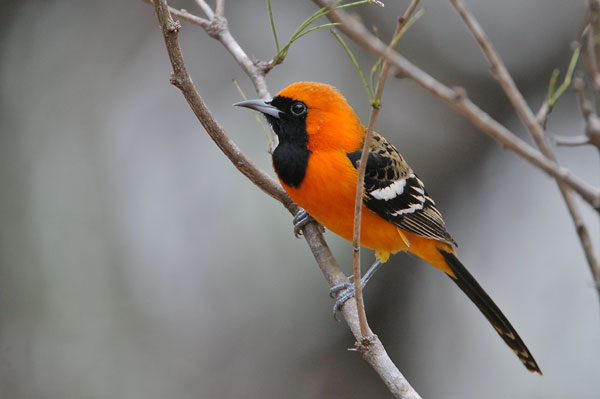
Hooded Oriole (Icterus cucullatus) Family: Icteridae By Charlie Ayers, Houston Audubon Coastal Conservation Technician This week’s Beak of the Week is a flashy Icterid of south Texas, the Hooded Oriole. Hooded Orioles are slender birds with a flame orange body, black wings, a black tail and a black throat patch that extends up to their […]




 Houston AuduBlog