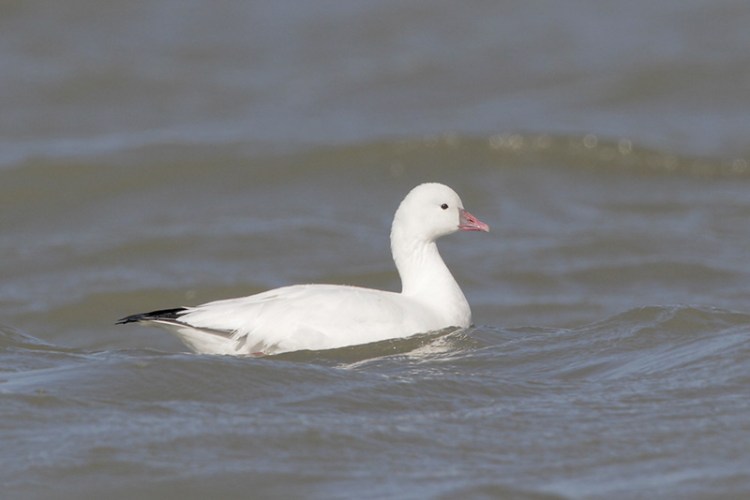
Ross’s Goose (Anser rossii) Family: Anatidae By Nick Minnich, Houston Audubon Coastal Conservation Technician This Beak of the Week is short and stubby compared to its taxonomic ally, the Snow Goose. The Ross’s Goose is often referred to as a miniature version of the other white geese, previously belonging to the genus Chen. Like other […]
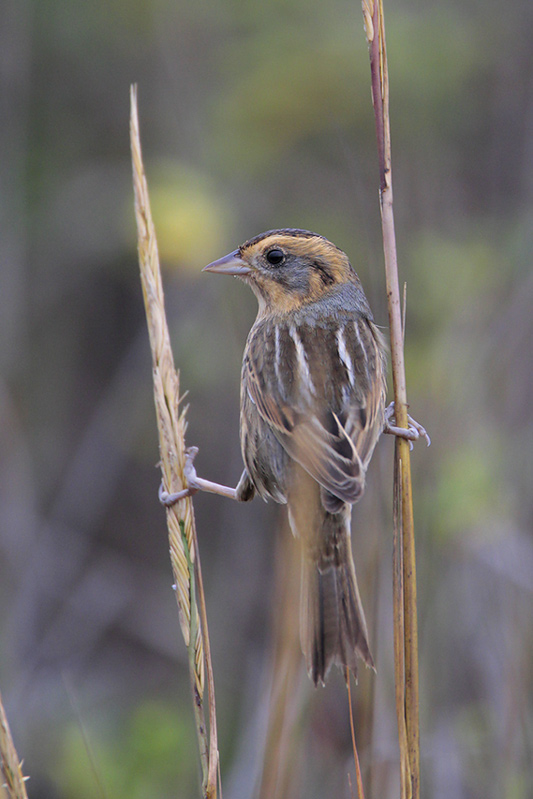
Nelson’s Sparrow (Ammospiza nelsoni) Family: Passerellidae By Charlie Ayers, Houston Audubon Coastal Conservation Technician This week’s Beak of the Week brings pumpkin spice to the table, the Nelson’s Sparrow. The Nelson’s Sparrow is quite colorful for a member of this family. They can be identified by their bold yellow-orange faces, gray cheeks, and a neat […]
Red Knot (Calidris canutus) Family: Scolopacidae By Theresa Kelly, Houston Audubon Coastal Conservation Technician This week’s Beak of the Week may seem to be a bit of a misnomer, as the Red Knot’s winter plumage can be fairly drab: pale brown underneath and speckled on the back and wings just like so many other shorebirds. […]
Long-billed Curlew (Numenius americanus) Family: Scolopacidae By Nick Minnich, Houston Audubon Coastal Conservation Technician This week’s beak is nothing short of impressive. There’s a lot of information one can gather about a bird’s life simply by studying their physical characteristics; nonetheless, a bird’s bill often provides valuable insight into the species’ foraging and food preference. […]
Peregrine Falcon (Falco peregrinus) Family: Falconidae By Nick Minnich, Houston Audubon Coastal Conservation Technician This week’s Beak of the Week is equipped with a unique adaptation that makes it the ultimate aerial hunter. Peregrine Falcons, regarded as the fastest flying bird, also have the widest natural distribution of any bird on Earth, nesting on every […]
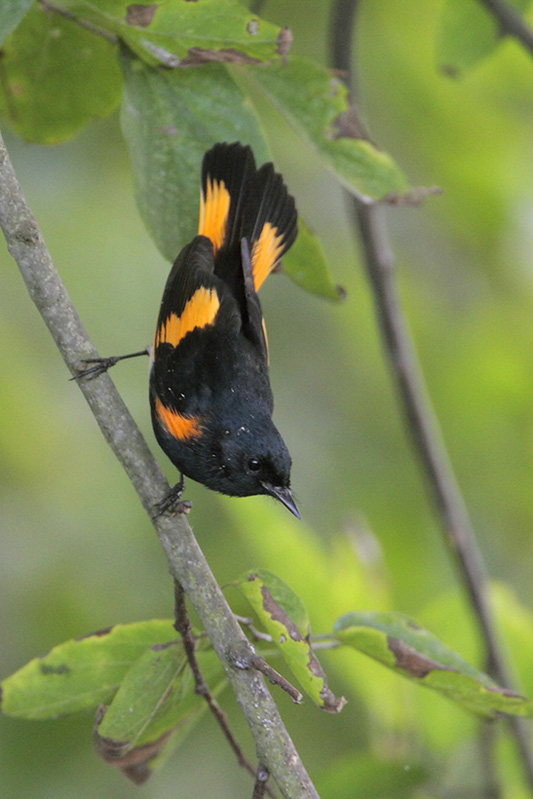
American Redstart (Septophaga ruticilla) Family: Parulidae By Charlie Ayers, Houston Audubon Coastal Conservation Technician This week’s Beak of the Week belongs to a bird who is always ready for Halloween, the American Redstart. Adult males of this species are black overall with splashes of orange on the flanks, wings and tail. Females and immature males […]
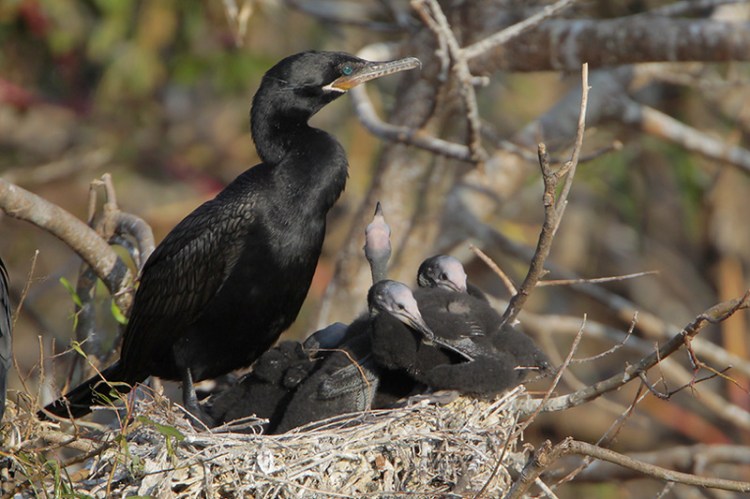
Neotropic Cormorant (Nannopterum brasilianum) Family: Phalacrocoracidae By Charlie Ayers, Houston Audubon Coastal Conservation Technician This week’s Beak of the Week is the Neotropic Cormorant. When birding near any body of water, be on the lookout for this small, slim, nearly all black bird with a long tail, large webbed feet and a thin straight bill […]
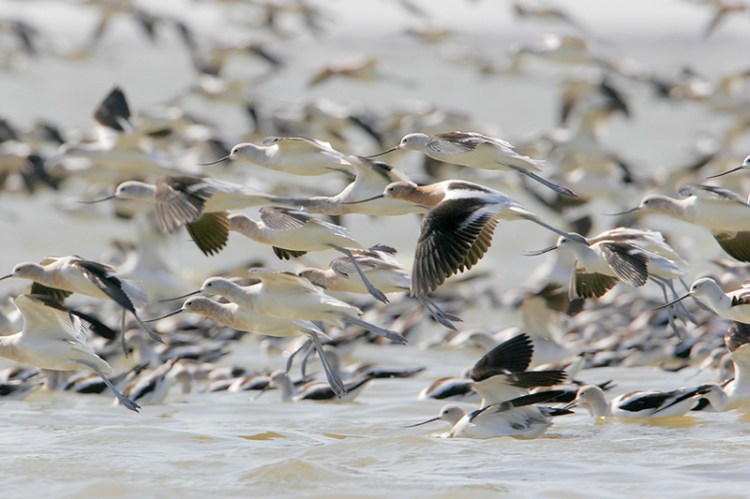
American Avocet (Recurvirostra americana) Family: Recurvirostridae By Charlie Ayers, Houston Audubon Coastal Conservation Technician This week’s Beak of the Week is one of the funkiest ones out there, the American Avocet. Look for this large wading bird’s long, thin, uniquely upturned bill, bold black and white wings and long blue-gray legs. American Avocets, like many […]
By Schyler Brown, Houston Audubon Conservation Specialist Besides humans, other animals need to travel in order to go places, see things, and enjoy an enriching life. It is true that some animals do not travel very far, like the Brown Tube Sponge (Agelas conifera) which, after attaching itself to the sea floor, spends most of […]
By Gabriel Durham, Bird-Friendly Communities Program Manager This summer, Memorial City Plaza became the first multi-story major commercial building in Houston to work with Houston Audubon to install window film to prevent bird collisions! This accomplishment is a big step forward in making Houston more Bird-Friendly and is a testament to how small connections can […]





 Houston AuduBlog