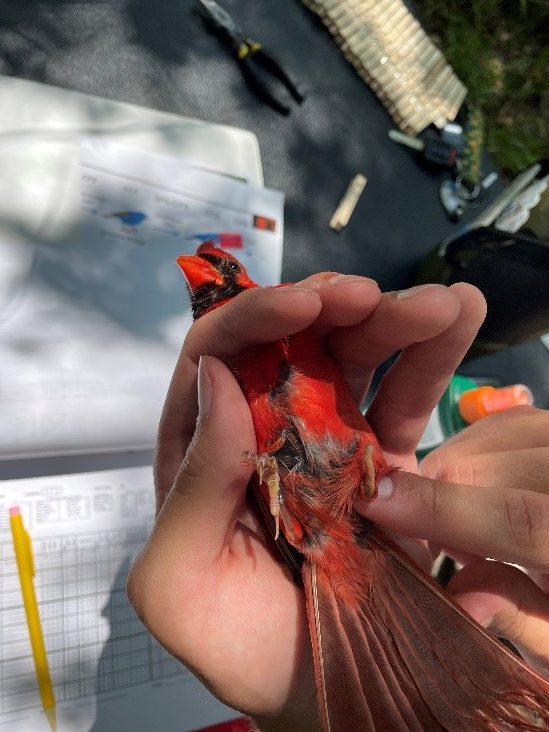
By Schyler Brown, Houston Audubon Conservation Specialist Dr. Kelsey Biles and I (Schyler Brown) run a bird banding station as part of the Monitoring Avian Productivity and Survivorship (M.A.P.S) program. This program is a nationwide initiative to understand avian populations via bird banding and recapture data during the breeding season. To capture breeding birds, we […]
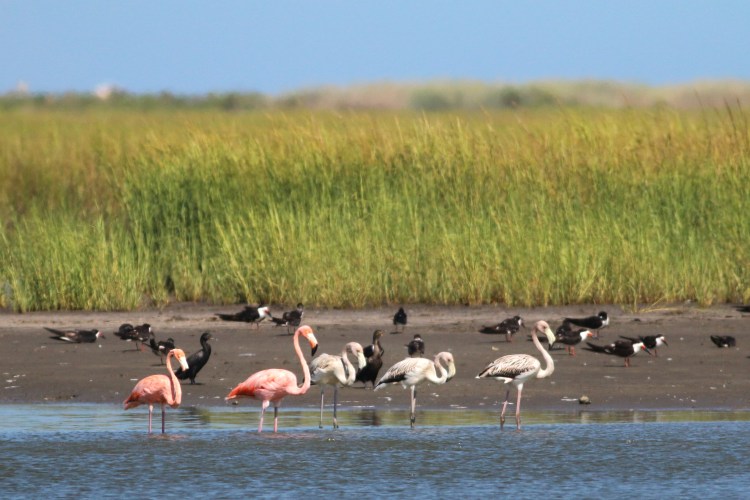
American Flamingo (Phoenicopterus ruber) Family: Phoenicopteridae by Wyatt Egelhoff, Houston Audubon Conservation Specialist Perhaps one of the most widely recognizable group of birds by both birders and non-birders alike, American Flamingos are sporadic visitors to Texas’ shores, and even rarer on the upper coast. Adults are hot pink, with strikingly contrasting black primary feathers. Their […]
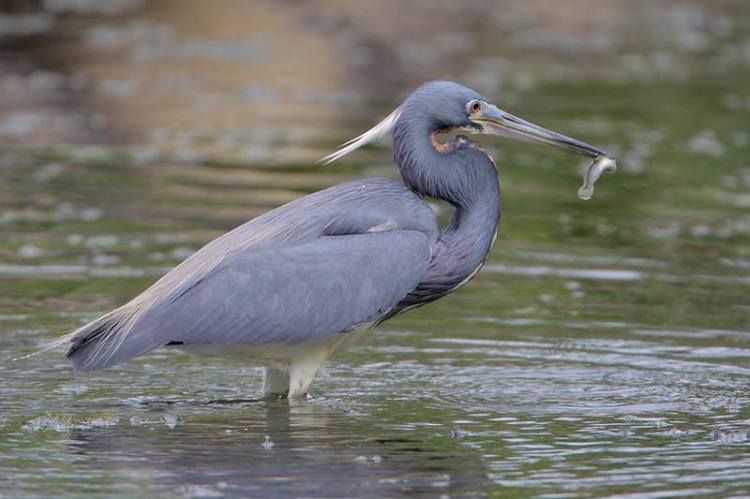
Tricolored Heron (Egretta tricolor) Family: Ardeidae The Tricolored Heron, formerly known as the Louisiana Heron, is a medium-sized heron with a long, slender neck and bill. Adults are mostly blue-gray above, but are distinguished from other grayish herons by their white belly and white stripe down the front of the neck. In breeding plumage Tricolored […]
Common Yellowthroat (Geothlypis trichas) Family: Parulidae The Common Yellowthroat is a small songbird that belongs to the diverse family of wood-warblers. This warbler is one of the most common and widespread of their family as their name suggests. Males are bright yellow with a distinct black face-mask and a thin white line just above it. […]
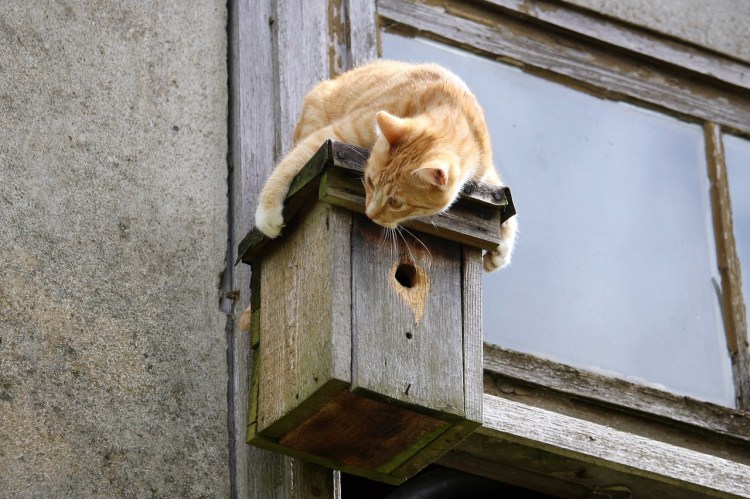
By Schyler Brown, Conservation Specialist, Houston Audubon We at Houston Audubon want to say Happy International Cat Day! Many of us at Houston Audubon have pet cats and love them dearly. However, we are aware of a looming problem that involves cats… Let’s cut to the chase- cats are the number one cause for the […]
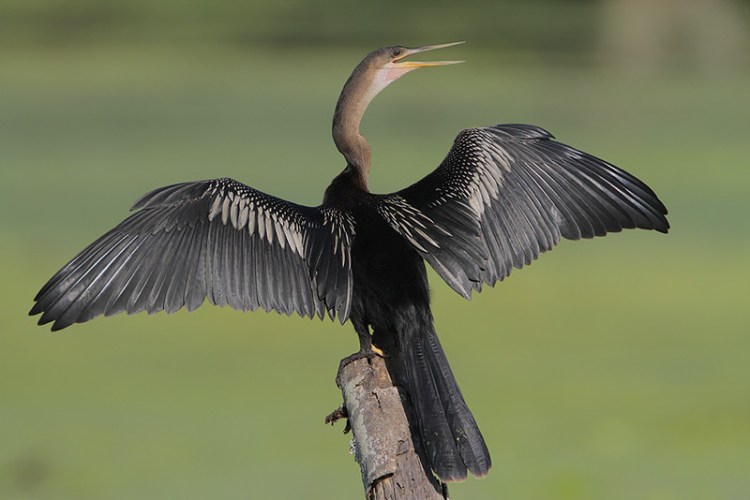
Anhinga (Anhinga anhinga) Family: Anhingidae The Anhinga is a large, dark water bird with a long, thin neck. It has a long, pointed bill and silver patches on the wings. Anhinga are graceful fliers and can travel long distances without flapping their wings. They are known as water turkeys for their swimming habits and broad […]
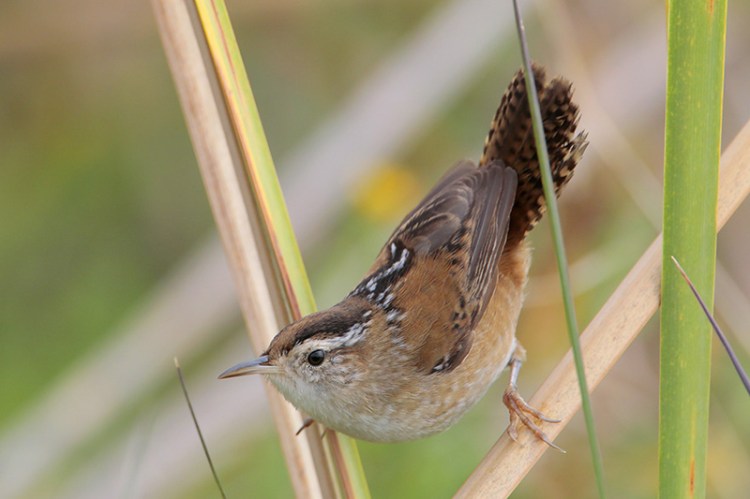
Marsh Wren (Cistothorus palustris) Family: Troglodytidae The Marsh Wren is a small brown bird that can be identified by its typical wren bill, whitish belly and eyebrow, distinct black triangle with white stripes on the back, and a solid brown crown. It will often sit with its tail held upright, and is very active and […]
Scissor-tailed Flycatcher (Tyrannus forficatus) Family: Tyrannidae The Scissor-tailed Flycatcher is a slender flycatcher with gray and salmon-pink coloring and an extremely long and deeply forked tail. You may have seen this bird perching on utility lines, treetops and fence lines. As with many species, the male is more intensely colored than the female, but males […]
By Miqdaad Bhuriwala, YPAC Member On April 29th, I volunteered at Part 3 of the Witness Series celebrating the Latino Connection to Wildlife and Nature. This event at Burnett Bayland Park in Gulfton was hosted in partnership with Madres del Parque, The Nature Conservancy, and Houston Audubon. One of the goals of this event was […]
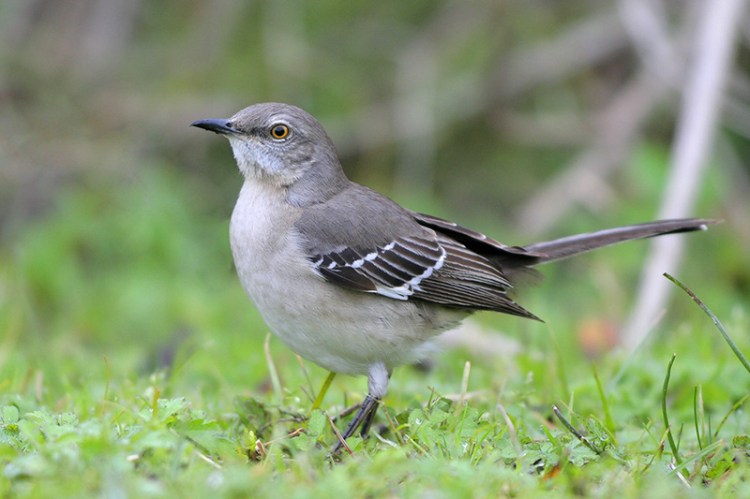
Northern Mockingbird (Mimus polyglottos) Family: Mimidae The state bird of Texas, the Northern Mockingbird, is a medium-sized songbird with a slender body and long tail. It is overall grayish brown in color, and has white wing bars that are strikingly visible when in flight. They can be seen in yards, parks, powerlines, forest edges, and […]




 Houston AuduBlog